


More news on this day
As conflicts, extreme weather and security incidents trigger sudden airspace closures from North America to the Middle East, more travelers are discovering their trips can unravel not because of a problem with their airline, but because the sky itself has been declared off limits.
Get the latest news straight to your inbox!
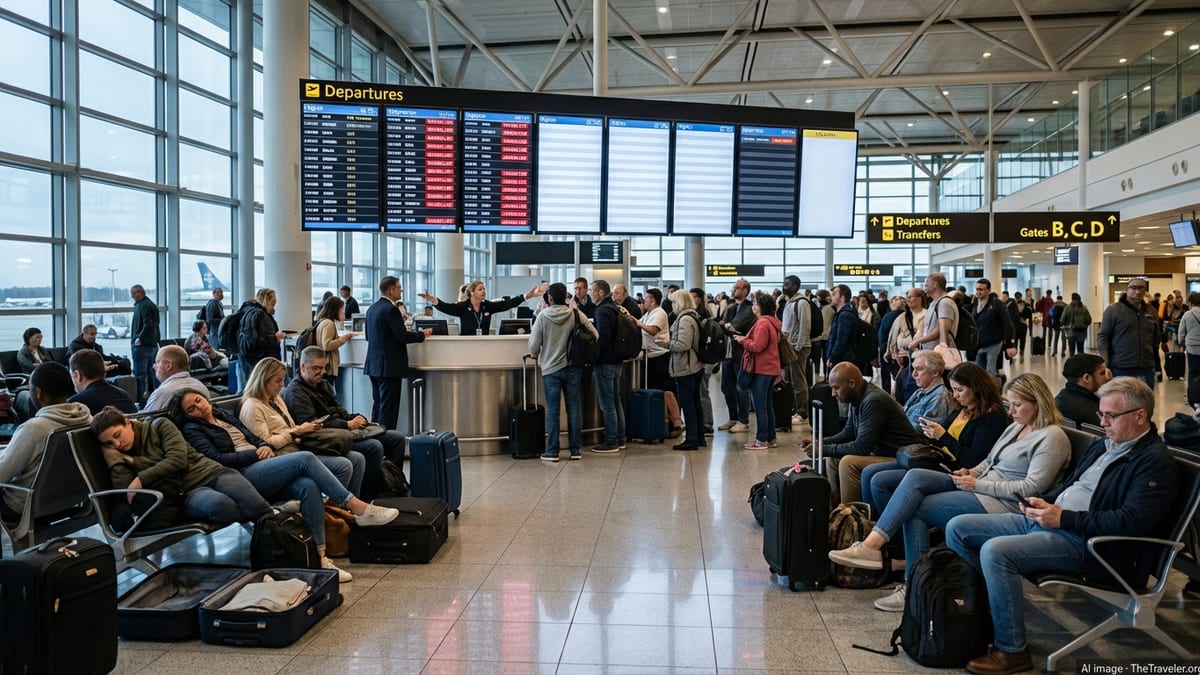
Why Airspace Closures Are Becoming More Common
Temporary airspace shutdowns, once associated mainly with major wars or national emergencies, are now appearing more frequently on aviation maps. Recent years have seen airspace restrictions linked to regional conflicts, missile and drone activity, geopolitical tensions and severe weather systems that redirect high levels of global traffic. In some cases, closures last only a few hours; in others, airlines must redesign routes for weeks or months.
Recent disruptions have ranged from targeted temporary flight restrictions over parts of the United States to broader constraints in the Middle East that forced large numbers of long haul services to detour or delay. Operational briefings from European air traffic managers describe how closures over Gulf region states in 2025 prompted mass diversions but still produced knock on effects in Europe as aircraft and crews ended up in the wrong places at the wrong times.
Analysis of disruption patterns in the United States also points to a trend in which a small number of days each year see extremely elevated delays due to constraints in the national airspace system. Researchers examining the post pandemic period have noted that as overall flight numbers recover, major weather events, staffing shortages and surprise restrictions can quickly cascade into widespread schedule chaos.
For travelers, the common thread in these events is that the decision to close or restrict airspace generally lies with governments or air navigation authorities rather than with the airline operating the flight. This distinction matters, because it shapes both what airlines can do operationally and what obligations they carry toward affected passengers.
What Airlines Typically Offer When the Sky Closes
When airspace closes, airlines often face an immediate choice between canceling flights outright or operating long detours that add hours to flight times and fuel burn. Publicly available route and schedule data from recent crises show a mix of strategies, including same day cancellations, rolling delays while authorities reassess restrictions, and rerouting aircraft along longer corridors that may themselves become congested.
In practice, most major carriers respond by rebooking passengers onto the next available services, sometimes on alternative routings or partner airlines. Industry guidance from airline associations stresses that carriers should prioritize getting passengers to their final destination as soon as reasonably possible when the disruption is outside their control. However, the exact level of flexibility, such as allowing a change of destination or travel date without extra charges, depends on each airline’s commercial policy for the specific event.
Travelers may also see airlines relax fare rules temporarily, waiving change fees or offering travel credits for those who prefer to postpone. During recent large scale disruptions documented in consumer reports, some carriers introduced special “travel waivers” listing eligible dates and routes, and specifying whether customers could switch to different airports in the same region. These waivers are not mandated by regulators; they are voluntary measures that differ from one airline to another.
Operational realities can still limit options. If airspace closures strand aircraft and crews in unexpected locations, carriers may have to rebuild schedules over several days, and alternative flights may be scarce. Passengers connecting through hub airports are particularly exposed, as a missed long haul link due to one closure can leave them waiting many hours for the next available seat.
Your Rights Differ by Region, Not by Frustration Level
Passenger rights after an airspace closure depend heavily on where you are flying and which jurisdiction’s rules apply. In the European Union and several neighboring countries that apply similar standards, Regulation 261 sets out care and assistance obligations when flights are canceled or heavily delayed, including meals, refreshments and hotel accommodation where necessary. Legal analyses of that regulation emphasize that airline responsibilities for care can remain in place even when the cause of the disruption lies outside the carrier’s control.
However, those same materials explain that closures triggered by war, security threats, air traffic control decisions or airport shutdowns are usually categorized as “extraordinary circumstances.” In that situation, travelers are generally not entitled to fixed cash compensation payments that would apply when a disruption is considered the airline’s fault, such as technical or crew scheduling problems. This distinction has been repeatedly highlighted in guidance aimed at passengers pursuing compensation claims after route closures and security incidents.
In the United States, federal consumer rules focus more on refunds than on compensation. Official materials from the Department of Transportation state that when an airline cancels a flight or makes a significant schedule change and a passenger chooses not to travel, the customer is typically entitled to a refund of the unused portion of the ticket, even if the original fare was sold as nonrefundable. This principle applies regardless of the reason for the cancellation, including situations where airspace restrictions prevent a flight from operating.
Outside these major regulatory blocs, protections vary widely. Some countries have specific passenger rights codes that mirror elements of European or North American practice, while others rely primarily on airline contracts of carriage. For international itineraries that cross multiple legal systems, the applicable rules may depend on where the journey starts, the operating carrier’s licensing state and whether the disruption occurs before departure or in transit.
Immediate Steps to Take When Your Flight Is Hit
When news of an airspace closure appears on departure boards or airline apps, the first priority for travelers is to clarify the exact status of their own flight. Disruption reports indicate that airlines sometimes keep services in “delayed” status while they await updates from air traffic authorities, only later switching to cancellation or rerouting once the duration and scope of the restriction become clearer.
Passengers are generally advised to make use of all official digital channels available, including airline apps, text alerts and email notifications, which often update faster than airport information screens. At the same time, speaking with staff at the gate or transit desk can be important when seats on alternative flights are limited and are being assigned on a first come, first served basis. Documentation such as boarding passes, booking confirmations and any written explanation provided about the cause of the disruption can be valuable later if a refund or claim is disputed.
Publicly available guidance from consumer agencies recommends that travelers who decide they no longer wish to travel should explicitly request a refund rather than accepting an open ended travel credit, unless a credit is genuinely preferred. Putting this request in writing through the airline’s official channels creates a record that can support complaints if the refund is delayed or denied. In some jurisdictions, regulators encourage passengers to exhaust the airline’s internal resolution options before escalating a case.
For those willing to continue, it may help to research alternative routings that avoid the closed airspace, particularly if multiple hubs could serve the same final destination. Reports from recent crises show that passengers who arrived at customer service with realistic rebooking suggestions sometimes moved faster through crowded queues than those starting from scratch, although outcomes still depend on the airline’s own policies and available inventory.
Planning Ahead for a Less Painful Disruption
While no traveler can predict every sudden closure of the skies, patterns emerging from recent disruption data suggest some ways to reduce the impact. Analysts tracking disruption in the United States have found that a small set of airports and routes experience disproportionately high rates of delay and cancellation during periods of stress in the airspace system, often due to weather and congestion layered on top of structural constraints.
For long haul trips that rely on potentially sensitive corridors, such as overflight of regions affected by conflict or heavy military activity, flexibility can be a form of insurance. Booking itineraries with at least one viable alternative routing, even if it requires a different connection point, may make it easier for airlines to rebook you when a closure forces traffic onto fewer paths. Some travelers choose airlines with larger networks or alliance partners that can offer more backup options if a particular route is closed.
Travel insurance policies are another variable. Policy wordings differ, but many explicitly address disruptions caused by war, terrorism or airspace closures, often with exclusions or specific limits. Consumer advocates recommend reading these sections carefully before purchase, since coverage can range from reimbursement of additional accommodation and meal costs to the exclusion of conflict related events entirely.
Ultimately, airspace closures highlight a tension at the heart of modern air travel. Airlines sell predictability in the form of schedules, yet the infrastructure they rely on is increasingly exposed to factors beyond their control. For passengers, understanding the basic rules, documenting every step of a disruption and building some flexibility into plans can turn a potentially chaotic situation into one that is at least manageable.