


More news on this day
Passengers flying through Dubai and other Gulf hubs are facing fresh uncertainty as Emirates, Etihad Airways and Flydubai navigate scattered delays, while Air France extends a full suspension of its Dubai route amid ongoing regional tensions and airspace constraints.
Get the latest news straight to your inbox!
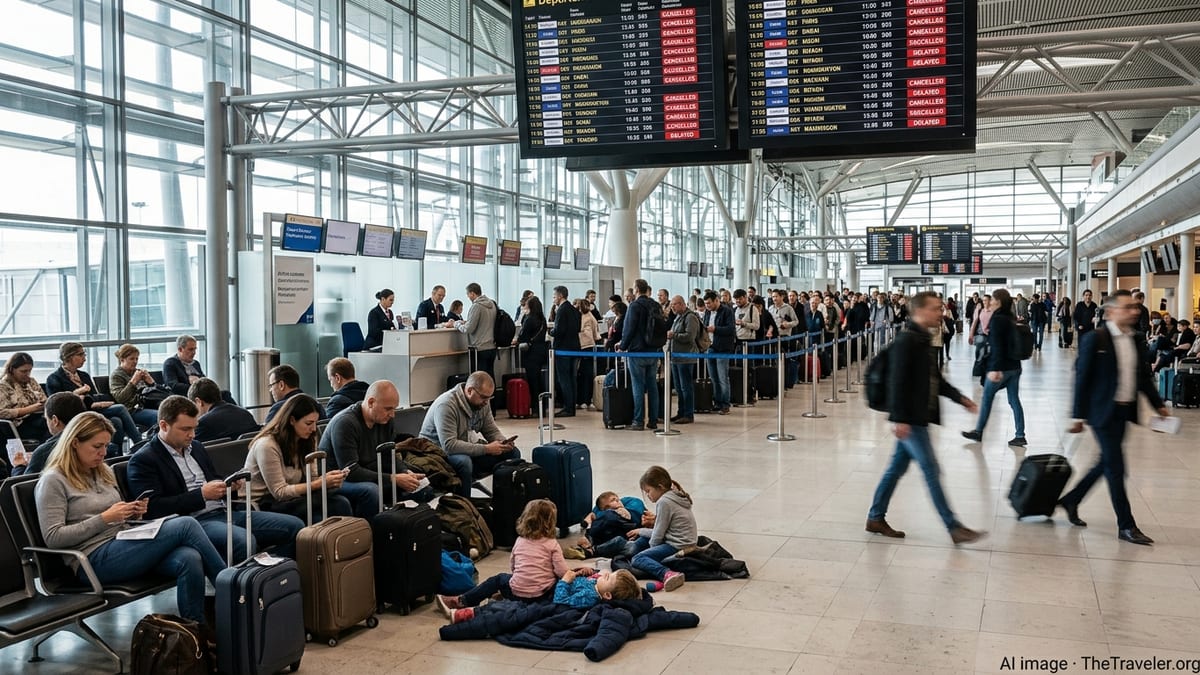
Scattered delays at major UAE hubs
Operations at Dubai International Airport and Abu Dhabi’s Zayed International Airport remain broadly intact, but flight-tracking data and regional coverage indicate a pattern of rolling delays on select routes across the Middle East and South Asia. Reports from Dubai on September 10 highlight pushed-back departures for Emirates, Flydubai and other carriers serving destinations including Pakistan, Saudi Arabia and India, even as the majority of services still operate close to schedule.
According to published updates, Emirates has warned customers that broader air traffic control issues and regional airspace restrictions can lead to last minute schedule changes. Advisories on the airline’s travel update pages continue to urge travelers to monitor flight status before heading to the airport and to allow extra time in case of disruption.
Flydubai, which operates an extensive regional network from Dubai, is similarly maintaining most flights but adjusting timings where needed. Operational notices emphasize that passengers should rely on the airline’s website or mobile app for real time notifications on gate changes, delays or cancellations, a sign that schedules remain fluid even without large scale groundings.
From Abu Dhabi, Etihad Airways is operating key long haul and regional services, yet local media tallies for September 10 list several delayed arrivals and departures. The pattern reinforces that while the Gulf hubs have avoided complete shutdowns, travelers can expect a higher than usual risk of disruption on short notice.
Air France prolongs Dubai suspension amid regional risk
The most dramatic move affecting Dubai connectivity from Europe is Air France’s decision to extend its suspension of Paris Charles de Gaulle to Dubai services. The carrier initially paused the route in response to heightened regional tensions and evolving airspace restrictions earlier this year, and has now pushed the restart date back to at least mid September.
An operations summary published on September 10 by passenger rights platform AirHelp notes that Air France has extended its full suspension of Paris Dubai flights until September 15, even as Gulf based airlines continue to serve the market. This follows earlier corporate schedule guidance for summer 2026 that already flagged a cautious stance on certain Middle East destinations due to security conditions and airspace closures.
Specialist aviation coverage in Europe adds that Air France has also prolonged route suspensions to Beirut, while maintaining operations to Tel Aviv and Riyadh with adjusted risk assessments. The resulting patchwork of service levels across the region underscores how carriers are calibrating individual routes differently based on their own safety models and overflight options.
Travel industry analysis suggests that the extended Dubai suspension reflects both immediate airspace complexity and a broader trend of European airlines trimming exposure to volatile corridors. While no permanent withdrawal has been announced, repeated short term extensions have made it difficult for passengers to plan trips via Paris, particularly for the coming weeks of late summer travel.
Emirates, Etihad and Flydubai adapt schedules rather than suspend
In contrast to the outright pause by Air France, Gulf based carriers are largely opting to adapt rather than suspend. Emirates, the largest operator at Dubai International, continues to run a wide network of flights through its hub while coping with knock on effects from regional airspace closures and congestion in European control sectors. Publicly available travel alerts refer to disruptions tied to external factors such as air traffic control constraints in the United Kingdom, illustrating how global bottlenecks can compound Middle East specific challenges.
Etihad Airways, based in Abu Dhabi, has taken a similar stance, keeping its core schedule in place even when individual flights face delays or rerouting to avoid sensitive airspace. Travelers transiting through Abu Dhabi are still able to connect to Europe, Asia and North America, but with a stronger emphasis on checking times close to departure and being prepared for rebooking if conditions deteriorate.
Flydubai’s operational messages point to targeted adjustments rather than network wide cuts. While the low cost carrier is temporarily modifying some European operations for unrelated airport infrastructure reasons later in the year, current reports from the UAE show that its Middle East and South Asia services continue, albeit with occasional late departures and arrivals.
Regional media coverage also highlights that other foreign airlines are beginning to map out their own return to Dubai after earlier suspensions linked to the Gulf crisis. Lufthansa and Wizz Air, for example, have outlined plans to gradually rebuild Dubai schedules later in 2026, signaling that demand for the hub remains strong even as near term risk assessments stay cautious.
Broader Middle East crisis weighs on connectivity
The latest disruption episode is part of a wider pattern triggered by the 2026 Gulf and Iran related crisis, which has repeatedly forced airlines to alter routings or halt services. Industry digests tracking the conflict’s impact estimate that flights between Europe and the Middle East have fallen sharply since hostilities escalated, with tens of thousands of services cancelled or rerouted in the early weeks alone due to airspace closures over Iran, Iraq, Jordan and neighboring states.
For carriers based outside the region, this has often meant lengthier detours around restricted zones, higher fuel burn and complex crew scheduling, eroding the viability of some marginal routes. For Gulf hubs such as Dubai and Abu Dhabi, intermittent closures and risk corridors have translated into brief shutdowns at the height of missile and drone exchanges, followed by partial resumptions that still require constant tactical adjustments.
Air France’s choice to keep Dubai flights suspended while Emirates and others fly illustrates how different risk appetites and regulatory frameworks can shape airline decisions. European Union rules, insurance requirements and national guidance may push some operators toward more conservative strategies, whereas locally based carriers weigh the same airspace maps against their dependence on maintaining hub connectivity.
Analysts note that this divergence can leave passengers navigating a fragmented landscape in which some airlines sell seats on a route as normal while others pull back entirely. For Dubai in particular, the result is a mix of busy terminals and full flights on Gulf carriers, offset by diminished choice for travelers loyal to certain European brands or alliance networks.
What travelers through Dubai and the region should expect
For passengers planning to fly to, from or through Dubai in the coming days, industry guidance stresses the importance of monitoring airline communications closely. With Emirates, Etihad, Flydubai and Air Arabia largely operating but vulnerable to short notice changes, checking flight status via official airline channels on the day of travel remains essential.
Travel rights organizations also underline that those booked on Air France’s suspended Dubai service are generally entitled to rebooking or refunds under European passenger protection rules when flights are cancelled. However, eligibility for additional compensation depends on whether the disruption is deemed to result from extraordinary circumstances, such as security risks or government ordered airspace closures.
Advisories compiled for corporate travel managers recommend building extra connection time into itineraries that transit the Middle East, particularly when combining Gulf flights with long haul services to Europe or North America. Some companies are temporarily favoring routings via alternative hubs in Asia or Southern Europe to reduce exposure to late night airspace changes or sudden restrictions.
For leisure travelers, practical steps include confirming visa or transit requirements when rebooked via a different hub, tracking any airline app notifications, and being prepared for overnight stays if missed connections occur. With Air France’s Dubai suspension now extended again and regional tensions still unresolved, the expectation from travel experts is that a degree of volatility will continue to shape Middle East flight plans at least through mid September.
Gulf News coverage of UAE flight delays and Air France Dubai suspension
AirHelp analysis of UAE flight disruptions and passenger rights
Air France summer 2026 network and Middle East adjustments
Khaleej Times round up of recent UAE flight delays and cancellations