


More news on this day
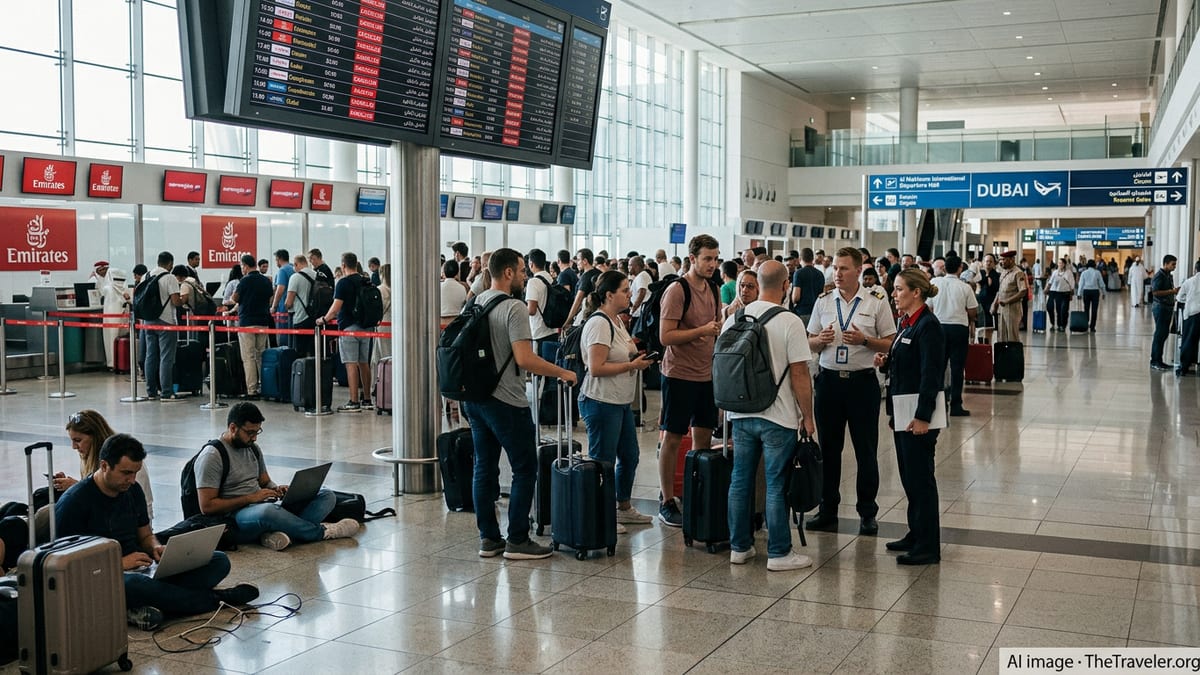
Passengers flying to and through Dubai are being urged to monitor their bookings closely as several international airlines extend suspensions and rerouting of Middle East services, even after the United States paused airstrikes on Iran.
Get the latest news straight to your inbox!
Risk advisories keep pressure on Gulf air routes
Published coverage indicates that a fresh round of conflict-zone guidance for Gulf airspace is shaping airline decisions more than short-term military developments. A recent advisory from the European Union Aviation Safety Agency urges carriers to avoid or carefully assess routes over parts of the United Arab Emirates, Bahrain, Kuwait, Oman and Qatar, with the notice currently in place until at least late July. This has prompted renewed caution among foreign airlines planning flights into Dubai and neighbouring hubs.
Reports from regional and international outlets describe a patchwork of restrictions rather than a blanket closure. UAE airspace remains officially open and Dubai International Airport continues to operate, but route-specific constraints, higher insurance costs and complex overflight approvals are limiting how some carriers can safely access the region. Industry analyses highlight that airlines typically need sustained stability before committing aircraft and crews back to previously affected corridors, meaning any pause in hostilities does not automatically translate into restored schedules.
Analysts note that Gulf and Levant airways have faced rolling disruptions since late February, when Iranian retaliatory strikes and drone attacks around key airports triggered widespread cancellations and temporary closures. Although local infrastructure has largely been repaired and traffic has recovered in stages, risk bulletins and military activity near critical chokepoints such as the Strait of Hormuz continue to influence routing decisions.
International carriers extend Dubai and regional suspensions
According to recent factboxes and travel advisories, several European and Asian airlines are keeping suspensions to Dubai and other Middle East destinations in place well beyond the latest US military pause. Coverage of airline schedules shows that some carriers, including national airlines from Europe, have pushed back the return of their Dubai services to autumn 2026, while others have extended suspensions to Riyadh, Beirut and selected Gulf gateways.
One set of updates compiled in mid-July shows that at least a dozen foreign airlines still have Dubai services paused or heavily reduced. A number of European flag carriers continue to route passengers through alternative hubs, often via major airports in Europe or Asia, rather than flying into Dubai or Riyadh directly. In parallel, some Asian airlines have chosen to lengthen earlier suspensions on Singapore to Dubai or similar routes, sometimes until late October, while increasing capacity on long-haul alternatives that avoid the region.
Meanwhile, smaller regional and South Asian airlines serving the UAE have made more targeted adjustments. Public information indicates that Pakistan International Airlines, for example, is maintaining a suspension of direct flights to Dubai International, operating instead into Al Ain within the UAE. Other operators have curtailed frequencies or shifted flights to secondary airports where risk assessments and insurance conditions are considered more favourable.
Industry observers suggest that the staggered nature of these decisions reflects each airline’s own assessment of airspace risk, insurance costs and the commercial importance of Gulf markets. Even when national regulators deem certain routes permissible, individual companies may opt for a more conservative approach, especially if they have alternative hubs that can temporarily absorb connecting traffic.
Dubai hub stays open as local carriers adjust operations
Despite the extended suspensions by some foreign airlines, publicly available data from airport operators and travel trackers indicates that Dubai International Airport remains one of the busiest hubs in the region. The airport has been operating throughout the latest escalation, albeit with periodic disruptions tied to airspace restrictions and earlier drone and missile incidents. Statements from Dubai Airports in recent months have emphasized an effort to maintain connectivity while working around reduced capacity on some regional corridors.
Local carriers such as Emirates, flydubai, Etihad Airways and Air Arabia are largely continuing to operate their global networks, though schedule changes remain common on routes closest to current or potential flashpoints. Recent travel industry reports note that services to certain destinations, including Kuwait and parts of Iraq, have seen temporary suspensions or frequency cuts linked to rapidly changing security conditions and airport closures.
Traffic statistics for the first half of 2026 illustrate the scale of the impact. Earlier updates from Dubai Airports showed passenger numbers and movements running below prior-year levels, reflecting weeks of airspace disruption across the Gulf and Levant. Even so, the hub has retained a sizable share of global transfer traffic, with analysts pointing out that airlines based in the UAE and Qatar continue to play a central role in long-haul connectivity between Europe, Asia and Africa, albeit with additional diversions and fuel costs.
Regional aviation commentary suggests that, as airspace capacity gradually improves, Gulf hubs are aiming to restore more of their pre-crisis schedules. However, the persistence of conflict-zone advisories and the possibility of renewed military action mean that short-notice changes remain a possibility for airlines operating to and from Dubai.
Why airlines are cautious despite a pause in strikes
The decision by the United States to pause strikes on Iran in late July was widely seen as a potential turning point, but travel and security analysts caution that the underlying risk factors for aviation have not fully receded. Reports on regional diplomacy indicate that the pause is conditional and could be reversed if negotiations falter or if there are further attacks on shipping or military assets.
Insurance and liability considerations weigh heavily on flight-planning decisions. Aviation risk specialists note that insurers closely monitor conflict alerts, missile and drone activity, and the proximity of air routes to potential targets. Even limited incidents, such as earlier drone activity near Dubai International or missile strikes closer to other Gulf airports, can lead to higher premiums or stricter operating conditions, which in turn make certain routes commercially unattractive.
Operational complexity is another factor. To avoid sensitive airspace, airlines may need to adopt longer flight paths that add hours to journey times and significantly increase fuel consumption. For carriers already operating on tight margins, published route analyses show that these detours can erode profitability to the point where suspensions or seasonal withdrawals are more viable than maintaining a reduced or heavily rerouted service.
Observers also highlight reputational risk. In an era of heightened social media scrutiny, airlines are acutely aware of how quickly perceptions can shift if passengers associate a brand with routes seen as risky. Maintaining suspensions until conflict advisories are lifted and a sustained period of calm is observed can be presented as a precautionary measure designed to put safety and predictability ahead of rapid commercial recovery.
What this means for passengers planning Middle East travel
For travellers, the extended suspensions and reroutings translate into a more fragmented and unpredictable landscape for Middle East journeys. Travel advisories from regional outlets consistently urge passengers to check flight status on official airline channels shortly before leaving for the airport and to monitor notifications for rebookings or schedule changes. Same-day adjustments, including last-minute aircraft swaps, diversions or cancellations, remain possible on some routes.
Experts in the travel trade recommend that passengers build in additional buffer time for connections through Gulf hubs and consider flexible tickets or travel insurance policies that specifically cover disruption from conflict-related events. With some foreign carriers pausing Dubai or Riyadh services until later in the year, travellers might need to route via alternative hubs in Europe or Asia, or in some cases rely on codeshare partners based in the region.
At the same time, the continued operation of major Gulf hubs means that most global city pairs remain reachable, albeit sometimes with longer travel times or fewer carrier choices. Travel industry reporting indicates that demand for flights to and through Dubai remains resilient, especially from business and VFR segments, even as leisure travellers show more willingness to postpone or reroute trips.
As the diplomatic track between Washington and Tehran evolves, airlines are expected to keep reviewing their schedules in short cycles rather than committing to rapid reinstatement of suspended routes. For now, the message from airport operators, carriers and travel advisers is consistent: the skies over the Gulf are open, but they are operating under heightened caution, and passengers should stay informed right up to the moment of departure.