


More news on this day
Several major international airlines are maintaining extended suspensions or reduced schedules on routes to Dubai and other Middle East hubs, even as reports indicate that United States strikes on Iran have paused and Gulf airspace restrictions are starting to ease.
Get the latest news straight to your inbox!
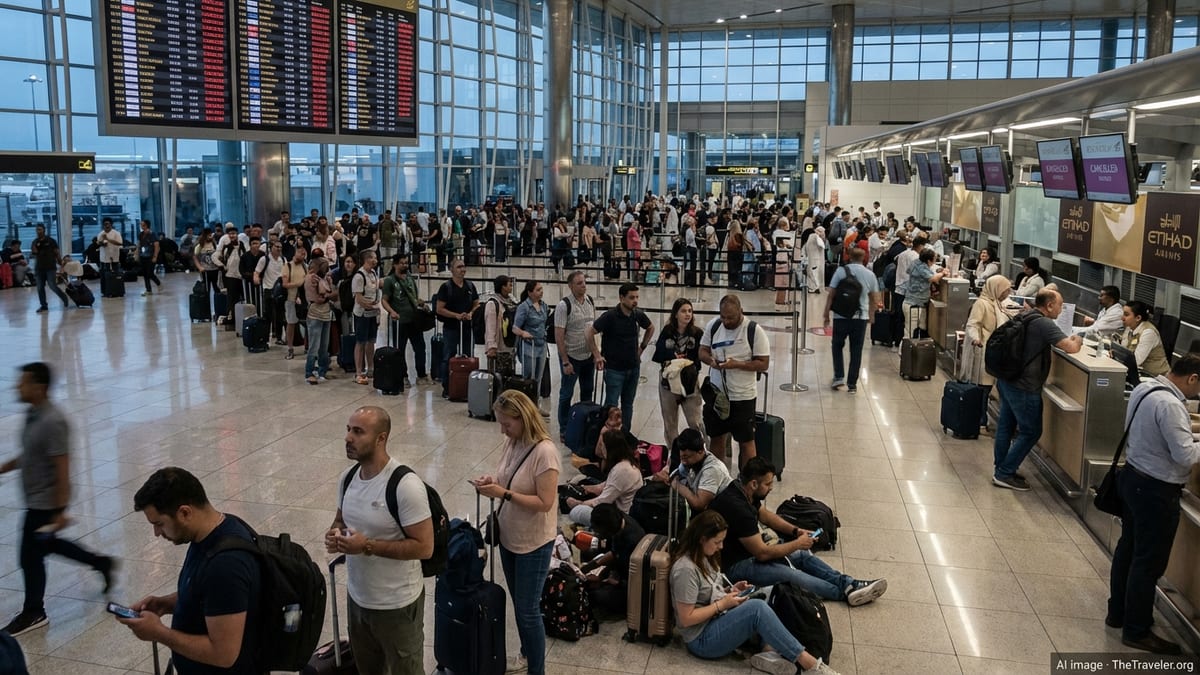
Extended suspensions stretch into late summer and autumn
Publicly available airline advisories show that a number of non-Gulf carriers continue to keep Dubai and wider Gulf operations on hold well into the peak Northern Hemisphere summer season, reflecting lingering risk assessments along key corridors between Europe, North America and Asia.
Travel industry round-ups indicate that Air Canada has prolonged its suspension of flights linking Toronto with Dubai and Tel Aviv until late October, while other carriers have opted for staggered resumptions or seasonal cancellations. Some European and Asian airlines are still omitting Dubai, Riyadh, Dammam and other Gulf cities from their active networks, even where regional hubs are technically open for traffic.
Information compiled by aviation trackers and specialist outlets points to Singapore Airlines keeping its Singapore Dubai route suspended into August, with added capacity deployed instead on Europe and Australia services to absorb displaced demand. Budget and leisure-focused airlines from Europe are also reported to have maintained the pause on Dubai, Abu Dhabi and Amman services until at least mid September, with selected Saudi Arabia routes withdrawn indefinitely.
The result is an uneven recovery pattern across the region. While some carriers have restored partial schedules to Middle East destinations, others are holding back until later in the year, creating a patchwork of options for passengers trying to reach Dubai via one-stop itineraries.
Gulf hubs remain open as regional carriers adjust
In contrast to the ongoing suspensions by several foreign airlines, Dubai International Airport and other major Gulf hubs remain operational, with local carriers largely continuing to fly and adjusting their networks in response to shifting airspace constraints.
Coverage in regional media notes that Emirates, Etihad Airways, flydubai and Air Arabia are still running the bulk of their scheduled services, although isolated cancellations and short term route suspensions persist on sectors closer to active conflict zones. Flights between the United Arab Emirates and Kuwait, for example, have seen periodic cancellations, and services to Iran remain suspended on multiple carriers.
Airport and government statements over recent weeks have underlined that UAE airspace has formally reopened after earlier, more stringent restrictions, and that capacity at Dubai and Abu Dhabi is being ramped back up. Nonetheless, overall traffic is still below previous projections, with earlier months of disruption in 2026 reducing passenger volumes and flight movements across what is typically one of the world’s busiest international aviation corridors.
Analysts say this divergence between open Gulf hubs and cautious foreign airline planning reflects the complexity of routing aircraft around sensitive airspace, together with broader operational and insurance considerations that extend beyond the immediate status of military activity.
Airspace and security assessments weigh on airline decisions
The immediate trigger for the current wave of suspensions was the conflict that followed US and Israeli strikes on Iran earlier in 2026, which prompted widespread airspace closures and diversions across Iran, Iraq, Israel and parts of the Gulf. Even as reports suggest that direct US strikes have been paused and some restrictions lifted, many airlines are still avoiding overflight of several states in the region.
Recent travel alerts from European carriers highlight continued avoidance of Iranian, Iraqi and Israeli airspace, along with limits on routing over parts of the Gulf. One major European airline has publicly confirmed that it is not operating flights to or from Dubai until early September, while allowing customers holding affected tickets to rebook or seek refunds.
Security advisories from governments also remain cautious. Updated guidance from European authorities notes that, despite diplomatic efforts and new understandings between Washington and Tehran, the regional security environment is unpredictable and a renewed escalation could occur with little warning. That assessment is feeding back into airline risk models, leading some operators to wait longer before restoring frequencies or reintroducing night flights that would require tighter routing margins.
Industry observers point out that, for intercontinental routes which traditionally used Gulf hubs as refuelling or connecting points, lengthy detours around closed or restricted airspace can erode the economic case for resuming flights, particularly for airlines already under financial pressure from higher fuel and insurance costs.
Patchy resumption across the wider Middle East
Beyond Dubai, the broader Middle East network remains fragmented. Factbox-style updates in international news reports show that a number of airlines have restarted flights to some cities while leaving others offline for months to come, creating an inconsistent web of connectivity across the region.
Carriers headquartered in Europe and Asia have, in some cases, resumed services to Tel Aviv, Amman or Beirut on limited schedules, while keeping Tehran, Muscat, Erbil or certain Saudi gateways suspended until the fourth quarter of 2026 or later. Others have pushed back the launch of new routes, such as Boston to Tel Aviv, or downgraded previously announced frequencies across the Gulf.
Low cost and leisure airlines have been particularly cautious with seasonal Middle East operations, opting to shelve Dubai and Red Sea services for winter 2026 or to consolidate flying into a narrower range of destinations that can be served without long detours. At the same time, a handful of regional and Central Asian carriers have taken advantage of the gaps, boosting flights into Dubai and other hubs by using alternative routings that skirt restricted skies.
For passengers, this means that flight availability can vary significantly by origin market. Travellers departing from major European capitals may find fewer non stop or one stop options to Dubai compared with pre conflict schedules, while those connecting via Gulf or Asian hubs may still have relatively robust choices.
What travellers should expect in the coming weeks
With the situation in flux, travel experts advise that disruption across Dubai and the wider Middle East is likely to persist through at least the late summer season. Even where airlines have published provisional restart dates, past weeks have shown that these timelines can shift as security assessments and airspace rules evolve.
Public information from multiple airlines stresses the importance of checking flight status regularly and monitoring any travel waivers or flexible booking policies. Several major carriers serving the region are continuing to offer free date changes, rerouting via alternative hubs or refunds for passengers unwilling to travel while advisories remain in place.
For Dubai in particular, the picture is one of a functioning global hub that is still contending with knock on effects from decisions taken outside the Gulf. Regional airlines are working to rebuild connectivity and capture demand as tourism and business travel pick up, but the absence or reduced presence of some large foreign carriers means that certain city pairs remain poorly served or require longer journeys.
As the pause in US strikes on Iran holds and diplomatic channels remain active, aviation analysts will be watching closely to see whether more airlines bring forward their resumption dates or maintain a cautious stance into the winter season. Until there is greater confidence that regional tensions will not flare again, many long haul travellers heading to or through Dubai can expect a more limited set of options than in previous years.