


More news on this day
Irish holidaymakers with plans for France and Spain are being urged to closely review their itineraries as large wildfires in both countries trigger mass evacuations, disrupt peak-season travel and prompt updated safety guidance from European authorities.
Get the latest news straight to your inbox!
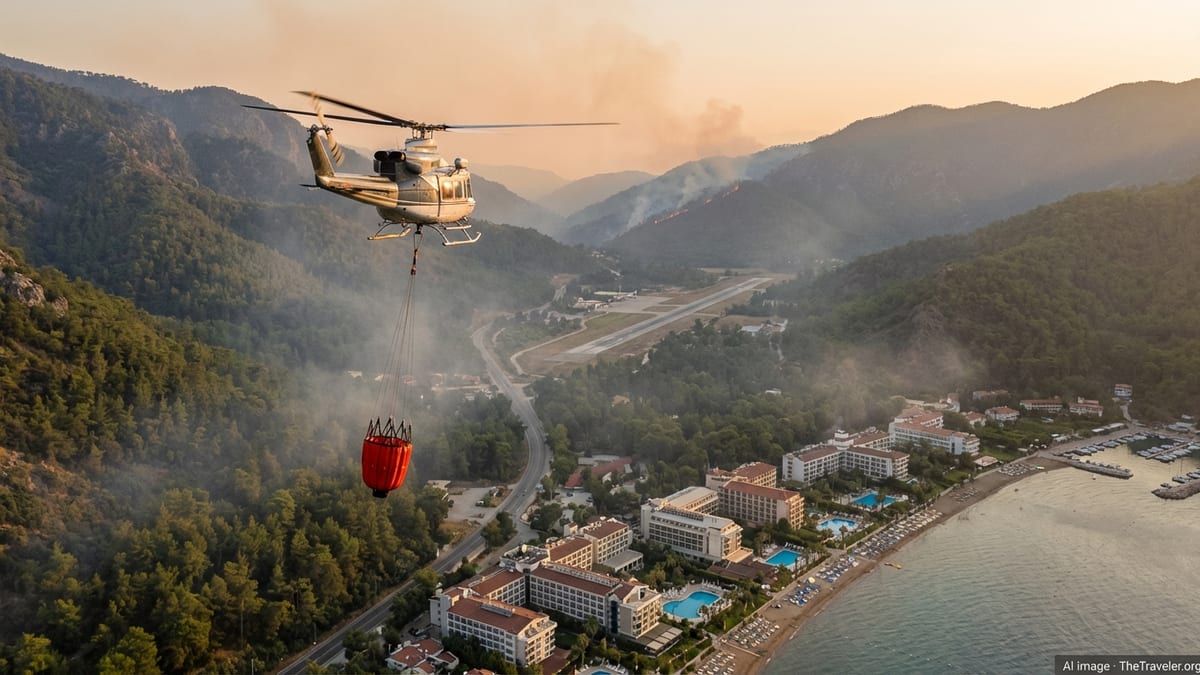
Major fires hit key French and Spanish holiday regions
Wildfires in recent days have scorched extensive areas of southwestern France and central Spain, affecting some of the very destinations most popular with Irish travellers in late July and August. Published coverage from international news agencies indicates that tens of thousands of residents and visitors have been evacuated from coastal areas around the Gironde and Landes departments near Bordeaux, following the spread of a major forest fire west of the city.
In France, reports describe a series of large blazes near Atlantic resorts and forested peninsulas, with emergency services focusing on protecting communities and tourist infrastructure. Towns along the Cap Ferret peninsula and around the Arcachon basin, known for long sandy beaches and family campsites, have seen particularly significant disruption as wind and heat complicate firefighting efforts.
Spain is also facing one of its most severe wildfire seasons in recent years. National and regional media report that large blazes in inland provinces have burned tens of thousands of hectares of forest and scrub, prompting evacuations in parts of Castilla-La Mancha and areas west of Madrid. Rural tourism destinations that promoted hiking, nature breaks and village stays are being forced to reassess summer operations as fire conditions persist.
European monitoring data cited in multiple reports suggests that, by late July, hundreds of thousands of hectares have burned across France and Spain this year, well above seasonal averages for both countries. The intense heat and extended dry spells of early summer are being highlighted as key contributing factors.
Updated travel advice and risk level for Irish visitors
The Irish Department of Foreign Affairs maintains country-by-country travel advisories that combine safety, security and climatic risks into overall guidance. According to publicly available mapping of current advisories, both France and Spain are presently rated as requiring a high degree of caution for Irish travellers, reflecting a combination of factors that now explicitly include wildfire risks in some regions.
Irish travellers are being encouraged to consult official travel advice platforms for both their destination country and Ireland before departure and during their stay. The latest foreign travel guidance for France from other European governments notes recent wildfire activity in western and southern regions, alongside warnings that conditions can change quickly with the wind and temperature. In Spain, travel recommendation pages highlight seasonal fire danger in inland and rural areas, particularly during heatwaves.
Public information from European meteorological and civil protection services stresses that fire risk is highly localised. Urban centres and many coastal resorts remain outside immediate danger zones, but smoke, poor air quality and transport disruption can still affect wider areas. Irish visitors are therefore advised to check regional alerts for the specific province or department they plan to visit, rather than relying on national-level summaries alone.
Insurance industry bodies in the United Kingdom and Ireland are also drawing attention to wildfire clauses in travel policies. Recent guidance from the sector urges holidaymakers heading to France and Spain to review documentation for cover relating to trip disruption, evacuation costs and force majeure events, and to contact their insurer if they are unsure how wildfire-related cancellations are treated.
Transport disruption and accommodation challenges
The timing of the current wildfires coincides with one of the busiest travel periods of the year between Ireland, France and Spain. Airlines and ferry routes are operating at near-capacity, and rail networks in continental Europe are heavily used by tourists moving between coastal and inland destinations. Reports from local and international outlets suggest that some regional train services in southwestern France have been reduced or rerouted where lines pass through smoke-affected zones or near active fire fronts.
Long-distance rail journeys from Paris towards the Atlantic coast and onward into northern Spain are among those most exposed to disruption when fires approach key corridors. Online traveller accounts in recent days describe advisories from operators discouraging non-essential journeys on certain dates, along with last-minute timetable changes and bus substitutions where sections of line are temporarily closed.
Accommodation has also become more complex in some regions. Campsites, holiday parks and coastal resorts located near forests or open countryside have been evacuated as a precaution, with guests moved to sports halls, schools or alternative hotels further inland. For Irish families who booked months in advance, this can mean sudden changes to carefully planned itineraries, including the need to find new accommodation at short notice in peak season.
Travel analysts note that while many large cities and established resort belts remain open for business, the cumulative effect of evacuations, smoke and uncertainty is straining local hospitality sectors. Rural guesthouses and eco-lodges that depend on summer hiking and nature tourism are among those facing cancellations, with some operators suspending bookings until conditions stabilise.
Practical guidance for Irish holidaymakers with imminent trips
For Irish travellers due to depart in the coming days, the key message from public information sources is to remain flexible and well informed. Holidaymakers are advised to monitor travel alerts from airlines, ferry companies and rail operators before setting out, and to allow extra time for changes to routes or schedules, especially when travelling to or through wildfire-affected regions.
Those heading to coastal or rural areas of France and Spain are encouraged to establish how close their accommodation is to forested zones and whether local authorities have issued evacuation warnings in recent days. Many regional governments and tourism offices provide live wildfire maps and safety updates, and Irish visitors may find it useful to ask hosts or property managers what contingency plans are in place if conditions deteriorate.
Standard safety advice stresses that visitors should never attempt to approach or photograph active fire fronts, drive on roads that have been closed, or ignore evacuation instructions. Travellers are also reminded to keep key documents and a basic go-bag accessible, so they can leave quickly if required. Simple measures such as keeping phones charged, maintaining a full fuel tank on self-drive holidays and agreeing a meeting point with companions can reduce stress in the event of sudden movement orders.
Those who no longer feel comfortable travelling to a particular region are encouraged to check the terms of their airline, accommodation and package bookings, as well as their travel insurance, to understand what options exist for refunds or changes. In many cases, adjustment fees may be waived when services are directly affected by wildfires, but this varies by provider and contract.
Balancing summer demand with evolving climate risks
The wildfires spreading across France and Spain come at a time when both countries are experiencing robust post-pandemic tourism demand. Spanish government forecasts released earlier this summer anticipated record international arrivals and spending, while French coastal regions have also reported high booking levels for July and August.
Climate scientists and European environment agencies have repeatedly highlighted that hotter, drier summers are increasing the likelihood of large wildfires around the Mediterranean and Atlantic fringes. Recent climate reports describe a long-term upward trend in the area burned each year in parts of southern Europe, even as firefighting capabilities improve.
For Irish holidaymakers, this means that what were once regarded as exceptional events are now becoming more frequent background risks of summer travel. Industry observers suggest that flexible planning, comprehensive insurance and a willingness to change destination at short notice may become normal features of peak-season trips to fire-prone regions.
While many Irish travellers will still complete their holidays to France and Spain without direct disruption, the unfolding situation underlines the importance of checking real-time information rather than relying solely on long-booked plans. As the wildfire season progresses, travel advice and local conditions are likely to remain fluid, and visitors are encouraged to factor that uncertainty into their decisions in the weeks ahead.