


Dublin Airport has quietly been reshaping its lounge offering, with refurbished spaces, evolving access rules and a renewed focus on paid entry and membership schemes. For many travelers it can be hard to judge whether these lounges are actually worth the money or miles, especially given mixed reports about crowding and limited food. This guide walks through each major lounge at Dublin, how to get in, what you will realistically find inside, and when it makes sense to pay for access.
Get the latest updates straight to your inbox!
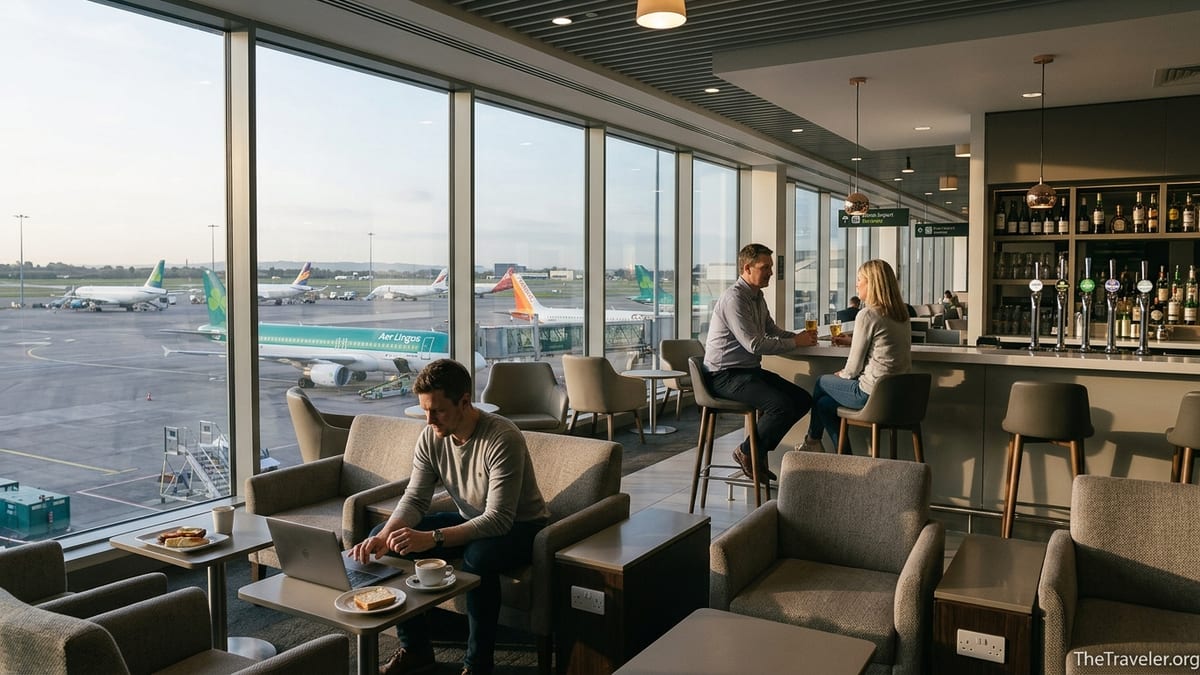
Understanding the Lounge Landscape at Dublin Airport
Dublin Airport has two main terminals and a surprisingly complex lounge ecosystem. The airport operator, daa, runs four common-use lounges under its own branding, while Aer Lingus runs additional lounges in Terminal 2, including a small arrivals facility. On top of that, airline partners from alliances such as Star Alliance and oneworld send their premium passengers into specific daa lounges rather than running their own branded spaces. The result is a patchwork of lounges that can feel confusing if you are used to clearer setups at hubs like Heathrow or Amsterdam.
In practical terms, most passengers will interact with three types of Dublin lounges. First are the main departure lounges before US preclearance, used by a mix of airline business-class guests, elite status holders and paid walk-ups. Second is the 51st&Green lounge, located after US preclearance in Terminal 2 and focused on transatlantic flights. Third are the Aer Lingus-branded lounges, primarily relevant if you are flying Ireland’s flag carrier. There is no separate Delta, United Club, British Airways Galleries or similar branded facility at Dublin; those airlines contract with daa’s lounges instead.
Over the last couple of years, daa has begun a program to revamp and rebrand several lounges, including expanding the Terminal 1 facilities and repositioning some spaces, such as the Liffey Lounge and newer higher-tier lounges. Public documents on airport commercial plans mention capacity constraints and a “limited” food and beverage offer in some lounges, something frequent flyers have also echoed in online reviews. That context is important when deciding whether to rely on lounge access for a full meal or see it more as a quiet seating area with snacks and drinks.
The ongoing refurbishments and reconfigurations also mean that opening hours and names may shift. For example, the former generic “T2 Lounge” is being repositioned as the Liffey Lounge, while premium spaces like Liberties Lounge and 51st&Green are positioned as the top tier. Travelers should always double-check current hours on the airport or airline site close to departure, especially for early-morning weekend flights and late-evening departures.
Key Lounges by Terminal: Locations and Who They Serve
In Terminal 1, the main common-use lounge is typically referred to as the T1 Lounge, located airside after security, up an escalator from the main departures retail concourse. This lounge primarily serves non-Aer Lingus airlines in Terminal 1, including carriers such as Lufthansa, KLM and Air France through airline agreements, as well as passengers with Priority Pass and similar membership cards via capacity-controlled access. In addition, daa’s premium Platinum Services facility operates as a separate VIP product with its own private terminal, used by some high-profile travelers and for paid VIP handling packages, but this is outside the normal lounge landscape most passengers will encounter.
Between Terminals 1 and 2, along the connecting corridor, sits the Liffey Lounge. This lounge is used as a partner lounge for certain airlines such as British Airways and some leisure carriers. It is typically smaller and pitched as a calmer, mid-range space rather than the airport’s flagship. Access is generally determined by flying business class or holding relevant airline status, though in some cases there may be paid entry options or co-branded credit card access negotiated in Ireland.
In Terminal 2, departing passengers find a cluster of lounges. The main daa-operated departure lounge for non-US flights sits airside after security, upstairs from the main T2 departures hall. It is here that many Aer Lingus economy passengers with lounge passes, plus travelers with certain Irish bank credit cards or priority schemes, are directed. Aer Lingus also operates its own branded lounge in Terminal 2, used by the airline’s business-class and top-tier frequent flyers on European and some long-haul services; for years this space has drawn mixed reviews for crowding at peak times.
Finally, there is the 51st&Green lounge, located after US preclearance at the far end of the Terminal 2 pier used for US-bound flights. This lounge is intended as the premium space for transatlantic passengers flying with Aer Lingus, American Airlines, Delta and United, particularly those in business class or holding high status. It has also historically sold paid access and been part of various card and membership schemes, but rules have tightened as demand has outstripped capacity, leading to stricter controls and more emphasis on pre-booking and airline entitlements.
Access Rules: Business Class, Status, Paid Entry and Priority Pass
If you are flying in business class on a full-service carrier from Dublin, there is a strong chance you will receive complimentary lounge access, though the specific lounge depends on the airline and route. For example, business-class passengers on airlines like Lufthansa or Air France departing from Terminal 1 are typically directed to daa’s T1 or Phoenix-style lounges, while transatlantic business passengers on Aer Lingus and its US partners are intended for 51st&Green after preclearance. Carriers such as Emirates and Qatar use a separate premium lounge known as the Martello Lounge, located on the corridor between Terminals 1 and 2, for their first and business-class guests.
Elite status on partner airlines can also grant access, though at Dublin this is implemented through the airport-run lounges rather than dedicated alliance-branded spaces. For example, a Star Alliance Gold passenger flying economy on a Lufthansa or Swiss service from Terminal 1 would typically be admitted to the relevant daa lounge used by those airlines. Oneworld elites flying British Airways from Terminal 1 are usually directed to the Liffey Lounge corridor space. Access is controlled by the airline; the lounge itself simply follows the airline’s list of eligible passengers on each flight.
Paid entry is a major pillar of the Dublin lounge model. The main daa lounges in both terminals, as well as 51st&Green when capacity allows, sell walk-up or pre-booked access, with pricing that commonly sits in the rough range of 35 to 45 euro per adult for a typical three-hour stay. Exact prices move due to promotions and seasonal demand, but travelers should budget in that ballpark. Pre-booking online often slightly undercuts walk-up rates and can be important at busy times; travelers regularly report being turned away at the door when the lounge is at or near maximum capacity.
Priority Pass and similar membership schemes such as LoungeKey have a presence at Dublin, but access is far from guaranteed at peak times. The main T1 lounge has in the past accepted these cards with a swipe that either deducts a visit from your plan or triggers a per-visit charge, yet cardholders have also reported being refused during morning and late-afternoon surges because airlines’ premium customers and pre-booked guests take priority. If your travel planning depends heavily on Priority Pass access, it is safer to treat Dublin as a “nice if available” location rather than a guaranteed benefit, and to have a backup plan for food and seating in the main terminal.
Food and Drink: What You Actually Get Inside
The most frequent criticism of Dublin Airport lounges is that the food and drink offering can feel more like a modest café buffet than a full meal service, especially in the common-use spaces. Public commercial reports from daa themselves refer to a “limited F&B offer” in some lounges, and travelers echo that with descriptions of basic pastries, soup, finger sandwiches and snack items. In the Terminal 1 lounge, a typical mid-morning spread might include croissants, scones, yoghurt pots, cereal, whole fruit and perhaps a simple hot dish like scrambled eggs or sausage pieces in chafing dishes. This is perfectly fine for a light breakfast but will not rival a full hotel buffet.
At lunchtime and into the afternoon, expect simple salads, bread rolls, cold cuts, hummus or pasta salad, plus packaged crisps and biscuits. Hot food may be limited to one or two rotating items such as soup or a basic casserole-style dish. Vegetarians are usually catered for with salad and soup, but vegans may find options sparse beyond fruit and crisps. This is where expectations matter. If you head into a daa common-use lounge expecting a restaurant-level meal before a low-cost carrier flight, you are likely to be disappointed; if you see it as a quiet space to grab a snack and a drink away from the crowds, it feels more reasonable.
51st&Green, positioned as a premium US preclearance lounge, aims a bit higher, though feedback has varied depending on refurbishment phases and crowding. When running to its intended standard, passengers can expect a broader buffet with hot options at breakfast and dinner times, including items like hot breakfast rolls, mini pastries, cheeses, salads and perhaps a modest dessert selection. A self-service bar typically offers Irish beers, house wine and standard spirits. Yet even here, this is not the kind of elaborate made-to-order dining you might find in flagship lounges in Doha or Singapore; it is a pleasant but relatively simple buffet that may feel underwhelming if your reference point is an international first-class lounge.
On the drinks side, Dublin’s lounges are competent rather than luxurious. Self-service coffee machines and tea stations are standard, often with decent quality beans and a choice of espresso, cappuccino and latte. Refrigerated fridges hold cans of soft drinks, juices and bottled water. Alcohol is typically self-pour in the main lounges, with a small selection of Irish lagers, a stout option, one or two red and white wines, and a shelf with house-level spirits like gin, vodka, whiskey and rum. Premium labels and craft selections are rare. Some lounges implement time-based restrictions or ask staff to pour stronger spirits later in the day to manage responsible service requirements.
Showers, Seating, Power Outlets and Other Amenities
Shower access at Dublin Airport lounges is limited and should not be assumed. Reports from frequent travelers suggest that the main Terminal 1 lounge has, at times, had a single basic shower within the restroom area, more akin to a gym shower than a dedicated spa suite. Availability can be inconsistent during refurbishments and may require asking staff at the desk for the key or token. The 51st&Green lounge has historically offered shower facilities, which is particularly useful for passengers arriving on an early morning flight to Dublin and connecting onward to the United States, though demand can outstrip supply during the busy transatlantic departure bank.
For a more robust arrivals-style shower experience, Aer Lingus promotes its Revival Lounge in Terminal 2, aimed at business-class passengers arriving from overnight transatlantic flights. This space focuses on individual changing rooms with full showers, towels and basic amenities so that passengers can freshen up before heading into the city. Access is limited primarily to Aer Lingus business-class customers, and it is not part of the general pay-per-use lounge offering that many Priority Pass or economy customers will see advertised.
Seating quality varies widely between lounges and even within the same space. In the common-use daa lounges, most seating is a mix of low lounge chairs, small café tables and some long banquette-style arrangements along windows or walls. Seats near power outlets tend to be occupied first, which can leave late arrivals hunting for a plug. Renovation plans indicate an intention to add more device-friendly seating and reconfigure layouts to avoid overcrowded bottlenecks, but until these works are fully complete, expect that at peak morning and afternoon waves you might struggle to find two seats together, especially if traveling as a family.
Wi-Fi is generally reliable and fast enough for email, streaming and remote work, and lounges are quieter than the main terminal concourses, which is an advantage if you need to jump on a video call. Newspapers and magazines are less consistently stocked than they once were, reflecting a broader trend across European airports, though some lounges still provide a limited selection of local and international titles. Children are not the primary audience for these spaces, but families are commonly seen; bear in mind that some lounges charge older children at adult rates, especially at 51st&Green, and there are no dedicated playrooms like those found at some large Asian hubs.
Are Dublin Airport Lounges Worth It?
Whether lounge access at Dublin is worth paying for depends heavily on your flight time, terminal, and personal priorities. If you are on a short European hop from Terminal 1 in the early morning, paying around 40 euro for lounge entry when you already had breakfast at your hotel may feel like poor value, especially once you see that the buffet is mainly pastries, cereal and coffee. In this case, buying a coffee and snack from a café in the terminal and finding a quieter gate area might be more sensible. On the other hand, if you are facing a three-hour layover with a laptop and need a power outlet and quiet, the same fee may feel justified even with modest food.
For US-bound passengers using 51st&Green, value is often higher because of the peculiarities of the US preclearance area. Once you clear US immigration and security, your options shrink to a cluster of gate seating and a handful of outlets and food outlets that can feel overwhelmed during the morning and midday bank of transatlantic departures. Travelers frequently describe the general gate area after preclearance as crowded and uncomfortable, especially with families. In that context, a lounge seat with space to spread out, plug in devices and access a buffet and bar can be a major improvement, even if the food is not exceptional.
Another factor is alcohol pricing in the main terminal. A single pint of beer at an airport pub or bar in Dublin can easily approach the low-teens in euro. If you are likely to have two drinks and a snack, lounge access quickly starts to feel competitive on a per-euro basis relative to buying everything a la carte. For solo business travelers who will make use of self-serve drinks, a decent coffee, Wi-Fi and somewhere to catch up on work, the math is often in favor of the lounge, especially if access is discounted through a card or pre-booking.
Where Dublin lounges are hardest to recommend is for families who will not use alcohol and may already have eaten. Basic snacks and soft drinks alone rarely justify the walk-up cost if your children will spend most of the time on tablets or running to the viewing windows in the main terminal regardless. Similarly, if you hold a Priority Pass through a credit card and are traveling at peak morning times in summer, you need to be emotionally prepared for possible refusal due to capacity; in that case, building lounge expectations into the trip for kids can backfire. For travelers who get complimentary access through business-class tickets or elite status, however, Dublin’s lounges are almost always worth visiting simply for the relative calm.
Practical Strategies to Get the Most From Dublin Lounges
A few simple strategies can help you get better value from Dublin’s lounges. First, time your arrival. For morning transatlantic departures from Terminal 2, try to arrive at the lounge shortly after it opens or soon after clearing preclearance rather than leaving it until just before boarding; this maximizes your chance of finding good seating and reduces frustration. In Terminal 1, avoid showing up during the heaviest wave of 6 to 9 a.m. departures if you can, especially as a Priority Pass visitor, as that is when airlines’ premium passengers are both most numerous and most protective of their space.
Second, consider pre-booking paid access when available. Many travelers report that pre-booked customers and airline-invited guests are admitted first, while walk-up and membership-card visitors are turned away when capacity is reached. If your itinerary includes a long layover or you are traveling with someone who is anxious in busy airports, the peace of mind of a pre-booked lounge slot can be worth the modest premium.
Third, calibrate your food expectations and plan around them. If your flight leaves near a main mealtime, you may wish to eat a substantial meal in one of Terminal 1 or Terminal 2’s restaurants before or after a shorter lounge visit. For example, you might grab a hot sit-down meal in the landside or early airside dining options, then use lounge time for coffee, dessert, and a drink while you work or relax. This approach helps avoid disappointment if the buffet selection is limited when you arrive.
Finally, check the latest information as Dublin’s lounge refurbishment program continues. Names such as Phoenix Lounge and Liberties Lounge are part of a broader rebranding effort, and opening hours can change seasonally. If you are traveling months after planning your trip, reconfirm which lounges are open in your terminal, whether 51st&Green is operating on your travel date, and whether your airline has updated its lounge arrangements. Keeping an eye on airline emails and the Dublin Airport website in the week before departure can save you from walking to the wrong part of the terminal with your bags.
The Takeaway
Dublin Airport’s lounges are in a period of transition, with refurbishment projects, rebranding and evolving access rules reflecting strong passenger demand. For many travelers, these lounges offer a welcome escape from crowded gate areas, with reliable Wi-Fi, comfortable seating and unlimited coffee, soft drinks and house alcohol. Food is generally adequate rather than luxurious, and shower access is limited, but for business travelers and those on long layovers, the overall package can still represent good value, especially when access comes as part of a business-class ticket or elite status.
At the same time, it is important to approach Dublin’s lounges with realistic expectations. If you are paying roughly 40 euro out of pocket purely for food and drink, you may find the buffet underwhelming compared with what that money could buy in the main terminal. Families who do not drink alcohol and already have meals sorted may see limited benefit beyond a quieter seating area, while Priority Pass members should be prepared for capacity-based refusals at peak times.
Ultimately, Dublin’s lounges are most worth it when they solve a specific problem for you: somewhere calm to work, a haven after US preclearance, a place to freshen up after an overnight flight, or a quiet corner for a nervous flyer. If one of those scenarios fits your trip and you can access a lounge through your ticket, status or a sensibly priced pre-booking, then including a Dublin lounge in your journey can significantly improve the airport experience. If not, the money you would spend on walk-up entry might be better invested in a good meal, a coffee and perhaps an upgraded seat on board.
FAQ
Q1. Which lounges are currently available at Dublin Airport?
The key lounges are the daa-operated lounges in Terminal 1 and Terminal 2, the corridor-based Liffey Lounge and Martello Lounge used by partner airlines, the 51st&Green lounge after US preclearance in Terminal 2, and Aer Lingus’ own lounges including its main departure lounge and the Revival arrivals lounge.
Q2. Can I use Priority Pass at Dublin Airport lounges?
Yes, Priority Pass and similar memberships are accepted at certain daa-operated lounges, particularly in Terminal 1, but access is always capacity dependent. At busy times, especially early mornings and late afternoons, cardholders are often turned away in favor of airline-invited guests and pre-booked customers.
Q3. How much does paid lounge access typically cost at Dublin?
Paid entry to common-use lounges at Dublin Airport usually falls in the range of about 35 to 45 euro per adult for a stay of up to around three hours. Prices vary by lounge, season and whether you pre-book online or pay at the door, with pre-booking often slightly cheaper.
Q4. Is the food in Dublin Airport lounges good enough to replace a meal?
In most cases, food in Dublin’s common-use lounges is best seen as light snacks rather than a full restaurant meal. You can expect pastries, cereal, basic salads, soup and some simple hot items, but not a wide hot buffet or made-to-order dishes. It can stand in for a light meal, but travelers wanting a substantial lunch or dinner may prefer to eat in a terminal restaurant.
Q5. Do any Dublin Airport lounges have showers?
Shower facilities are limited. The 51st&Green lounge has historically offered showers for US-bound passengers, and Aer Lingus’ Revival Lounge in Terminal 2 provides arrivals showers for its business-class passengers. A basic shower has at times been available in the Terminal 1 lounge, but availability can be inconsistent and may require asking staff.
Q6. Which lounge should I aim for if I am flying to the United States?
If you are flying transatlantic from Dublin, particularly on Aer Lingus or its major US partners, the 51st&Green lounge after US preclearance in Terminal 2 is usually the target. It offers a more premium environment close to the US gates. However, you must clear preclearance before reaching it, and access rules differ by ticket type, airline status and any pre-booked passes.
Q7. Are Dublin Airport lounges suitable for families with children?
Families do use Dublin’s lounges, but these spaces are not specifically designed with children in mind, and some charge older children at adult rates. If your children mainly want space to move around or are unlikely to eat much beyond snacks, the value of lounge access may be limited compared with spending on regular terminal food and drinks.
Q8. Can I access a lounge on arrival at Dublin Airport?
Arrival lounge options are limited. Aer Lingus operates its Revival Lounge in Terminal 2 for eligible business-class passengers arriving from long-haul flights, offering showers and changing facilities. There is no general pay-per-use arrivals lounge available to all passengers in the same way.
Q9. Is it worth pre-booking lounge access at Dublin?
Pre-booking can be worthwhile, especially during busy summer months or bank holiday weekends. Pre-booked guests are more likely to be admitted when lounges are near capacity, and online rates can be slightly cheaper than walk-up prices. This is particularly useful if you have a long layover or are traveling with someone who finds busy terminals stressful.
Q10. How early should I arrive at the lounge before my flight?
Most lounges at Dublin Airport allow stays of around three hours before scheduled departure. Aim to arrive with one and a half to two hours to spare, particularly if you want time to eat, have a drink and relax. For US flights, factor in the time needed to clear US preclearance before reaching 51st&Green, and avoid cutting it too close to boarding time.