


Dugi Otok is the kind of Croatian island that still feels like a discovery. With bright turquoise bays, sleepy stone villages and one of the most dramatic coastal cliffs in the Adriatic, it packs a lot into its 45 kilometers. This guide lays out practical, real-world 1, 2 and 3-day itineraries so you can make the most of Sakarun beach, Telašćica Nature Park, Sali, Veli Rat Lighthouse and the island’s quieter corners, with clear advice on ferry logistics, driving times and on-the-ground costs.
Get the latest updates straight to your inbox!
Essential Planning: When to Go and How to Get There
Dugi Otok sits west of Zadar and is reached mainly by car ferry on the Zadar to Brbinj route, operated by Jadrolinija. In summer 2026 this line runs several times a day from Zadar’s Gaženica ferry port, with extra departures in peak season. Schedules vary by weekday and month, so you should always check the latest timetable and book a spot for your car in advance during July and August. As an example, a typical high season morning departure may leave Zadar around 9:00, taking about 1 hour 20 minutes to reach Brbinj.
Ticket prices depend on vehicle and period. A walk-on passenger ticket is usually in the low single digits in euros, while a standard car is often around a few tens of euros each way in high season. Price categories are published on Jadrolinija’s booking pages, and recent updates show that seasonal tariffs apply year-round on this line, so expect slightly higher prices than on some mainland routes. Pets are allowed on board and must stay on the open deck.
If you are not bringing a car, a fast catamaran connects Zadar with Sali and Zaglav on the southern part of Dugi Otok. The 2026 official schedule lists multiple daily departures on state line 9406, with early morning, afternoon and evening sailings. This is a convenient way to base yourself in Sali without worrying about island parking, but it does limit how freely you can reach the northern beaches such as Sakarun.
The best months to visit are late May to late September. July and August bring the warmest sea temperatures and the fullest ferry timetables, but also busier beaches and higher accommodation rates. June and September are ideal for travelers who want quieter roads and easier parking at Sakarun and within Telašćica Nature Park, while still enjoying comfortable swimming conditions.
Getting Around: Buses, Cars, Scooters and Boats
Dugi Otok is long and narrow, and the main road runs from Veli Rat in the northwest to Sali and Zaglav in the southeast. Distances look small on the map but still add up. Driving from Brbinj, where the car ferry docks, to Veli Rat takes roughly 35 minutes, and to Sali around 40 to 45 minutes in normal traffic. The road is mostly single carriageway, with some bends and occasional goats and cyclists, so plan conservative travel times, especially after dark.
There is a local bus system, but it is designed primarily to connect with ferry arrivals rather than operate like a city network. Recent traveler reports in 2026 mention buses meeting the Brbinj ferry and continuing toward Sali, with limited services to northern villages. Buses can work if you are staying several nights in one place and planning a couple of targeted day trips, but for a tight 1 or 2-day itinerary a rental car, scooter or pre-booked transfer gives far more flexibility.
Rental cars are easiest to arrange on the mainland in Zadar, then taken over on the ferry. This gives you freedom to crisscross the island and carry beach gear and water. Small cars are better than large SUVs for narrow village lanes and parking spots near coves. Scooters and e-bikes are available in larger settlements like Sali and Božava in summer, which is a good solution if you are arriving as a foot passenger. Always factor in sun exposure and hills if you plan long rides between Sali, Brbinj and the northern beaches.
For sea-based exploring, local agencies in Sali, Božava and occasionally in Veli Rat offer small motorboat rentals and organized tours. A popular real-world example is a full-day boat trip from Sali that combines Telašćica’s cliffs and salt lake with snorkeling stops in nearby bays of the Kornati archipelago. Prices vary by boat size and inclusions, but you can expect a basic shared excursion in high season to be priced in the tens of euros per person, with private boat rentals running into low hundreds for the day, fuel extra.
Classic 1-Day Dugi Otok Route: Sakarun and Veli Rat
If you only have one full day on Dugi Otok and you are arriving with a car on the morning ferry, focus on the northwest. From Brbinj, drive straight toward Veli Rat and Sakarun. On the way you pass through pine forests, viewpoints over the open sea and small villages like Dragove and Božava. Grab supplies in one of the mini-markets in Božava or Veli Rat, as food options at the beach are mainly simple bars.
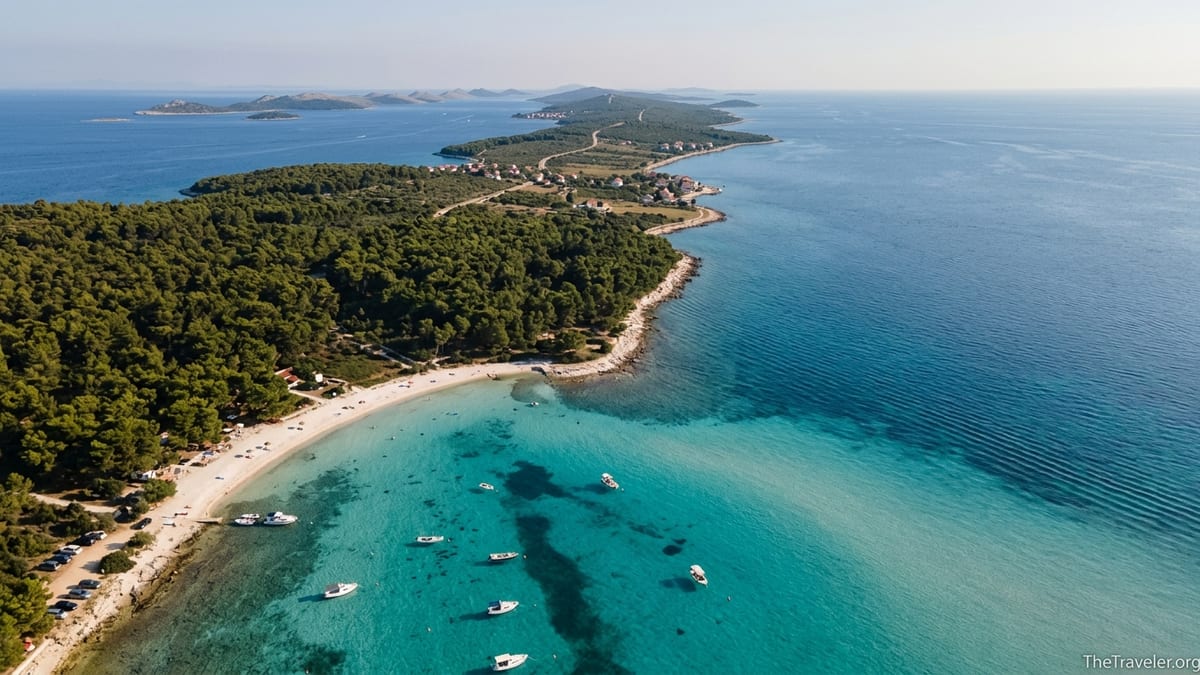
Sakarun is the island’s headline beach, a deep bay of white pebbles and sand with Caribbean-style turquoise shallows. Recent visitor reports mention a paid parking area set a short walk behind the beach, often charged by the hour or for a 3-hour block, typically in the single-digit euro range. In high summer, arrive before late morning to secure a spot and a shady patch under the pines. Beach bars serve coffee, simple snacks and drinks, and card payments are not always reliable, so carry cash.
After a relaxed swim-and-sun morning, continue to Veli Rat Lighthouse at the northwest tip. The iconic yellow lighthouse sits above rocky coves with crystal-clear water. You can usually walk around the grounds, photograph the tower and descend to several natural swimming spots. Sturdy water shoes help on the sharp rocks. Late afternoon is ideal here for golden light and slightly cooler temperatures, and you often find far fewer people than at midday Sakarun.
On the return to Brbinj for your evening ferry, allow generous buffer time in case of slow traffic or photo stops. If time permits, pause at one of the roadside viewpoints between Veli Rat and Brbinj that look west over uninhabited islets. For travelers without a car, consider a day tour from Zadar that includes bus transfer, Sakarun time and a stop near the lighthouse; several local operators advertise such excursions in summer, typically priced in the range of a simple organized day trip rather than a private charter.
Two-Day Itinerary: Adding Telašćica and Sali
With 2 days, you can balance the northern beaches with the south’s dramatic scenery. Keep the first day largely as outlined above: Sakarun and Veli Rat, with an overnight either in Božava, Veli Rat or a private apartment closer to Brbinj. Staying overnight lets you enjoy a quieter evening swim and an unrushed dinner at a konoba serving grilled fish, calamari and local wine before the day trippers leave.
On the second day, head south toward Telašćica Nature Park, a protected area covering the southern tip of Dugi Otok. Park entry is charged per person and by vehicle category, with the 2025 price list indicating different tariffs for cars, campervans and boats. As of the latest published data, standard car and adult tickets combined typically reach a few tens of euros for a family, valid for up to 7 days in some cases. Pay at the park entrance booth or buy in advance through the park’s official channels, and keep the ticket in case of checks at internal gates.
Inside Telašćica, you can visit three main highlights in a single visit. The clifftop viewpoints on the outer side of the island drop sheer into deep blue water and are some of the highest sea cliffs in the region. Walking paths run close to the edge, often without railings, so good footwear and caution with children are essential. The inland Mir salt lake is a short drive or walk away and offers calm, slightly warmer water for swimming. Finally, natural bays like Tripuljak and Pasjak provide quiet coves for a final dip if you are traveling with a car.
Base yourself in Sali for the second night. Sali is the island’s main village and port, with a waterfront promenade, several restaurants, a supermarket, bakery and ATMs. In summer evenings the harbor fills with small yachts, and you can walk from most guesthouses to dinner. For example, you might check into a simple room above the harbor in the early evening, shower off the Telašćica dust and then choose between pizzerias, seafood taverns and a gelato stand before strolling past the moored boats.
Three-Day Route: Slow Travel and Hidden Corners
With 3 days on Dugi Otok, you can keep the Sakarun, Veli Rat and Telašćica highlights while slowing down and adding lesser known spots and a boat trip. A practical structure is to spend your first night in the north near Sakarun, the second night in Sali, and keep the third night flexible, either returning north or staying again in Sali depending on your ferry plans.
On Day 1, follow the classic northern route but consider staying after the crowds leave Sakarun. As late afternoon settles, colors soften and the beach bars quieten, and you can walk the length of the bay almost alone outside peak weeks. Overnight in Božava lets you wake up by the sea and perhaps take an early swim from one of the concrete platforms before breakfast. Some hotels and guesthouses include simple buffets, while private apartments often leave fresh figs or local olive oil as a welcome gift.
Day 2 focuses on the south and Telašćica, as described earlier, but you can add short stops. On the drive from Božava to Sali, pull into viewpoints above the central part of the island where the sea appears on both sides of the road. In Sali, check boat tour boards along the waterfront to compare options for the next day, from quick half-day trips to nearby bays to full-day Kornati National Park excursions that depart early in the morning and include lunch on board.
Day 3 is your buffer day. A popular option is a combined Telašćica plus Kornati boat tour if you have not yet visited the archipelago. Agencies typically depart around 8:00 or 9:00, cruise past narrow channels and barren rock islands, stop for swimming and snorkeling and serve a grilled fish or meat lunch. If you already saw Telašćica by car, you might instead dedicate this final day to exploring smaller coves near Sali and Zaglav, renting kayaks or stand-up paddleboards to reach pebble beaches that do not appear on most maps.
Alternatively, base yourself again in the north and explore quiet bays near villages like Soline and Verunić, or walk portions of the inland trails signposted around the island. In the shoulder seasons of May, June and late September, these routes are pleasantly empty, and you can picnic among dry-stone walls without seeing another traveler for hours. Finish your final evening with a sunset drink above the sea, knowing that the next morning’s ferry back to Zadar requires an early start and at least 30 to 45 minutes to reach Brbinj from most accommodations.
Beaches, Viewpoints and Boat Trips You Should Not Miss
Beyond Sakarun, Dugi Otok hides many smaller beaches worth weaving into your itinerary. Near Veli Rat, coves like Pantera Bay offer shallow, clear water and scattered shade from pine trees. These are mostly rocky or pebble beaches, so lightweight water shoes and a foldable mat make a real difference to comfort. South of Božava, you can detour down short gravel roads signposted to small bays where only a few cars can park; in July afternoons these might still fill up, so arrive before lunchtime where possible.
Viewpoints are scattered all along the spine of the island. A real-world example many drivers notice is a lay-by above Savar village, where you can look down on a tiny islet with a stone chapel in the middle of the channel. Another popular stop is a ridge between Zaglav and Sali where, on clear days, you see the Kornati islands fanning out to the south while the mainland mountains rise to the east. Simple roadside parking and short walks lead to these spots, but there are few railings, so always watch your footing and avoid getting too close to crumbling edges.
Boat trips are where Dugi Otok truly shines. In Sali, several kiosks advertise daily tours in multiple languages, often showing photos of Mežanj islet, Telašćica cliffs and Kornati bays. Prices in 2025 and 2026 materials generally cluster in the lower to mid two-digit euro range per person for shared trips, with family discounts and children’s prices. In Božava and Veli Rat the offer is smaller but more tailored to snorkeling and sunset cruises around the northern bays, sometimes with maximum group sizes of eight to ten people for a more intimate feel.
If you prefer independence, renting a small motorboat for the day lets you anchor off uninhabited islets close to Dugi Otok. Many local operators set a minimum skipper age and require basic experience, and they will usually show you on a paper chart where you may and may not go, especially near protected areas. Fuel is almost always charged separately and can add a notable amount at the end of the day, so ask for an approximate consumption estimate before you commit.
Ferry, Tickets and Practical Logistics
The core of any Dugi Otok plan is the ferry timeline. For the Zadar to Brbinj route in 2026, the published timetable shows early morning departures from Brbinj back to Zadar around 5:30 on weekdays and multiple afternoon and evening returns from the mainland, with additional weekend changes later in August and September. For practical purposes, most visitors will want a mid-morning outbound ferry from Zadar and a late afternoon or evening return after their last island night. Always aim to be in the Gaženica port area at least 45 to 60 minutes before departure with a vehicle in peak months.
Tickets can be bought in advance through Jadrolinija’s online system or at port ticket offices. In July and August, especially on Saturdays when many accommodations have changeover days, advance booking for cars is strongly recommended. Foot passengers usually have more flexibility and can often buy on the day, but even they risk queues if weather disrupts services. As local media in February 2026 showed, strong southern winds can suspend multiple Zadar island lines for a full day, so build a small weather buffer into your itinerary if you have flights to catch.
Within Telašćica Nature Park, you pay an entrance fee either at the main road checkpoint or by boat if arriving from the sea. The official price list for 2025, which is still broadly indicative for 2026, includes separate categories for motor vehicles, campervans and individual visitors. As rules for fishing, camping and drone use are strict, check the latest park regulations to avoid fines. For example, free camping in parking lots or on remote beaches, although sometimes discussed on travel forums, is not allowed and is occasionally checked by local authorities.
Cash remains useful across the island. While Croatia uses the euro and card acceptance is increasing, small beach bars at Sakarun, kiosk-style bakeries and parking attendants sometimes only accept cash or have card terminals that fail in peak periods. ATMs are available in Sali and some larger villages, but it is wise to withdraw in Zadar before departure and carry enough coins and small notes for parking, ice creams and tips.
The Takeaway
Dugi Otok rewards travelers who slow down. In one day you can see the postcard scenes of Sakarun and Veli Rat, in two days you add the raw drama of Telašćica and the evening charm of Sali, and with three days you begin to feel the rhythm of island life: early ferries, empty morning roads, siesta-quiet villages and lingering sunsets over the open sea.
What makes this thin strip of land special is the combination of accessible highlights and genuine remoteness. You might sip an espresso on Sali’s waterfront in the morning, dive off wave-cut rocks beneath Veli Rat Lighthouse in the afternoon and finish your day listening to cicadas in an olive grove apartment, all within a few dozen kilometers. With a little planning around ferries, tickets and driving times, Dugi Otok becomes one of Croatia’s most rewarding short island escapes.
FAQ
Q1. Do I need a car to follow these 1, 2 and 3-day routes on Dugi Otok?
While not absolutely essential, having a car or scooter makes these itineraries far easier, especially if you want to combine Sakarun, Veli Rat and Telašćica within a short stay. Public buses exist but run infrequently and are timed to ferries, so schedules can be limiting for spontaneous beach hopping.
Q2. How early should I arrive for the Zadar to Brbinj ferry with a vehicle?
In July and August, plan to be in the Gaženica ferry port area 45 to 60 minutes before departure, particularly on weekends. Outside peak season, 30 to 45 minutes is usually enough, but arriving early helps reduce stress and gives you time to park in the correct lane.
Q3. Can I visit both Sakarun beach and Telašćica Nature Park in a single day?
It is technically possible with an early start and your own vehicle, but it makes for a rushed day because the two areas lie at opposite ends of the island. For a more relaxed experience, dedicate one day to the north around Sakarun and Veli Rat and another to the south and Telašćica.
Q4. Are there entrance fees for Telašćica Nature Park and how are they paid?
Yes, there are entrance fees per person and for vehicles or boats. You usually pay at an entrance checkpoint when arriving by road or to park staff when entering by sea. Prices vary by season and vehicle type, so check the most recent official list before your trip.
Q5. Is Sakarun beach suitable for children and non-swimmers?
Sakarun is very popular with families because the shallows extend a long way out and the sea is usually calm. The seabed is a mix of sand and small stones, so water shoes can help, but overall it is one of the safest and most comfortable beaches on the island for children and less confident swimmers.
Q6. What should I pack for a 3-day Dugi Otok trip following this guide?
Bring sturdy walking shoes or sandals, water shoes for rocky coves, a sun hat, high-SPF sunscreen, a refillable water bottle, a light windbreaker for ferry crossings, and enough cash for parking, beach bars and small shops. A dry bag and snorkel set are useful for boat trips and hidden bays.
Q7. Are there grocery stores and ATMs on Dugi Otok?
Yes, you will find small supermarkets and bakeries in larger settlements like Sali, Božava and Veli Rat, and ATMs in Sali and some other villages. However, opening hours can be shorter than on the mainland, especially outside peak season, so do not leave food shopping or cash withdrawals to the last minute.
Q8. Can I camp freely on beaches or in parking lots around the island?
No, free camping on beaches, in parking areas or on private land without permission is not allowed and can result in fines. If you are traveling with a campervan, use official campsites or designated accommodation and respect local regulations within protected areas such as Telašćica.
Q9. Is it safe to swim near Veli Rat Lighthouse and along the cliffs in Telašćica?
Swimming at the rocky coves around Veli Rat is generally safe in calm weather if you use common sense and wear water shoes. Around the tall cliffs of Telašćica, swimming is usually confined to designated bays such as Mir salt lake and not directly under the highest cliff faces, where boat traffic and currents can be stronger.
Q10. How far in advance should I book accommodation for a July or August visit?
For peak summer, it is wise to book hotels, apartments or campsites at least a few months in advance, particularly if you want to stay near Sakarun or in Sali with sea views. Last-minute options do exist but will give you less choice of location and price, especially for stays longer than two or three nights.