


More news on this day
An easyJet flight from London Luton to Glasgow on Monday 16 November 2026 was delayed by around an hour after a male passenger smoked in the aircraft toilet before departure, triggered the lavatory smoke alarm and was removed by police while the Airbus A320 remained at the stand.
Get the latest news straight to your inbox!
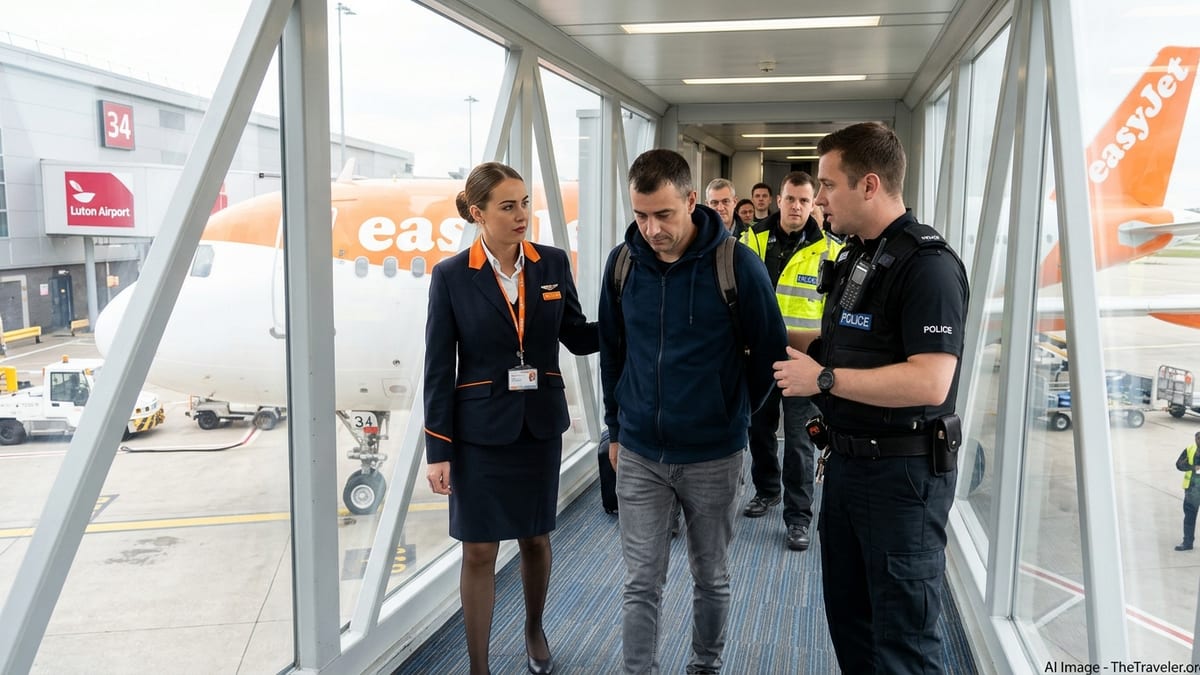
Passenger removed at the gate after lavatory smoke alarm
The incident occurred on easyJet flight U2404 (also marketed as EZY404) from London Luton Airport to Glasgow, operated by an Airbus A320 registered in the UK. The service was scheduled to depart Luton at 13:00 on 16 November 2026. Public departure data show the flight eventually left the stand at 13:48, indicating a delay of just under 50 minutes compared with schedule.
According to contemporaneous reports citing onboard accounts, the disruption began when a male passenger smoked a cigarette in one of the aircraft toilets while boarding and pre-departure procedures were still under way at the gate. The lavatory smoke detector activated, alerting cabin crew, who then identified the individual believed to have been smoking and informed the captain.
Police officers attended the aircraft at the stand in Luton and boarded to remove the passenger from the flight. All other customers remained on the same aircraft. The flight continued to Glasgow later that afternoon, arriving the same day with a modest delay versus its planned arrival time. No injuries or technical damage were reported.
What easyJet’s rules say about smoking and removal
Smoking, including the use of e-cigarettes and vaping devices, is prohibited on all easyJet services. The airline’s current terms and conditions state that smoking is “strictly forbidden” anywhere on board and that measures will be taken to stop any passenger who attempts to smoke on an aircraft. The same conditions give the carrier the right to refuse carriage or remove a passenger from a flight, without liability, where it reasonably believes the person has smoked or attempted to smoke either in the airport outside permitted areas or on board.
Under the refusal-of-carriage provisions, if a passenger is removed for conduct such as smoking or other safety-related behaviour, easyJet may also cancel any onward sectors in the same booking. The airline further reserves the option to cancel existing future bookings and to refuse new reservations for a period it considers appropriate in serious cases. For this particular Luton–Glasgow incident, no information has yet been made public on whether the individual faces any longer-term ban or cancellation of future easyJet travel.
The carrier has not announced any changes to its smoking policy following the Luton event. For travellers using Luton, where easyJet maintains a major base, the episode mainly underlines that the existing rules are actively enforced and that cabin crew and the captain are empowered to request police intervention when necessary.
UK legal framework and potential penalties
Beyond airline policy, smoking on board an aircraft is a matter of UK law. The Air Navigation Order makes it an offence for a person to smoke in any compartment of a UK-registered aircraft when smoking in that compartment is prohibited by a posted notice. In practice, UK operators such as easyJet do not permit smoking anywhere on board, including in lavatories, so a person who ignores these notices can be investigated for a criminal offence.
The UK Civil Aviation Authority reiterates that smoking and vaping are banned on all UK airlines and treats disruptive behaviour, including interference with safety procedures, as a serious matter. Cases involving onboard smoking can lead to police involvement on arrival, investigation, fines and potentially prosecution in the courts. In more serious disruptive incidents, offenders have faced significant financial penalties and custodial sentences, though outcomes vary depending on circumstances and the evidence available.
In the Luton–Glasgow case, authorities have not yet disclosed whether the removed passenger will face charges, a fixed penalty, or further legal action. Without formal confirmation from police, prosecutors or the courts, it is not possible to say what sanctions, if any, will follow beyond the immediate removal from the flight.
Impact on fellow travellers and what passengers should know
For most people on board U2404, the primary impact was a delay of just under an hour departing Luton and a late arrival into Glasgow, which may have caused some travellers to miss onward rail connections, meetings or ground transport bookings. Because the cause was the conduct of an individual passenger rather than a technical fault or crew issue, other customers are unlikely to have remedies beyond the standard options that apply to short delays under easyJet’s policies and applicable regulations.
The incident illustrates how sensitive modern aircraft systems are to smoke. Lavatories are fitted with detectors specifically designed to pick up cigarette or vape smoke quickly. When activated, they trigger a clear alert to cabin crew, who are trained to respond immediately, investigate the source and inform the cockpit if necessary. What may feel to one passenger like a brief attempt to smoke discreetly in the toilet is almost certain to be detected and can halt boarding or departure while the situation is resolved.
For UK leisure and business travellers, the practical takeaway is that smoking or vaping anywhere on board, including in toilets before take-off, can lead to removal from the aircraft, police attendance at the gate or on arrival, potential fines and the risk of being refused future carriage. Even if no diversion occurs, such behaviour can disrupt travel plans for an entire cabin. Passengers should assume that “just one quick cigarette” in an aircraft lavatory carries a high likelihood of detection and consequences that extend well beyond a single flight.