


Choosing where to stay in the German Alps can feel overwhelming. The region stretches from the rolling foothills of the Allgäu to the dramatic peaks around Berchtesgaden, with dozens of villages competing for your attention. The key for most travelers is to pick a small number of well connected base towns that match their priorities on scenery, activities, season, budget and whether they will have a car. The following overview focuses on the main bases that are widely used by visitors and confirmed by regional tourism boards as part of the Bavarian and Allgäu Alps, rather than listing every hamlet on the map.
Get the latest updates straight to your inbox!
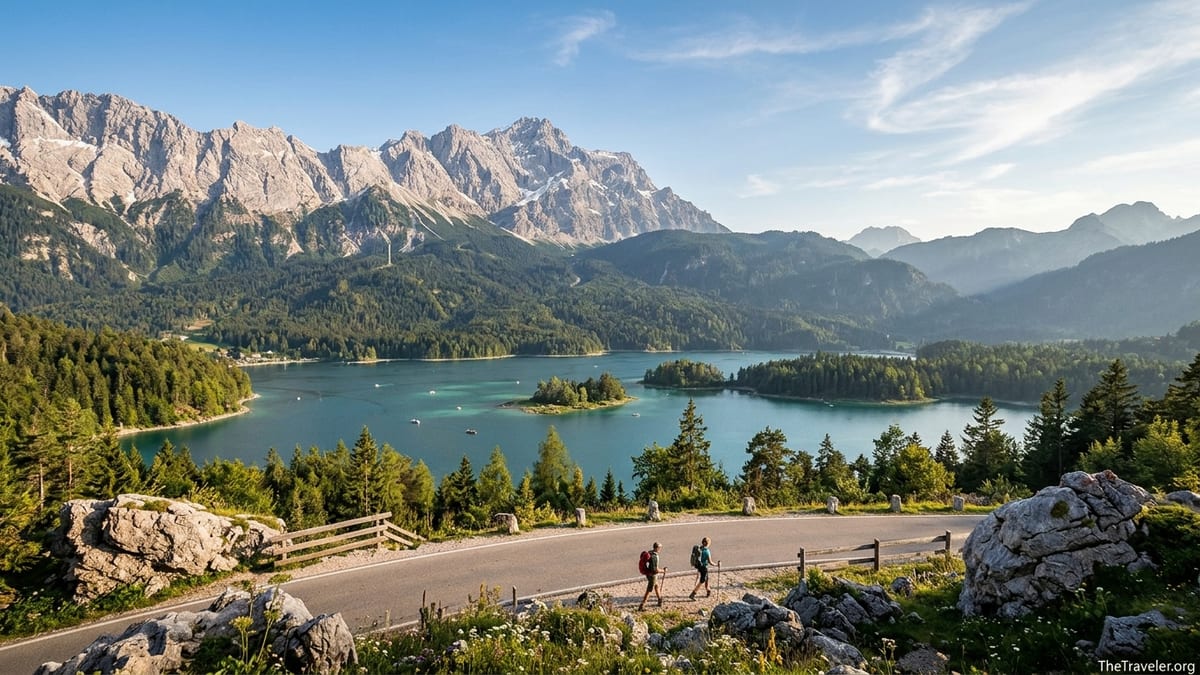
How to Think About Bases in the German Alps
The main hubs in the German Alps cluster along the northern edge of the mountain chain, within Bavaria and the Allgäu. Larger centers such as Füssen, Oberstdorf, Garmisch-Partenkirchen, Tegernsee, Chiemsee and Berchtesgaden combine rail access, visitor infrastructure and a concentration of accommodation, while smaller lakeside or valley villages sit nearby as quieter alternatives. All of the bases described here are promoted by their regional tourism organizations specifically as gateways to the German Alps and are commonly used as starting points for hiking, skiing or scenic touring.
When choosing a base, first decide whether you want a lively town with plenty of restaurants and shops, or a quieter village feel. Next, think about your main focus: castles and gentle walking, lakes and family time, serious hiking, winter sports, or dramatic high mountain scenery. Finally, consider how you plan to move around. Rail links from Munich and other cities are good to some hubs, while others strongly reward having a car. Public transport patterns and guest card schemes can change, so any specific journey time or ticket mentioned here should be checked against current timetables for your travel dates.
Season also matters. Many mountain lifts, high trails and some guesthouses operate mainly from roughly late May to early October, and again from around late December into March for winter sports. Shoulder months like November and early April can see extensive closures in smaller villages. Around Christmas and New Year, school holiday weeks, major ski events and peak summer weekends, advance booking becomes essential in the most popular bases.
Füssen and Schwangau: Castles and Allgäu Foothills
Füssen and neighboring Schwangau sit in the Allgäu Alps at the western end of Bavaria’s alpine arc. The atmosphere is romantic and slightly storybook, with pastel old-town streets in Füssen and open meadows rising to jagged peaks behind Schwangau. This base suits first time visitors who want to concentrate on Neuschwanstein and Hohenschwangau castles, easy lakeside and valley walks, and day trips into the broader Allgäu. It is less ideal for those seeking extensive high alpine hiking right from their hotel door, although there are cable cars and moderate trails nearby.
Access from Munich is straightforward by rail followed by a short bus ride. Regional trains from Munich Hauptbahnhof to Füssen typically run at least every two hours and take around two hours, though travelers should always confirm exact times for their chosen day. From Füssen station, local buses reach Hohenschwangau and the castle area in roughly 10 to 15 minutes. With a car, the drive from Munich is usually about two hours depending on traffic. A car gives more flexibility for exploring smaller Allgäu villages, but is not essential for a castle focused stay.
The main attractions from this base include Neuschwanstein Castle itself, Hohenschwangau Castle a short walk away, boat trips and swimming at lakes such as Alpsee and Forggensee, and the Tegelberg cable car area for panoramic views and moderate hikes. All of these lie either in Schwangau or within a short local bus or taxi ride from Füssen. Day trips deeper into the Allgäu, such as to the Breitachklamm gorge or to Kempten, are easiest by car but can be pieced together by regional trains and buses.
Accommodation in Füssen and Schwangau ranges from small guesthouses and pensions through mid range hotels and a handful of higher end spa properties, along with apartments and a few farm stays in the surrounding countryside. For trip planning, it works well to select three to five representative properties that are clearly within either Füssen town or Schwangau, then verify their category, prices for a specific shoulder season week and key amenities such as parking and distance to the station or castle bus stops. Because demand surges on summer weekends and during school holidays, travelers should expect higher prices and tighter availability close to the castles, and may find better value in Füssen’s town center or nearby villages.
Oberstdorf Area: Allgäu Hiking and Winter Sports
Oberstdorf lies in the southern Allgäu Alps and feels more like a classic mountain resort than a castle town. The atmosphere is focused on outdoor activity, with a compact center surrounded by green valleys and high ridges. This base suits hikers, winter sports enthusiasts and travelers who want a strong alpine feel but slightly fewer day trippers than at Neuschwanstein or Königssee. It is less ideal for visitors who want big city style nightlife or who prefer purely gentle valley walks.
From Munich, Oberstdorf can be reached by regional trains with a change, typically in around three hours, though timetables vary by season and weekday. A car reduces journey time slightly and is valuable for exploring side valleys and neighboring villages, yet the village itself is walkable and well served by buses and mountain transport. As with other bases, specific train departure times, platform changes and any rail works should be checked close to travel.
Key attractions and activities reachable from Oberstdorf include the Nebelhorn cable car and hiking area, the Fellhorn and Kanzelwand ski and hiking sector, the Breitachklamm gorge and winter events such as ski jumping competitions. Many trailheads start from the edge of the village or from short bus rides into side valleys. In winter, groomed cross country ski trails and sledding runs add further options without requiring long transfers.
The Oberstdorf area offers a broad spread of lodging, from traditional guesthouses and family run pensions to mid range hotels, self catering apartments and higher end spa resorts. Farm stays and chalets in surrounding hamlets are also common. Planners should choose a small sample of well reviewed properties in or adjacent to the village center, verify their star ratings and typical shoulder season nightly rates on major booking platforms, and check details such as ski room facilities, spa access, parking and proximity to bus stops or cable car stations. During peak winter weeks and summer hiking season, advance booking is strongly advised.
Garmisch-Partenkirchen and the Zugspitz Region
Garmisch-Partenkirchen sits beneath the Zugspitze, Germany’s highest mountain, and serves as the core hub of the wider Zugspitz Region. The feel is that of a substantial town combined with classic alpine scenery. It suits travelers who want a mix of outdoor activities, a good choice of restaurants and shops, and a strong public transport network. It is particularly attractive for non drivers and for winter sports fans, while still working well for families and first time visitors to the German Alps.
Rail access from Munich is one of the best in the Alps. Regional trains on the Munich to Garmisch-Partenkirchen line generally run about hourly and take roughly one and a half hours, according to current timetable summaries for 2026. Some weekend Intercity Express services also call here. Recent changes have integrated the wider district into the Munich transport tariff area, and local guest cards in parts of the Zugspitz Region provide free or discounted bus travel on regional lines. Travelers should verify exact journey times, ticket options and any engineering works on the Munich to Garmisch route for their chosen dates.
From Garmisch-Partenkirchen, headline activities include rides on the Zugspitze cable car or cog railway from nearby Grainau, visits to the Eibsee mountain lake, skiing and hiking in the Garmisch Classic area, and valley walks such as the Partnach Gorge when open. Many of these are reachable by frequent buses that connect the town, Grainau and the Zugspitze valley stations, though some special lines or lake segments may have separate fares even when local buses are otherwise included with guest cards.
Accommodation in Garmisch-Partenkirchen and neighboring Zugspitz villages covers everything from simple inns and guesthouses to mid range hotels, spa properties and upscale resorts. There is also a strong supply of apartments and holiday flats, which appeal to families and longer stays. When selecting example properties, planners should focus on those within walking distance of Garmisch-Partenkirchen station, the historic centers of Garmisch or Partenkirchen, or the main bus routes toward Eibsee and Zugspitze. For each, verify the official star category where applicable, typical shoulder season prices, wellness facilities, parking arrangements and any local guest card benefits such as free regional bus travel. Peak times include Christmas and New Year, major ski race weekends like the Kandahar downhill, and sunny winter and summer holiday periods.
Tegernsee and Schliersee: Quieter Lakes Near Munich
The Tegernsee and Schliersee lakes lie on the northeastern flank of the Bavarian Alps, in a landscape of wooded hills, pastures and rounded peaks. Both have long traditions as holiday regions and feature compact lakeside towns and villages. This area suits travelers looking for a calmer base than Garmisch or Berchtesgaden, with strong emphasis on lake views, easy to moderate walking and relaxation. It is popular with families and couples from Munich seeking weekend escapes.
Rail connections from Munich are generally frequent and relatively fast. Trains to Tegernsee and to Schliersee and Bayrischzell usually take roughly one hour to one hour and twenty minutes, though the exact pattern depends on the line and time of day. The region has been integrated into the wider Munich transport network, and certain local guest cards are recognized on regional buses and some rail services within specified zones. Nonetheless, visitors should always confirm current ticket rules, including whether their accommodation’s guest card is valid as a transport ticket and in which areas.
From bases on Tegernsee or Schliersee, headline activities include lakeside promenades and boat trips, local cable cars and chairlifts to viewpoints such as the Wallberg near Tegernsee, and easy to moderate hikes starting directly from the shore or nearby valleys. In winter, small to medium sized ski areas and cross country ski trails operate in the surrounding hills, but the region is more about gentle winter walking, spas and cozy inns than large scale skiing.
Accommodation options around Tegernsee and Schliersee range from traditional lakeside guesthouses and boutique hotels to spa resorts, apartments and farm stays in the surrounding villages. Direct lakefront hotels often command premium prices, especially in high summer and on sunny weekends, while properties slightly back from the shore or one village along the lakefront can offer better value. When researching specific places to stay, ensure that properties marketed with lake views are genuinely on or near the lake, check shoulder season rates for representative dates, and confirm details such as access to stations, boat piers, parking and wellness facilities.
Chiemsee and the Chiemgau Alps
The Chiemsee and broader Chiemgau region mark the central portion of the Bavarian Alps, combining a large lake sometimes called the Bavarian Sea with foothills leading up to the Chiemgau Alps. This base suits travelers who enjoy a mix of cultural visits, such as island palaces, with relaxed days by the water and easy excursions into nearby mountains. It is a good fit for families and road trippers who want variety, though serious high altitude hikers may prefer Oberstdorf, Garmisch or Berchtesgaden for direct mountain access.
Chiemsee is reached from Munich primarily via trains on the line toward Salzburg, typically taking around one hour to stations such as Prien am Chiemsee, from where local buses and boats fan out around the lake. Journey times and frequencies vary depending on the stop and time of day, so travelers should consult current rail and boat timetables. With a car, the drive from Munich to the Chiemsee area usually takes a little over an hour in normal traffic along the main motorway, and greatly simplifies onward travel into the Chiemgau valleys.
Key attractions accessible from Chiemsee bases include boat trips to Herreninsel and Fraueninsel with their palace and abbey, lakeside promenades and bathing areas, and excursions into the Chiemgau Alps for hiking and winter sports. Popular mountain destinations such as the Kampenwand near Aschau are within short driving or regional bus distances. In winter, several Chiemgau ski areas offer modest but family friendly slopes, often paired with cross country trails.
The accommodation scene around Chiemsee and in the Chiemgau includes lakefront hotels, guesthouses in villages like Prien and Bernau, farm stays in the countryside and apartments throughout the region. As elsewhere, travelers should select example properties located clearly in or near the intended base village, confirm their category and amenities, and check prices for a defined shoulder season period. Lakefront stays command a premium, while properties a few kilometers inland can be significantly better value and quieter, albeit with more reliance on a car.
Berchtesgaden and Schönau am Königssee: Dramatic Peaks and Lakes
Berchtesgaden and neighboring Schönau am Königssee sit in the far southeastern corner of Germany, encircled by the Berchtesgaden Alps and directly adjacent to Berchtesgaden National Park. The scenery is among the most dramatic in the German Alps, with sheer peaks rising above emerald lakes such as Königssee. This base suits hikers, photographers and travelers seeking a strong sense of place and national park access. It is less ideal for those who want to be within very easy reach of multiple different alpine regions in a short stay, as it lies at the end of a branch line and road network.
From Munich, Berchtesgaden is typically reached by regional trains toward Freilassing with a change to a local line or bus, with total travel time usually close to three hours depending on the connection. From Salzburg, buses run regularly to Berchtesgaden in around one hour. Current local information shows that the Berchtesgaden guest card provides free travel on most regional bus lines within the Berchtesgadener Land district and on certain local train segments, but not on a few special services such as the Eagle’s Nest access road and some mountain routes. Because timetables and ticket conditions continue to evolve, travelers should verify the latest details on official regional sites for their travel month.
Highlight activities from this base include boat trips on Königssee from Schönau, hiking in Berchtesgaden National Park on routes that start at or near the lake and in side valleys, visits to salt mines and to viewpoints such as the Kehlstein when operating, and excursions to alpine pastures. Many of these start from Berchtesgaden or Schönau, or from trailheads reached by local buses that are often covered by the guest card. In peak summer, heavy visitor numbers can lead to queues for lake boats and limited parking near Königssee, so early starts or use of public transport is recommended.
Berchtesgaden and Schönau offer a wide spectrum of places to stay, from simple pensions and guesthouses to mid range hotels, spa properties and apartments in both villages and surrounding hamlets. Some accommodations explicitly market their inclusion of the Berchtesgaden guest card, which can make a car free stay much more practical. When shortlisting specific options, verify that any property advertised as “at Königssee” is genuinely within walking distance of the boat pier or lakefront, confirm shoulder season prices and check policies on parking, half board and cancellation. During high summer, long weekends and around Christmas, early booking is strongly recommended, as national park proximity keeps demand high.
Seasonality, Booking and Practical Trade offs
Across all of these bases, the main summer season typically runs from about late May or early June into late September, with variations by altitude and lift operation dates. This is when mountain trails, boat services and cable cars usually run their widest schedules, and when lake regions such as Tegernsee, Schliersee and Chiemsee are busiest. Winter seasons focus on ski and snow activities, often from around late December into March where snow conditions allow. In the shoulder months of November and early spring, many mountain inns, lifts and some hotels close entirely or reduce operations, particularly in smaller villages and higher valleys.
Booking patterns follow this rhythm. Near Neuschwanstein, Garmisch-Partenkirchen, Tegernsee and Königssee, accommodation can be heavily booked many months ahead for key periods such as Christmas and New Year, school holidays, major sporting events and high summer weekends. A spot check of availability in recent peak periods shows limited choice and higher prices in central locations, while more options remain in outlying villages or at higher price points. Travelers sensitive to budget may prefer shoulder season dates, midweek stays or bases one step removed from the most famous sights.
Car free travel is increasingly practical in much of the German Alps thanks to integrated transport networks and guest card schemes that allow free or discounted use of local buses and some trains. Garmisch-Partenkirchen and the Zugspitz Region, Berchtesgaden and its surroundings, and parts of the Tegernsee Schliersee and Chiemgau areas all participate in such arrangements to varying degrees. However, coverage and conditions differ, and not all special tourist lines are included, so visitors should confirm what is currently offered by their chosen base and accommodation. Drivers should be aware that parking near headline sights like Neuschwanstein and Königssee is concentrated in paid car parks which can fill at peak times.
Choosing the Right Base for Your Trip
For a non driving couple focused on easy access, amenities and iconic sights, Garmisch-Partenkirchen and Berchtesgaden make especially strong bases. Both offer rail or bus links from Munich or Salzburg, a clear town center with multiple dining options, and guest card supported local transport to nearby lakes, cable cars and trailheads. Füssen and Schwangau also work well for shorter, castle centered stays, though nightlife and variety are more limited.
A road tripping family that values space and apartment style stays might prioritize the Chiemgau, Tegernsee or Schliersee regions, coupling one of these with a few nights near Oberstdorf or Garmisch-Partenkirchen. Driving makes it easy to reach lakeside beaches, smaller cable cars and farm stays, and to move on if weather closes in over one part of the range. Oberstdorf and surrounding villages are particularly good for families that want extensive walking and winter options in a contained area.
Hikers seeking quieter mountain villages with strong trail networks can look toward Oberstdorf and its side valleys, the wider Zugspitz Region outside the immediate town, or the hamlets around Berchtesgaden and Königssee. In these cases, it is worth trading a little convenience for more direct access to trailheads and early starts, while still keeping a town such as Garmisch or Berchtesgaden within bus reach for supplies and rainy day activities.
Travelers mainly interested in lakeside relaxation with a taste of the Alps, gentle walking and good food may gravitate toward Tegernsee, Schliersee or Chiemsee. These offer relatively fast journeys from Munich, a balanced choice of accommodation and activities that are less weather dependent than high alpine hikes. Whatever your profile, the best approach is to select one or two hubs that match your style, confirm current transport and seasonal operations for your dates, and then build day trips outward rather than changing accommodation every night.