


More news on this day
Global shipping is entering a new phase of disruption as severe restrictions in the Strait of Hormuz collide with persistent Red Sea security risks and costly diversions around the Cape of Good Hope, drawing Egypt, South Africa, Saudi Arabia, the United Arab Emirates, Oman, India, Greece, Singapore and others into a high‑stakes contest to keep trade moving.
Get the latest news straight to your inbox!
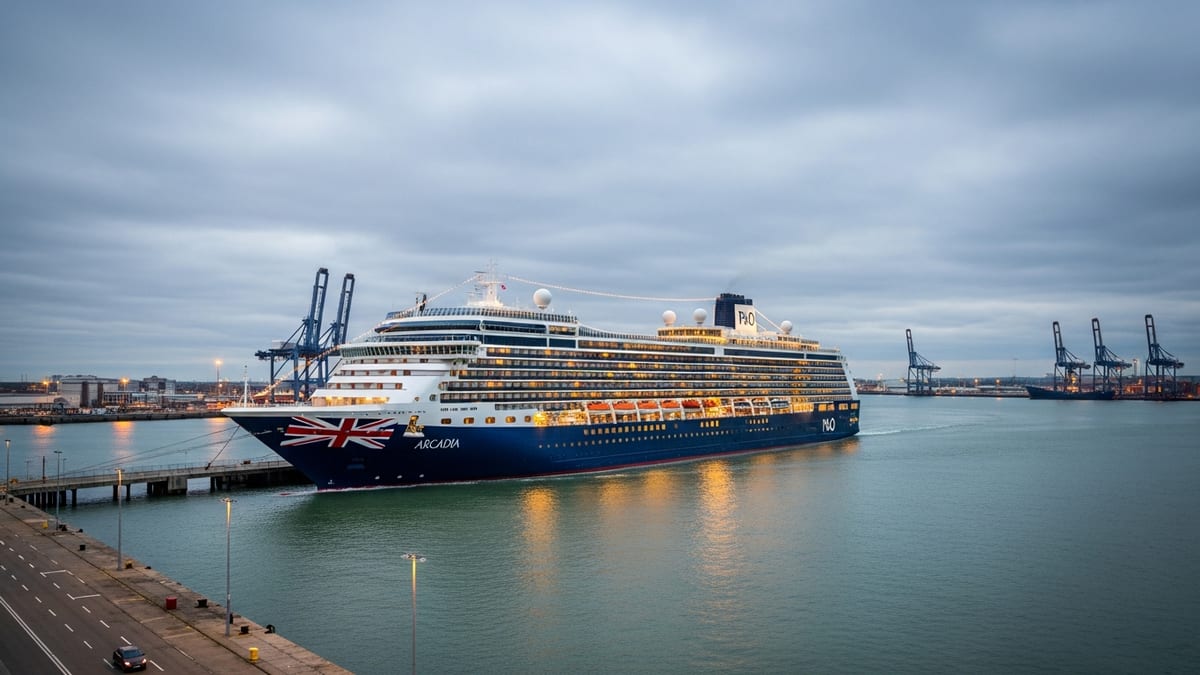
Hormuz Restrictions Add Fresh Pressure to an Already Strained Network
Shipping data and specialist trackers indicate that since late February 2026, commercial traffic through the Strait of Hormuz has collapsed from normal daily flows of dozens of tankers to only a small number of tightly controlled or Iran‑linked vessels. Publicly available situation reports describe the chokepoint as effectively closed to most international shipping, with around one fifth of typical seaborne oil volumes unable to transit as usual.
The sharp reduction in passages has forced crude and liquefied natural gas exporters in the Gulf to consider longer and more expensive alternatives, relying more heavily on existing pipelines across Saudi Arabia and the United Arab Emirates, as well as re‑routing some cargoes around the Arabian Sea toward the Cape of Good Hope. Analysts note that even partial disruptions at Hormuz quickly filter into higher freight and bunker fuel costs, amplifying the price effect across global shipping.
Insurance has emerged as a critical stress point. Market commentary suggests war‑risk premiums for any voyages approaching the Gulf of Oman have surged since the onset of the crisis, adding significant costs per transit. Some shipowners have responded by refusing fixtures that traverse Hormuz altogether, tightening capacity for routes that once depended on the passage as a predictable corridor for energy exports to Asia and Europe.
Red Sea Risks Continue to Divert Vessels From Suez and Egypt
Even before the latest Hormuz crisis, the Red Sea had become one of the world’s most volatile shipping lanes due to a sustained campaign of missile and drone attacks by Yemen’s Houthi movement. Research by maritime security and academic institutions tracking activity since late 2023 shows a marked decline in container and tanker traffic through the southern Red Sea and the Bab el Mandeb Strait, as major carriers diverted fleets away from the danger zone.
By early 2024, organizations monitoring global trade estimated that thousands of ships had opted to bypass the Suez Canal, choosing instead to sail around the Cape of Good Hope at the southern tip of Africa. Case studies of traffic through the Gulf of Aden and the canal indicate that container and liquefied petroleum gas volumes were especially affected, reflecting the risk calculus of operators whose cargoes are highly time‑sensitive and vulnerable to disruption.
Egypt, as the steward of the Suez Canal, has been particularly exposed to these shifts. Public data on canal revenues and transits point to a notable fall in high‑value container traffic during peaks of the Red Sea crisis, partially offset by bulk carriers and tankers that continued to use the route. With Hormuz now under severe constraint, Egypt finds itself in a dual role: contending with reduced flows through its own waterway while simultaneously trying to position Suez as the safer alternative whenever Red Sea risks temporarily abate.
Cape of Good Hope Diversions Elevate South Africa and Indian Ocean Hubs
As security concerns mounted in the Red Sea, diversion around the Cape of Good Hope evolved from an emergency measure into a semi‑regular feature of global routing. Industry assessments suggest that sailing via the Cape can add roughly two weeks to a typical Asia–Europe round trip, depending on speed and port calls, with a corresponding jump in fuel consumption and charter rates.
South Africa has consequently moved closer to the center of long‑haul logistics. Publicly available port statistics and operator statements show increased calls at hubs such as Durban and Cape Town as shipping lines stitched together new service patterns for diverted loops. At the same time, agencies tracking piracy and maritime crime have warned that greater traffic off the southern and eastern African coasts requires renewed investment in navigation safety and security patrols.
Along the broader Indian Ocean arc, states like Oman, India, the United Arab Emirates and Singapore have also gained prominence. Omani ports at the mouth of the Gulf, Indian terminals on the west coast, and Singapore’s vast transshipment complex have all seen their strategic value reinforced as alternative refueling, repair and consolidation nodes for fleets skirting both Hormuz and the Red Sea. According to logistics consultants, these facilities now serve as key pivots for redesigned services linking Asia, the Middle East and Europe via longer ocean legs.
Egypt Joins a Growing Club of Strategic Maritime States
The convergence of crises along the main energy and container corridors has effectively created a ring of strategic maritime states stretching from the Mediterranean and Red Sea through the Gulf and across the Indian Ocean to Southeast Asia. Egypt, Saudi Arabia, the United Arab Emirates, Oman, India, Greece, South Africa and Singapore each occupy critical junctions in this emerging map of alternative routes, storage options and contingency ports.
Egypt’s accession to broader economic groupings focused on the Global South, including the BRICS framework, has been closely watched by analysts assessing how new trade and finance alignments might intersect with shifting shipping patterns. Research on Egypt’s participation in these blocs notes that deeper links with major emerging economies could support investment in canal‑adjacent logistics zones, bunkering and port infrastructure aimed at capturing value as vessels reroute.
Greece, home to one of the world’s largest shipping fleets, plays a different but complementary role. Greek‑owned tankers and bulk carriers are heavily present on the long detours around Africa and across the Indian Ocean. Incidents such as attacks on Greek‑linked vessels in the Red Sea have highlighted both the sector’s exposure to security shocks and its importance in maintaining the flow of commodities even as routes shift away from the traditional chokepoints.
Costs, Schedules and Climate Goals All Feel the Impact
The combined effect of Hormuz restrictions, Red Sea insecurity and Cape diversions is feeding directly into freight markets and supply chains. Shipping analysts cited by financial and trade publications report higher spot rates for container and tanker voyages on Asia–Europe and Middle East–Asia lanes, with emergency surcharges and congestion fees becoming common contract features since late 2023. Some assessments suggest that prolonged disruption could add measurable pressure to global goods inflation.
Shippers are grappling not only with higher costs but also with schedule reliability. Longer routes mean vessels and containers are tied up at sea for additional days, reducing effective capacity. Logistics intelligence platforms tracking schedule adherence have repeatedly flagged delays and bunching at key transshipment hubs as carriers juggle vessel rotations, maintenance windows and crew changes within a far more volatile operating environment.
The climate implications are also drawing scrutiny. Detours around Africa increase voyage distances and fuel burn, complicating efforts by shipping lines to meet sectoral decarbonization targets. Some carriers have experimented with speed optimization and alternative fuels on diverted services, but industry experts caution that persistent avoidance of the shortest routes between Asia and Europe will inevitably raise total emissions, at least in the near term.
For Egypt and its counterparts around the Indian Ocean and Mediterranean, the shifting network brings both opportunity and risk. Investment in ports, canals and maritime services could yield long‑term gains if trade continues to reorient, yet the underlying drivers remain volatile conflicts and security crises. As the situation in the Strait of Hormuz and the Red Sea evolves, these states will remain at the forefront of efforts to stabilize one of the world’s most critical systems: the safe and predictable movement of ships at sea.