


More news on this day
Cyprus has joined Malta, Ireland, Greek islands and other emblematic European destinations in a new policy push, as the European Commission rolls out its first dedicated strategies for islands and coastal communities aimed at strengthening tourism connectivity, affordable housing, maritime transport, climate resilience and blue economy growth.
Get the latest news straight to your inbox!
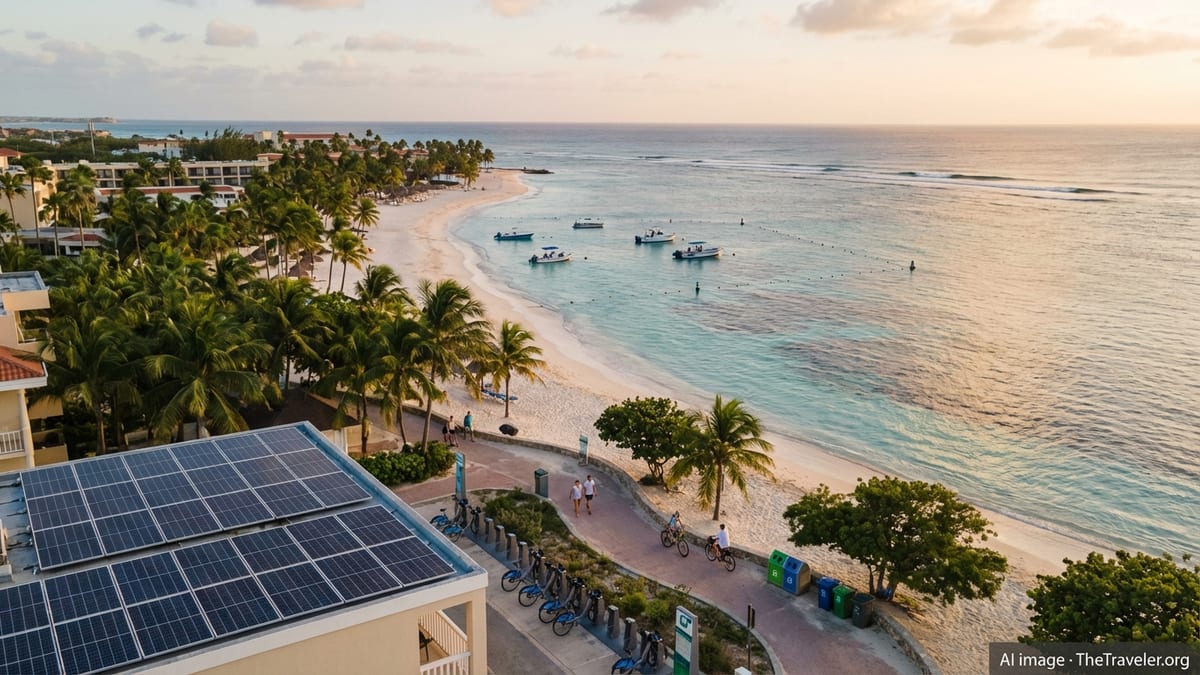
A First for EU Islands and Coastal Communities
Published information from the European Commission shows that the twin strategies, released in June 2026, are the first EU-wide frameworks designed specifically for islands and coastal communities, home to an estimated 17 million island residents and around 95 million people along Europe’s coastlines. The move follows commitments made under the European Ocean Pact and growing concern over overtourism, climate pressure and housing shortages in popular seaside destinations.
The island strategy focuses on territories such as Cyprus, Malta, Ireland’s offshore islands and Greece’s Aegean and Ionian archipelagos, which combine heavy tourism dependence with geographic isolation and high transport costs. The coastal strategy extends the lens to mainland shorelines from the Atlantic to the Baltic and Mediterranean, where resort towns, port cities and fishing villages face mounting environmental and social strain.
Reports indicate that both strategies emphasise a coordinated approach rather than new standalone funding streams. The aim is to align existing EU instruments, from cohesion policy to research funding and investment platforms, so that transport links, housing, energy and climate adaptation in insular and coastal regions are addressed in a more integrated way.
Policy documents highlight four broad pillars for islands and complementary priorities for coastal zones: economic competitiveness and innovation, improved connectivity, environmental protection and climate resilience, and stronger local communities and security. Tourism, maritime transport and the blue economy run through each pillar as cross-cutting themes.
Tourism Connectivity and Maritime Links in Focus
For travel and tourism, the new strategies place transport connectivity at the centre of future development. Publicly available plans point to the need for more reliable, year round and affordable air, sea and, where possible, rail connections so that islands and coastal areas are not cut off outside the peak summer season.
The Commission’s blue economy and ports initiatives are referenced as key levers to strengthen maritime links, including ferry networks that serve remote islands and coastal hubs. Policy texts highlight the role of ports as gateways not only for cargo and cruise traffic but also for passenger ferries that local communities rely on for work, education and healthcare, particularly in archipelagos such as Greece and island states such as Cyprus and Malta.
In tourism terms, better connectivity is framed as a way to spread visitor flows more evenly across the year and across destinations. According to recent European tourism guidance, more balanced regional development and diversified transport options are seen as tools to reduce pressure on a handful of iconic hotspots while supporting lesser known islands and coastal towns that struggle to attract investment.
Digital connectivity is also singled out as a priority. The island strategy underlines that high speed broadband and mobile coverage are essential for travel businesses, from small guesthouses to tour operators, and for attracting remote workers and start ups that can complement traditional tourism and maritime sectors.
Affordable Housing and Community Wellbeing in Tourist Hotspots
Housing affordability emerges as one of the most sensitive issues in the new framework, especially in destinations where short term rentals and second homes have outpaced the capacity of local residents to find long term accommodation. Strategy documents and related commentary describe housing pressures as a direct consequence of tourism growth and limited land availability on islands and in compact coastal resorts.
The Commission links the islands and coastal strategies to a forthcoming Pan European Investment Platform for affordable and sustainable housing, to be developed with the European Investment Bank. The intention, according to published material, is to mobilise additional funding for social and affordable housing projects, with island and coastal communities identified among the priority beneficiaries.
Local authorities in Mediterranean destinations such as Cyprus, Malta and Greek islands are expected to be able to tap a broader mix of EU tools to expand housing supply, renovate older building stock and promote energy efficient dwellings. The strategies frame this as vital not only for residents but also for the tourism workforce, which has been hit by labour shortages partly linked to the lack of reasonably priced housing near major resorts.
Beyond bricks and mortar, the islands strategy calls for improved access to public services, education, healthcare and cultural facilities so that communities remain liveable throughout the year. The goal is to counter demographic decline and seasonality by making it more attractive for young people and families to stay, even as tourism and the blue economy continue to evolve.
Climate Resilience and Greener Blue Economy Growth
Climate resilience and environmental protection are core elements of both strategies, reflecting the exposure of islands and coastal regions to sea level rise, coastal erosion, storms and marine pollution. Policy texts indicate that risk assessments, investment mapping and local capacity building will be stepped up to support adaptation projects ranging from protective infrastructure to nature based solutions such as dune and wetland restoration.
The initiatives are closely linked to wider EU climate and research programmes, including Horizon Europe funding for marine and coastal innovation. Recent Commission communications outline support for projects that restore marine ecosystems, regenerate underwater forests and develop new methods to protect coastal heritage sites at risk from erosion and extreme weather events.
On the economic side, the strategies seek to move beyond a narrow focus on seasonal tourism by nurturing a more diversified and sustainable blue economy. Fisheries, aquaculture, coastal tourism, maritime transport and emerging sectors such as offshore renewable energy and blue bioeconomy clusters are all highlighted as areas where islands and coastal communities can create high quality jobs.
Specific ideas cited in the published material include dual use of fishing vessels for tourism activities such as pescatourism, development of certification schemes for blue carbon credits linked to seagrass and wetland restoration, and support for small businesses that combine hospitality, cultural heritage and marine conservation. The overarching objective is to maintain tourism revenues while reducing environmental impacts and increasing local value added.
What It Means for Cyprus, Malta, Ireland and Greek Islands
For Cyprus, the new islands strategy represents a broad policy umbrella that brings together issues that have long shaped the country’s tourism reliant economy. The island’s dependence on air links, its role as a regional maritime hub in the Eastern Mediterranean and its vulnerability to heatwaves and water scarcity are all cited in supporting analyses as typical of the challenges the EU now wants to address in a more systematic way.
Malta and the Greek islands, from Crete to the Cyclades, are in a similar position, with dense tourism seasons, constrained land and infrastructure, and growing tension between visitor numbers and local quality of life. The strategies suggest that these destinations will be encouraged to shift further toward sustainable tourism models, with emphasis on energy efficient hotels, better waste and water management, and measures to protect maritime and coastal heritage.
For Ireland’s island communities, scattered along an Atlantic coastline facing strong climate impacts, the focus is likely to fall on connectivity, digital inclusion and support for diversified livelihoods that mix tourism, cultural industries and marine activities. The coastal strategy also has implications for Ireland’s mainland coastal towns, which form part of Europe’s wider Atlantic and North Sea blue economy corridors.
Across all these destinations, the Commission’s move is described in policy and analytical documents as a starting point rather than a final blueprint. Implementation will depend on how national and regional governments, together with local stakeholders and tourism and maritime industries, use the strategies to shape investment priorities in the years ahead.