


More news on this day
Emergency crews and rail personnel are continuing cleanup and assessment after a multi-car freight train derailment near the Laurens and Greenwood county line in South Carolina, according to regional news coverage and public safety updates.
Get the latest news straight to your inbox!
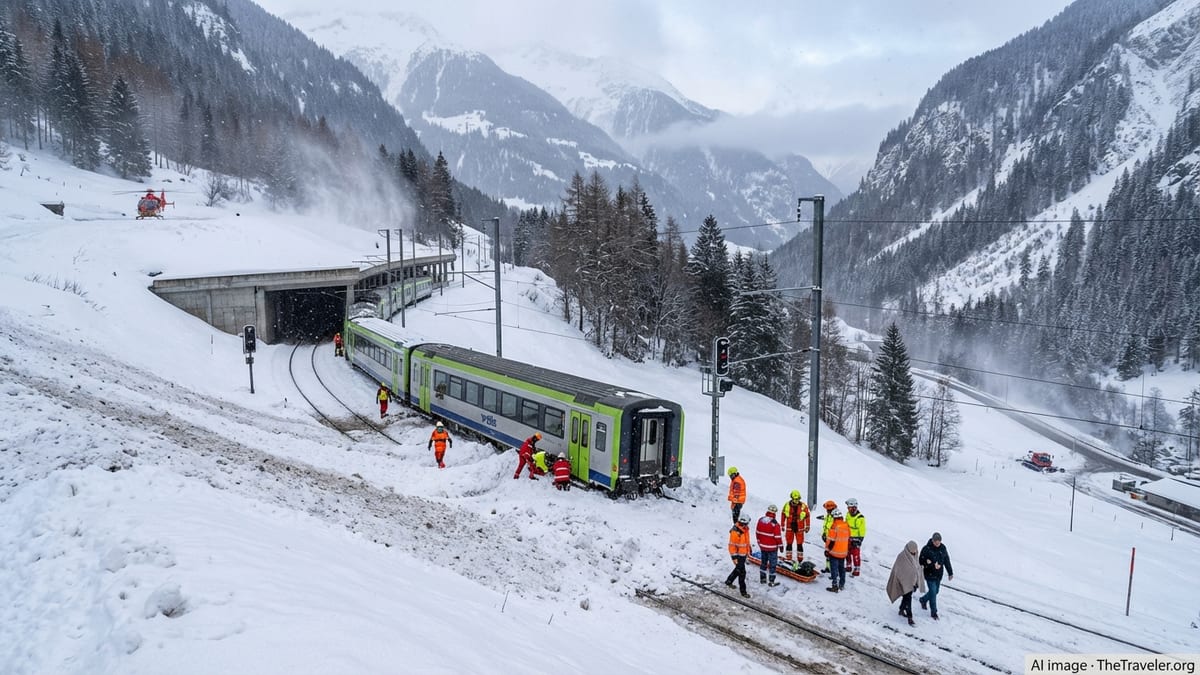
Derailment near county line prompts major emergency response
Regional outlets report that the incident involved roughly a dozen or more freight cars leaving the tracks near the border between Laurens and Greenwood counties. Early accounts from the scene describe a significant emergency response as fire, medical and hazmat teams converged on the rural rail corridor in the hours after the crash.
Images and video from the scene show multiple railcars off the tracks, some leaning or overturned, in an area bordered by wooded land and open fields. The location, away from dense neighborhoods, is being cited in coverage as a factor that limited broader disruption to homes and businesses but complicated vehicle access for heavy recovery equipment.
Publicly available information indicates that rail traffic through the area was halted while inspectors worked to assess damage to the line, adjacent ground and nearby crossings. The rail operator has not yet released a detailed public breakdown of the consist, but reports emphasize that the crash involved a freight train with numerous cars rather than a short local train.
Initial reports do not identify any fatalities associated with the derailment, though at least one person was evaluated for injuries. Emergency managers in the region have stressed through local coverage that conditions at the site are being monitored as cleanup progresses.
Investigation focuses on cause and track conditions
Published coverage indicates that the South Carolina Highway Patrol and rail safety teams launched an investigation shortly after word of the derailment emerged. Standard procedures in comparable incidents typically include a review of train speed data, signal records, crew statements and recent track inspection logs for the affected segment.
Rail safety specialists generally examine wheel marks, track damage and the pattern of overturned cars to determine the likely point where the first car left the rails. Investigators are expected to look at recent weather patterns, freight loading and any prior maintenance activity in the area to establish whether mechanical failure, infrastructure issues or operational factors may have contributed.
South Carolina has seen an active freight network across the Upstate, and previous federal reviews of derailments in the region have often highlighted the importance of regular track inspections and slow orders in problem areas. Although no final determination has been released in this case, observers will be watching for any recommendations that emerge once findings are made public.
Until official summaries are published, information about the cause of the crash is limited to general descriptions of the damage pattern. Rail industry analysts note that derailments involving multiple cars can result from a single failure point, such as a broken rail or equipment defect, that cascades quickly down the train’s length.
Environmental monitoring and freight cargo checks underway
Local reports indicate that hazmat crews were dispatched as a precaution, a standard practice whenever several freight cars leave the tracks. Initial on-scene accounts suggest that the derailed cars did not involve an immediate large-scale hazardous material release, but specialists have continued to survey soil, drainage ditches and nearby waterways for any signs of leakage.
According to publicly available emergency management guidance, rail companies are required to provide detailed cargo manifests so that responders can identify which cars, if any, carry chemicals, fuels or other regulated materials. That information helps determine the radius of any safety perimeter and whether nearby residents or road users need to be notified.
In this case, there have been no broad evacuation notices reported by regional outlets, suggesting that the risk to surrounding communities has remained localized at the crash site. Nevertheless, environmental monitoring typically continues for days as cleanup crews upright cars, remove damaged equipment and begin track repairs.
Freight movement through the area is expected to remain restricted until debris is cleared and engineers certify that the rail bed and structures meet operating standards. Temporary storage of damaged cars and leftover cargo, often in nearby yards, can extend the visible footprint of the incident beyond the immediate derailment location.
Travel and traffic impacts for nearby communities
The derailment occurred in a part of Laurens and Greenwood counties where road and rail lines intersect in several rural corridors. Publicly available traffic information indicates that at least some local roads and rail crossings near the scene have experienced intermittent closures while heavy equipment and emergency vehicles operate in the area.
For residents and travelers, the primary impact has been localized detours and delays, particularly for drivers who rely on secondary roads to move between communities near the county line. Regional coverage notes that motorists are being encouraged to allow extra travel time and follow detour signage while crews continue to work close to the tracks.
Although major interstate routes remain open, the crash underscores how a rail incident in a rural part of South Carolina can still ripple through everyday travel patterns. School transportation, local delivery services and commuters who rely on back roads often face longer alternate routes until crossings fully reopen.
Travel-industry observers point out that the incident may also affect freight schedules serving nearby towns, at least in the short term. Delays in rail shipments can push additional truck traffic onto regional highways as shippers seek alternate routes, adding another layer of potential congestion for drivers.
Derailment renews focus on rail safety in South Carolina
The multi-car derailment near the Laurens-Greenwood line is adding to an ongoing conversation about rail safety across South Carolina. Earlier incidents in other parts of the state, including crashes at road crossings and smaller derailments, have previously brought attention to infrastructure investment and safety measures along busy freight corridors.
Publicly available statistics from state transportation and public safety agencies show that South Carolina experiences a steady volume of roadway and rail-related incidents each year, reflecting the state’s role as a freight and logistics hub. The latest derailment is likely to feature in future discussions over funding priorities for track upgrades, crossing protections and emergency-response training.
Community advocates in several Upstate counties have previously raised questions about train speeds through rural areas, blocked crossings and the proximity of freight lines to residential neighborhoods. While the Laurens-Greenwood derailment occurred away from dense housing, it highlights the potential consequences when long freight trains encounter problems in less accessible terrain.
As investigators work toward a formal report, local residents and travelers are watching for updates on when full rail service will resume and whether any new safety recommendations will emerge. For now, cleanup and inspections continue, with the corridor serving as a visible reminder of the importance of resilient rail infrastructure in a region that depends heavily on both road and rail connections.