


More news on this day
Emirates is aligning with a growing roster of Middle Eastern and European airlines that are reshaping routes, cancelling services and rolling out traveller support measures in response to the escalating Iran conflict, putting safety and flexibility ahead of aggressive fare competition.
Get the latest news straight to your inbox!
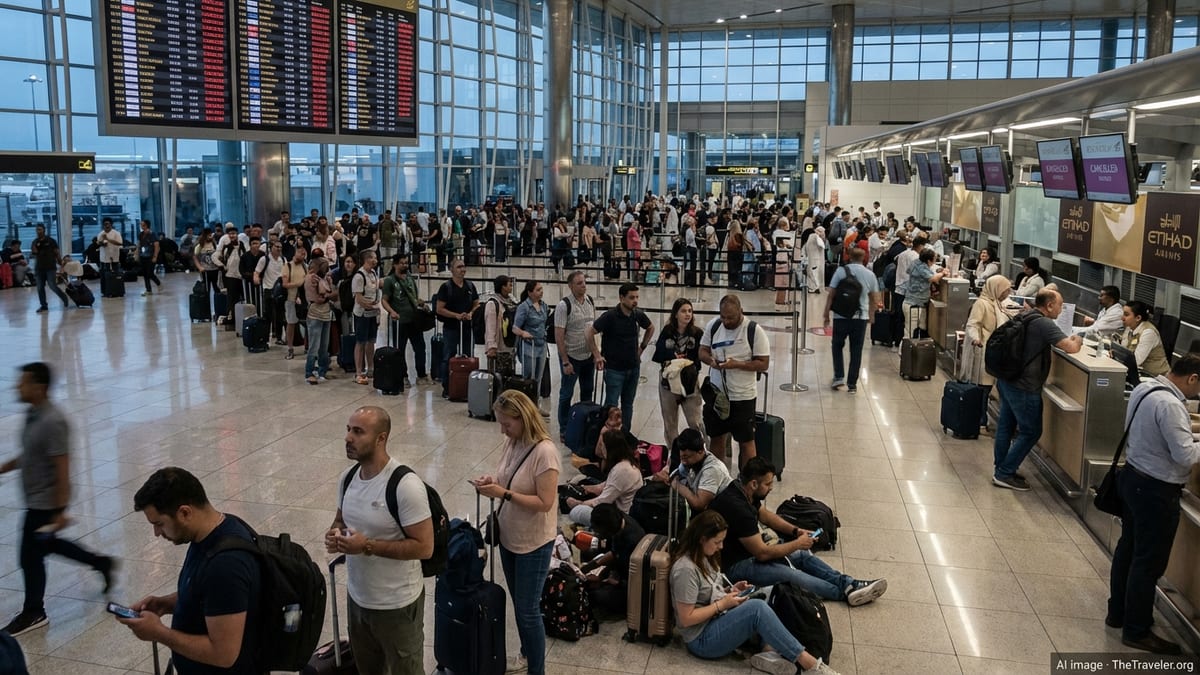
Airlines Redraw Routes As Iran Conflict Reshapes Skies
The latest phase of the Iran conflict has triggered swift and coordinated reactions from airlines spanning the Gulf and Europe. Publicly available flight-tracking data and industry coverage indicate that carriers including Emirates, Qatar Airways, Etihad Airways, flydubai, SWISS, Brussels Airlines and Air France have all adjusted operations in recent months to limit exposure to Iranian and nearby airspace, particularly during peak periods of military activity.
Reports from aviation intelligence groups show that the air corridors linking Europe and Asia have been repeatedly reshaped as operators divert flights south over Saudi Arabia and Egypt or push further north to avoid Iranian, Iraqi, Jordanian and Israeli skies when tensions spike. Reroutings have added flight time and fuel burn, but airlines have largely absorbed these costs rather than incentivising demand through price cuts on higher-risk routings.
According to industry summaries, some carriers temporarily suspended flights to destinations such as Tel Aviv, Amman and regional hubs in the immediate aftermath of major drone and missile exchanges, while others continued limited services using revised routings. The pattern underscores a broad sector preference for network resilience and safety-driven scheduling over short-term revenue maximisation.
Emirates, based in Dubai, has been part of this shift, selectively cancelling or delaying departures on days when regional airspace has been closed or closely managed, while simultaneously rerouting long-haul services that would normally cross Iranian territory.
Emirates Emphasises Rerouting, Not Discounting
Coverage from Gulf-based business and aviation outlets shows that Emirates’ response has centred on tactical cancellations and reroutings rather than fare-led campaigns. When airspace closures over Israel, Jordan and Iraq followed major Iranian strikes, the airline diverted Europe and North America services onto longer tracks and cancelled some regional flights, advising passengers to monitor status updates through official channels and airline apps.
Industry analyses note that such rerouting can increase block times, crew costs and fuel consumption, narrowing margins on already competitive long-haul routes. Despite this, Emirates has not paired the operational upheaval with headline-grabbing fare sales on affected corridors. Instead, the focus has remained on communicating schedule changes and maintaining confidence in safety standards.
In parallel, the airline has continued to restore or expand services on routes deemed operationally stable, highlighting a dual-track strategy that separates long-term network planning from short-term geopolitical turbulence. This approach mirrors moves by other Gulf carriers, which have reintroduced suspended services in some markets while remaining cautious around conflict-adjacent airspace.
By prioritising route design and operational control over pricing as its main levers, Emirates is positioning itself alongside peers that frame safety and predictability as their primary value propositions during periods of heightened regional risk.
Gulf Carriers Present a United Safety-First Posture
Across the wider Gulf, Qatar Airways, Etihad Airways and flydubai have adopted similar stances. Public statements and schedule notices compiled by regional media show that these airlines cancelled or rescheduled flights touching Iranian, Iraqi, Israeli and Jordanian airspace at key flashpoints in the conflict, often announcing resumptions only once restrictions eased and alternative routings were confirmed.
Etihad has underscored that it continually monitors security and airspace developments and will not operate flights unless they are assessed as safe, reflecting a policy echoed in varying terms by other carriers in the region. Flydubai has acknowledged cancelling services to several destinations on days when “a number of airspaces” were closed, while keeping customers updated on rolling schedule changes.
Qatar Airways, which operates an extensive network across the Middle East and beyond, has also temporarily scaled back or reconfigured services at moments of acute tension, then progressively restored flights as regional authorities reopened airspace. Collectively, these steps indicate a shared willingness among Gulf carriers to absorb operational and commercial disruption as the price of maintaining a conservative safety posture.
The preference for tightened safety protocols and operational agility, rather than fare-driven demand stimulation, suggests that these airlines see reputational and regulatory risk as far outweighing any potential short-term gains from aggressive pricing in a volatile security environment.
European Airlines Join in Reroutes and Suspensions
European carriers have been deeply entangled in the same airspace disruptions, as many of their long-haul services transit the Middle East on routes between Europe and Asia. Coverage from European financial and travel media indicates that SWISS, Brussels Airlines and Air France, along with other major operators, have cancelled or diverted flights in response to both Iranian and Israeli military actions.
Reports show that SWISS suspended at least one flight to Iran and rerouted other services away from Iranian airspace at pivotal moments, while Brussels Airlines and partner carriers adjusted Tel Aviv operations during the most intense phases of the conflict. Air France and its group partners have periodically halted flights to Israel and changed routings for services that would normally rely on airways near conflict zones.
These measures frequently translated into extended journey times for passengers travelling between European hubs and cities in Asia or the Indian subcontinent. Instead of offsetting the inconvenience with promotional fares, airlines concentrated on strengthening customer communication, expanding rebooking options and, where required by regulation, offering refunds or vouchers.
By moving in parallel with Gulf carriers on safety and support measures, European airlines have helped normalise a sector-wide expectation that flights in and around the Middle East may be longer or more circuitous as long as security conditions remain unstable.
Customer Support and Flexibility Take Centre Stage
As reroutings and cancellations accumulate, airlines have increasingly framed customer support as the key differentiator. Public advisories urge travellers to check flight status frequently, sign up for alerts and allow additional time for connections through major hubs such as Dubai, Abu Dhabi and Doha.
Travel reports describe carriers offering free-of-charge date or routing changes on affected tickets during defined disruption windows, along with refund eligibility where flights are cancelled outright. Some airlines have temporarily relaxed no-show penalties and change fees to accommodate travellers who prefer to postpone trips near conflict zones.
The emphasis on flexibility reflects a recognition that passenger anxiety can be as disruptive as the operational challenges themselves. By foregrounding safety assessments, alternate routings and clear pathways for itinerary changes, airlines aim to reassure customers that decisions are being guided by risk management rather than seat-filling tactics.
For Emirates and its peers in the Gulf and Europe, the evolving Iran conflict has become a stress test of crisis playbooks developed over years of regional volatility. The industry’s collective tilt toward safety-first incentives and robust customer support, rather than price-led campaigns, suggests that protecting traveller confidence now sits at the core of competitive strategy in one of the world’s most geopolitically sensitive air corridors.