


More news on this day
Travelers across Europe, Russia, Türkiye, the United States and other regions faced widespread disruption this week as KLM, British Airways, Aeroflot and Pegasus collectively cancelled dozens of flights and delayed more than a hundred services, snarling schedules at key hubs from Amsterdam and London to Moscow.
Get the latest news straight to your inbox!
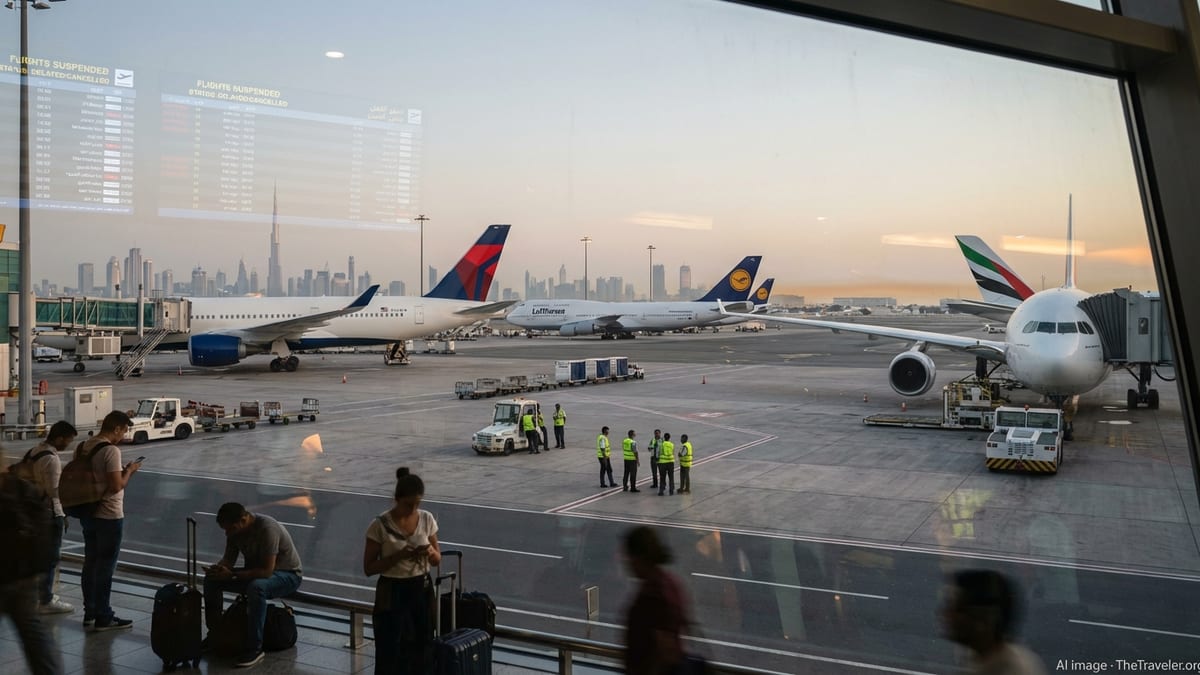
Wave of Cancellations and Delays Across Multiple Carriers
Publicly available operational data from flight-tracking and passenger-rights platforms indicates that at least 39 flights operated by KLM, British Airways, Aeroflot and Pegasus were cancelled within a short time window, while around 126 additional services faced significant delays. The disruptions were concentrated at major hubs including Amsterdam Schiphol, London Heathrow and Gatwick, and Moscow airports, but knock-on effects were reported at destinations across Europe, North America and the Middle East.
The pattern mirrors a broader spike in irregular operations reported in early June, when monitoring services recorded hundreds of delayed and cancelled flights at Amsterdam and London alone. In Amsterdam, recent tallies have shown more than 250 delayed flights and over 20 cancellations in a single day, with KLM among the most affected carriers. At London’s main airports, similar snapshots documented hundreds of delays and a smaller but still disruptive number of grounded services on busy travel days.
Although precise causes varied by flight and carrier, analysts tracking operations point to a mix of factors including aircraft and crew rotation challenges, local weather constraints, slot and air traffic control limitations and residual schedule tightness following earlier capacity reductions. As individual flights slip behind schedule, aircraft and crews can quickly fall out of position, forcing airlines to consolidate services or cancel rotations outright.
The combined impact for travelers was immediate. Passengers connecting through hubs such as Amsterdam and London reported missed onward flights to North America, the Gulf and key leisure destinations, while point-to-point travelers faced prolonged waits, overnight stays and last-minute reroutings through alternative hubs.
Amsterdam and London Emerge as Key Pressure Points
Flight disruption tracking for early June highlights Amsterdam Schiphol and London’s main airports as particular flashpoints. At Schiphol, recent data show more than 250 delayed flights and over 20 cancellations in a single day, with KLM featuring prominently due to its heavy reliance on the Dutch hub for European and intercontinental connections. Even modest delays on short European legs have been reported to cascade into missed long-haul departures to North America, Africa and Asia.
London Heathrow and Gatwick have experienced similar strain. Passenger-rights services report more than 300 delayed flights and a dozen or so cancellations in a recent 24-hour period at the two airports combined, affecting a wide mix of domestic, European and long-haul services. British Airways has been among the carriers cited in coverage of those disruptions, alongside other major international airlines operating dense schedules into the London system.
Industry observers note that the hub-and-spoke models used at Amsterdam and Heathrow amplify the effect of each cancellation. When an inbound flight arrives late or cannot operate, connecting travelers may miss banks of tightly scheduled onward services. Airlines then face limited options to re-accommodate large numbers of passengers, particularly on peak travel days when remaining seats are scarce.
Reports also indicate that congestion at security, baggage handling and de-icing facilities during earlier weather events this year has led airlines to adopt more conservative operational strategies. These measures can include pre-emptive cancellations and tighter load management in an effort to avoid complete gridlock, but they can also mean more travelers see their flights removed from the schedule at short notice.
Impact Spreads to Russia, Türkiye, the United States and Beyond
While Amsterdam and London attracted much of the early attention, data from flight-status platforms show that knock-on effects reached far beyond northwest Europe. Aeroflot services at Moscow, for example, experienced new disruptions against a backdrop of a network that has previously been challenged by sanctions, earlier cyber incidents and constrained fleet deployment. Cancellations and delays on domestic and regional routes can ripple through the carrier’s tight bank structure at Sheremetyevo and other airports.
Türkiye’s Pegasus Airlines has also featured in recent delay statistics, particularly on routes linking Istanbul with major regional capitals such as Moscow. Historical performance information for these city pairs shows that significant average delays are not uncommon, and a fresh round of operational challenges has once again put pressure on tight turnarounds. As services run late, aircraft scheduled for subsequent departures can quickly accumulate further delay or be reassigned, leading to cancellations when the timetable can no longer be recovered.
Transatlantic and other long-haul routes involving the United States have not been immune. Disruptions originating in European hubs have translated into late arrivals and schedule reshuffling at major U.S. gateways, where carriers typically operate complex webs of domestic connections. Travelers bound for or departing from cities such as New York, Atlanta and others may experience delays even when local conditions appear normal, simply because their aircraft or crew have been held up elsewhere in the network.
In Switzerland and other European markets, regional airports saw secondary effects as feeder flights operated by or on behalf of the affected carriers arrived late or were trimmed from the schedule. For travelers relying on timed connections to rail or onward flights, these irregularities have created additional uncertainty and forced last-minute changes to carefully planned itineraries.
Airlines Activate Rebooking and Compensation Policies
In response to the spike in disruptions, carriers involved have been relying on their standard rebooking, voucher and refund frameworks. Publicly available guidance from KLM, for example, outlines options for travelers whose flights are cancelled or significantly delayed, including the ability to rebook on alternative dates, request travel vouchers valid for future trips, or claim refunds in certain circumstances.
European and United Kingdom passenger-rights rules provide an additional layer of protection for many affected travelers. Under these regimes, passengers may be entitled to care such as meals and accommodation during extended waits, as well as monetary compensation if a cancellation or long delay is not caused by circumstances deemed extraordinary. Passenger-advocacy firms have already highlighted these rights in connection with the latest disruptions at Amsterdam and London, encouraging travelers to document their itineraries and keep receipts for extra expenses.
British Airways, Aeroflot and Pegasus each publish their own irregular-operations policies, typically allowing rebooking on the next available flight, refunds where services are not provided, and in some cases rerouting through partner hubs. However, observers note that the sheer volume of disrupted passengers can strain call centers, airport help desks and digital self-service channels, slowing down the process of finding alternative travel solutions.
Travel forums and social media posts suggest that some passengers have opted to arrange their own alternative journeys, including rail or bus segments, when faced with multi-day waits for replacement flights. Passenger-rights advisers often caution travelers to review airline conditions of carriage and local regulations before incurring significant additional costs, as reimbursement is not guaranteed in every scenario.
What Travelers Can Expect in the Coming Days
Operational data and recent patterns suggest that residual disruption could continue as airlines work to reposition aircraft and crews and gradually return schedules to normal. Even after the initial wave of cancellations and delays passes, rotations later in the week can remain vulnerable if aircraft are out of place or maintenance windows have been compressed.
Travel specialists recommend that passengers traveling through Amsterdam, London, Moscow, Istanbul and major U.S. gateways in the near term monitor their flight status regularly through official airline channels and flight-tracking tools. Early awareness of a schedule change can increase the chances of securing a more favorable rerouting or alternative departure date, particularly on heavily booked routes.
Reports from previous disruption events at these hubs underline the importance of allowing ample connection times, especially when traveling on separate tickets or mixing carriers. With schedules still under pressure from staffing, maintenance and airspace constraints, tight connections that might have been manageable in more stable periods now carry a higher risk of misconnection.
For now, the joint impact of cancellations and delays at KLM, British Airways, Aeroflot and Pegasus underscores how quickly localized operational issues can spread across global networks. With summer travel demand building, industry observers will be watching closely to see whether carriers can add resilience to their schedules or whether travelers should prepare for further bouts of turbulence at key hubs worldwide.