


More news on this day
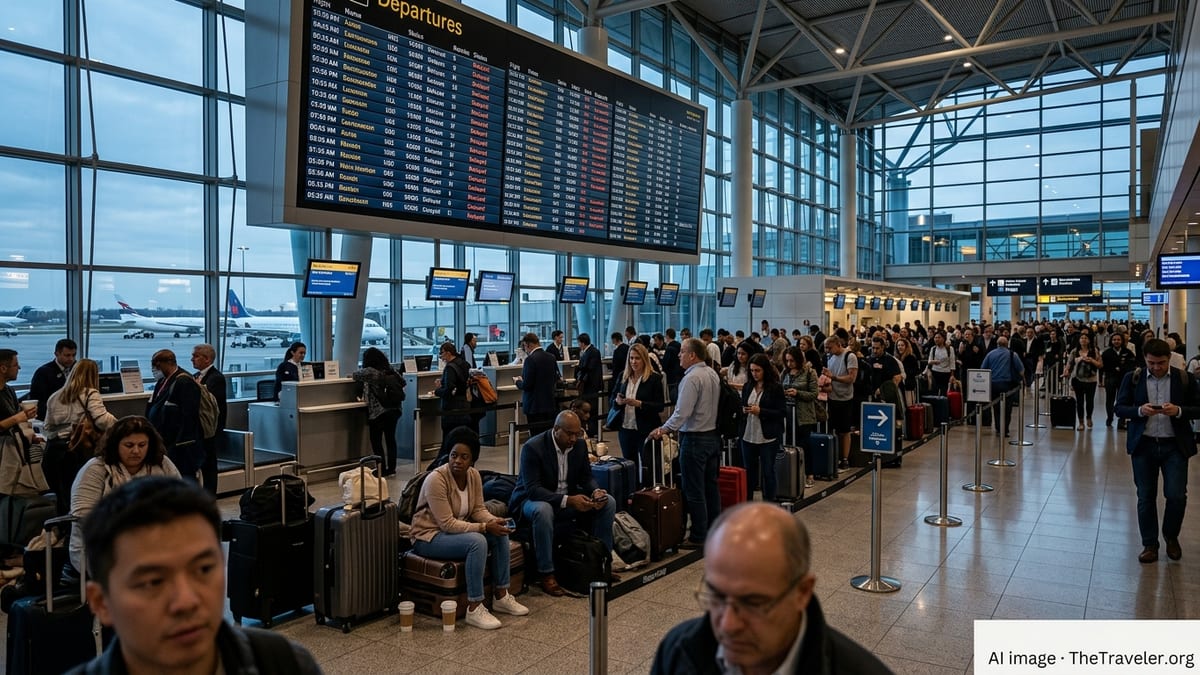
Travelers at Erbil International Airport faced long waits and disrupted plans on July 20 as a cluster of cancellations and delays on regional routes left passengers stranded on connections to Türkiye, Jordan and the United Arab Emirates.
Get the latest news straight to your inbox!
Patchwork of Cancellations Across Regional Carriers
Publicly available flight data and local reporting indicate that at least 10 departures and arrivals touching Erbil and onward connections in Iraq, Türkiye, Jordan and the United Arab Emirates were scrubbed or heavily disrupted over the weekend and into Monday, with a further nine services delayed. Most of the affected flights involved connections between Erbil and major regional hubs such as Istanbul, Amman and Dubai, amplifying the impact for travelers attempting to continue onward to Europe, North America and Asia.
Recent airline notices and schedule changes show that Turkish Airlines, Pegasus, AnadoluJet and Royal Jordanian have all implemented targeted cancellations involving Erbil and other Iraqi airports in response to the broader regional security and airspace situation. In some cases, services linking Erbil with Istanbul or Amman were removed from schedules for specific days, while other days continued to operate, creating an unpredictable pattern that has made it difficult for travelers to plan or rebook itineraries with confidence.
While only a fraction of Erbil’s daily movements were directly affected, the knock-on effect has been considerable. Because Istanbul and Amman serve as key connection points for long-haul journeys, the loss or delay of a single sector often forces passengers to rearrange entire multi-leg itineraries, compete for limited rebooking space and, in some instances, arrange overnight stays when missed connections cannot be recovered on the same day.
Some regional carriers had already been operating with constrained schedules following earlier phases of the Middle East crisis. Aegean and several Gulf-based airlines had previously reduced or suspended selected services involving Iraq and nearby markets, which meant that when the latest cluster of cancellations was added, spare capacity for re-routing Erbil passengers via neighboring hubs was already limited.
Erbil Airport Remains Technically Open but Operationally Strained
Despite the disruptions, Erbil International Airport has not been formally closed. Official schedules and statements from airport operators over recent days continue to describe the facility as open, with the majority of flights operating as planned. Local Kurdish media have also stressed that Erbil’s airspace has not been shut, in contrast to earlier periods in 2026 when large parts of regional airspace were briefly closed or restricted following escalations in the Iran war.
The distinction between formal closure and practical disruption has been stark for travelers. With runways and terminal facilities fully available, many domestic flights and some international services have departed on time, giving an appearance of normality. Yet for passengers booked on the handful of Erbil services that have been cut or delayed, the experience has closely resembled that of a full shutdown: hours spent in the terminal waiting for updates, confusion over rebooking rights and uncertainty about when alternative flights might become available.
Airport departure boards on Monday showed a mix of on-time operations alongside pockets of cancelled and delayed flights, particularly on routes connecting to Istanbul and Dubai. Some Iraqi Airways departures to the United Arab Emirates were removed from live schedules, while certain Turkish Airlines services continued to operate, underscoring the uneven nature of the disruption and the influence of airline-specific risk assessments.
Because many travelers in Erbil rely on same-day onward connections via regional hubs, even minor scheduling changes can have outsized consequences. A delay of several hours on an Erbil to Istanbul service can trigger missed evening departures to Europe or North America, leaving passengers with limited accommodation options and added costs unless carriers provide rebooking support or hotel arrangements.
Regional Security Environment and Airspace Constraints
The current wave of disruptions is unfolding against a backdrop of ongoing instability in Middle Eastern airspace. Since the escalation of the Iran war earlier this year, multiple countries, including Iraq, Jordan and the United Arab Emirates, have periodically imposed airspace restrictions, with ripple effects across commercial aviation. Earlier phases of the crisis saw large-scale airspace closures and thousands of daily cancellations across the Gulf and Levant, prompting airlines to redesign routes, add fuel stops or suspend certain connections entirely.
Although Erbil itself has generally remained operational in recent days, sector-wide logistics updates and aviation advisories continue to describe Iraq as a high-risk environment for overflights and schedule planning. Freight and passenger bulletins distributed to corporate clients in June and July cited persistent constraints on capacity into Iraq, Jordan and the UAE, with warnings that short-notice cancellations and extended delays remained likely as security conditions evolved.
These structural pressures have left airlines with little flexibility when new disruptions arise. Carriers that might ordinarily absorb a cancelled Erbil sector by re-routing passengers via nearby cities such as Doha or Kuwait City are in some cases unable to do so because both airspace and airport capacity remain constrained across the region. As a result, even a limited set of cancellations concentrated on a single day can strand passengers at Erbil and other regional airports for extended periods.
Published travel advisories in Gulf media further highlight the fluid nature of the situation, noting that airlines serving the UAE and neighboring markets are still revising schedules on short notice in response to airspace warnings and operational assessments. For travelers connecting through Erbil, this means that both their departure from Iraq and their onward legs through major Gulf hubs can be subject to last-minute change.
Airlines Offer Flexible Policies but Rebooking Proves Difficult
Several major airlines serving Erbil have introduced or extended flexible booking policies for passengers affected by the disruptions. Royal Jordanian has published guidance allowing free-of-charge changes for ticket holders whose itineraries include Erbil and other impacted airports in Iraq and the Gulf, subject to travel within specified validity dates. Turkish Airlines has previously announced waivers covering flights to Iraq, Jordan and the UAE during designated disruption periods, including options for date changes and refunds within defined windows.
In practice, however, stranded passengers have reported that rebooking can be challenging. With fewer flights available on some regional routes and certain destinations still experiencing reduced frequencies, seats on alternative dates or carriers may be scarce. Travelers attempting to preserve long-haul connections via Amman or Dubai sometimes face the choice between advancing their trip by a day, accepting a long layover or paying out of pocket for tickets on non-partner airlines that still operate their desired route.
Another complication is the patchwork nature of airline responses. Some carriers continue to operate to Erbil and neighboring hubs throughout the disruption, while others suspend selected flights for short periods as a precaution. This can create situations in which one leg of a multi-segment ticket is cancelled while other segments remain valid, leaving travelers to navigate differing rules on partial refunds, ticket reissues and additional costs such as hotel stays or ground transport.
Travel forums and social media posts over recent months show that passengers across the region have sometimes struggled to interpret the fine print of waiver policies, especially when cancellations affect only one sector in a longer itinerary. In several reported cases, travelers to and from Iraq and Jordan have described difficulties obtaining compensation or full-trip refunds when airlines classified disruptions as security related rather than operational.
What Travelers Through Erbil Should Do Now
Given the latest pattern of cancellations and delays, publicly available guidance from airlines and aviation analysts suggests that passengers planning to travel through Erbil in the coming days should closely monitor their bookings and build in additional buffer time for connections. Checking flight status repeatedly in the 24 hours before departure and again on the day of travel remains essential, as schedules can change with limited notice.
Travelers are also being advised in open advisories and media coverage to ensure that contact details in their bookings are up to date so that airlines can send automated notifications about schedule changes and rebooking options. Where flexible change policies are in place, early action can improve the chances of securing seats on alternative dates or routes before remaining capacity is taken by other affected passengers.
For those already stranded at Erbil, the most viable options typically involve working through official customer service channels of the operating carrier or, if the ticket was purchased via a third party, the issuing agent. Published airline policies indicate that documented cancellations and significant delays may entitle passengers to date changes, routing changes or partial refunds, depending on the fare type and the jurisdiction under which the ticket was sold.
With the regional security environment still unsettled and airspace restrictions subject to rapid revision, industry observers expect further short-notice adjustments on routes linking Iraq, Türkiye, Jordan and the United Arab Emirates. Travelers transiting Erbil and other regional hubs are therefore likely to face an elevated risk of disruption for some time, even as airports emphasize that they remain open and operational.