


More news on this day
Passengers traveling through Kuwait International Airport this week faced mounting disruption as publicly available flight-tracking data showed 32 delays and 5 cancellations concentrated on key routes linking Kuwait with major hubs across the Middle East.
Get the latest news straight to your inbox!
Regional Tensions and Operational Strains Converge
The latest wave of disruption at Kuwait International Airport comes against a backdrop of ongoing regional tensions and intermittent airspace restrictions that have repeatedly forced airlines to rework timetables. Recent coverage of the wider Gulf aviation sector indicates that carriers operating in and out of Kuwait have been navigating a mix of security-related airspace constraints and routine operational challenges, creating an uneven travel experience for passengers.
Reports from regional news outlets describe how renewed instability in parts of the Middle East has led to periodic suspensions or rerouting of services, particularly on short-haul links between Kuwait and neighboring Gulf states. When airspace conditions tighten, airlines typically respond by consolidating flights, adjusting departure windows or substituting aircraft types, measures that can cascade into delays and isolated cancellations at already busy terminals.
Industry observers note that Kuwait International Airport has been operating under sustained pressure for much of the summer travel period, compounding the impact of any disruption. As airlines run near-capacity schedules to meet holiday demand, even modest schedule changes can quickly translate into longer turnaround times and knock-on delays later in the day.
On the day when 32 delays and 5 cancellations were recorded, the pattern of disruption at Kuwait International Airport aligned with this broader picture, with late departures clustered around peak morning and evening banks and most cancellations affecting services that connect to other congested Middle Eastern hubs.
Major Airlines and Key Gulf Routes Affected
According to aggregated timetable and flight-status information, the disruptions at Kuwait International Airport were concentrated among airlines that anchor the region’s short- and medium-haul network. Services involving carriers based in the United Arab Emirates, Qatar and Saudi Arabia featured prominently among the delayed and cancelled flights, reflecting the intensity of traffic on these corridors.
Flights linking Kuwait with Dubai, Abu Dhabi and Sharjah accounted for a significant share of the interruptions, with several services departing later than scheduled after aircraft arrived late from earlier rotations. Routes connecting Kuwait to Doha and Riyadh also saw measurable delays, underscoring how operational strains at one Gulf gateway can ripple rapidly across a tightly interconnected regional network.
Publicly available updates indicated that a portion of the five cancellations involved flights on heavily traveled links between Kuwait and major UAE hubs. In several cases, airlines appeared to consolidate passengers onto alternative departures later in the day or the following morning, an approach commonly used when demand remains strong but schedule resilience is limited.
The disruption extended beyond point to point travelers. Passengers using Kuwait as a connecting stop between the wider Middle East and destinations in Europe, South Asia and North Africa also experienced missed onward flights or extended layovers. This was particularly evident on itineraries that rely on narrow timing windows between arriving regional services and long haul departures from connecting hubs.
Passenger Impact at Kuwait International Airport
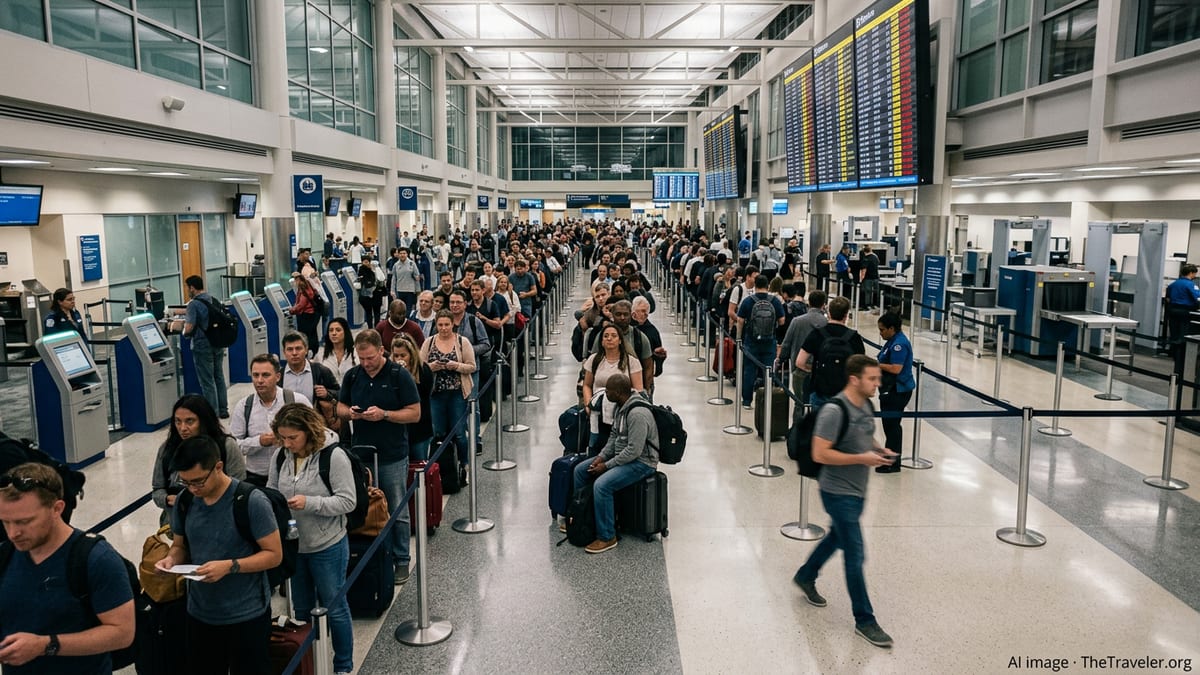
Inside Kuwait International Airport, the cluster of 32 delayed flights created visible congestion around check in counters, security screening points and boarding gates. Travelers reported lengthening queues as airlines worked through rebooking requests, processed last minute schedule changes and sought to keep flights as close as possible to their revised departure times.
Public data from aviation tracking platforms showed that many of the delays fell into the one to three hour range, long enough to disrupt business schedules and family plans but typically short of thresholds that trigger extensive rebooking or accommodation arrangements. Nonetheless, the cumulative effect on the day’s operations was noticeable, with some departures pushed back to off peak hours as ground crews and aircraft were repositioned.
Passengers connecting through other Middle Eastern hubs felt the consequences when delays at Kuwait led to missed onward flights, particularly on dense routes to cities such as Jeddah, Doha and Dubai. Travel forums and social media posts referenced last minute gate changes and extended waits for updated departure information, a familiar pattern when airports manage rolling disruption across multiple airlines and terminals.
While official statistics on compensation and assistance have not yet been published, general regional practice suggests that travelers experiencing longer disruptions may be eligible for meal vouchers or hotel arrangements, depending on the duration of the delay, the point of origin and the airline’s own conditions of carriage.
Operational Recovery and Ongoing Uncertainty
By the following operating cycles, schedules at Kuwait International Airport showed signs of gradual stabilization as airlines worked to absorb the backlog created by the 32 delays and 5 cancellations. Recovery typically involves a combination of aircraft swaps, crew reassignments and tactical retiming, all aimed at returning the network to a more predictable pattern before the next period of peak demand.
However, the underlying drivers of disruption in Kuwait’s airspace and across the wider Gulf region remain fluid. Recent months have demonstrated how quickly developments such as security alerts, shifting travel advisories or infrastructure constraints can translate into immediate schedule adjustments. Aviation analysts caution that this volatility is likely to persist, particularly on routes that intersect with sensitive airspace or rely on tight operational margins.
For passengers planning to travel through Kuwait International Airport or other major Middle Eastern hubs, publicly available guidance from airlines and airport operators emphasizes the importance of monitoring flight status closely in the 24 hours before departure. Same day notifications through mobile applications and text alerts have become a primary tool for communicating last minute changes, especially when conditions evolve faster than printed or static timetables can be updated.
The latest disruption involving 32 delays and 5 cancellations at Kuwait International Airport illustrates how even a limited number of affected flights can significantly alter the travel experience during busy periods. As regional carriers continue to balance high demand with a challenging operating environment, travelers are being encouraged to build additional flexibility into their plans and to remain alert to evolving conditions across the Middle East’s aviation network.