


Airport lounges used to be the domain of global hubs and elite frequent flyers. Escape Lounges have quietly challenged that idea, bringing a surprisingly polished experience to secondary and mid‑size US airports. Branded in the United States as “Escape Lounges – The Centurion Studio Partner,” these spaces now sit at the crossroads of several major lounge ecosystems, from the American Express Global Lounge Collection to Priority Pass and traditional pay‑per‑visit access. After comparing Escape with rival networks and sampling locations like Cincinnati, Phoenix, Sacramento and Fort Lauderdale, a clear picture emerges of where these lounges shine and where other networks still lead.
Get the latest updates straight to your inbox!
Where Escape Lounges Fit in the Lounge Ecosystem
Escape Lounges occupy a unique niche between fully branded proprietary lounges, like American Express Centurion Lounges, and broad third‑party networks such as Priority Pass and Plaza Premium. In the US, Escape operates roughly 20 lounges, with a footprint that includes airports like Minneapolis–St. Paul, Fort Lauderdale, Sacramento, Oakland, Cincinnati and newer locations in Kansas City, Tulsa and San Juan. Many of these are airports that either lack a full Centurion Lounge or have limited airline club coverage, which makes Escape particularly valuable for travelers who do not pass through New York, Dallas or Los Angeles on every trip.
On the network level, Escape is tightly integrated with the American Express Global Lounge Collection. Platinum and Centurion cardmembers get complimentary access to US Escape locations, subject to capacity and the usual three‑hour window before departure. At the same time, a subset of Escape Lounges is available to Priority Pass and DragonPass members, and most locations sell day passes that can be pre‑booked or purchased at the door. This multi‑channel model means the same lounge may feel like an American Express space to one traveler and like a pay‑per‑visit contract lounge to another.
Compared with airline‑operated clubs like Delta Sky Club or United Club, Escape positions itself as carrier‑neutral. Travelers flying Allegiant from Cincinnati, Southwest from Oakland or Spirit from Fort Lauderdale can all use the same Escape Lounge provided they meet the access rules. For travelers who routinely switch between low‑cost and full‑service carriers, that neutrality can be a major advantage over airline‑specific lounges that require a same‑day boarding pass on that airline or an eligible partner.
In practice, this puts Escape in direct competition with The Club and Plaza Premium, both of which also operate common‑use lounges in multiple US airports. Where Escape often pulls ahead is in food quality and overall design in US markets, while The Club and Plaza Premium may offer a broader global footprint and more shower or family facilities at major international hubs.
Access, Pricing and How to Get the Best Value
For most US‑based travelers, the easiest way to access Escape Lounges is with an American Express card that participates in the Global Lounge Collection. Personal and business Platinum cardmembers, as well as Centurion members, receive complimentary entry for themselves and typically up to two guests, provided they show a same‑day boarding pass and government‑issued ID. Some Escape locations also welcome Delta SkyMiles Reserve cardmembers when they are flying on a same‑day Delta‑marketed flight, mirroring the policy seen at full Centurion Lounges.
Travelers without an eligible premium card can still use Escape Lounges via paid access. In the US, pre‑booked entry commonly starts at around 32 to 45 dollars per person, depending on location and demand, with walk‑up pricing usually sitting slightly higher. For example, at several US airports, local concession documents list Escape’s standard adult day‑pass range at roughly 40 to 45 dollars, compared with about 50 dollars for competing “The Club” lounges in the same environment. Prices are dynamic and can move with peak periods, but pre‑booking online typically saves at least a few dollars per person and secures a guaranteed spot.
Priority Pass and DragonPass members can access many, though not all, Escape locations as part of their membership. A frequent flyer with a Priority Pass membership through a Chase Sapphire Reserve card might use the Escape Lounge at Syracuse, Columbus or Phoenix Terminal 3 simply by presenting the digital card in their app, subject to space. However, there are notable exceptions where Escape and its American Express partners have chosen to limit capacity to Amex and direct‑pay guests, particularly in markets where crowding would otherwise be a problem, so it is worth confirming access in the Priority Pass or Escape app before arrival.
In terms of value, travelers who purchase access out of pocket should weigh the roughly 40 to 45 dollar fee against their likely airport spending. A sit‑down meal with a drink at a mid‑airport restaurant in Minneapolis or Fort Lauderdale can easily reach 30 to 35 dollars before tip. Add a coffee, snack and Wi‑Fi with ample seating, and the all‑inclusive model of Escape often becomes competitive, especially on long layovers or for those who arrive early to clear security. For families, the ability for children under three to enter free and discounted child pricing in some markets further improves the value equation.
Design, Comfort and Amenities: What to Expect Inside
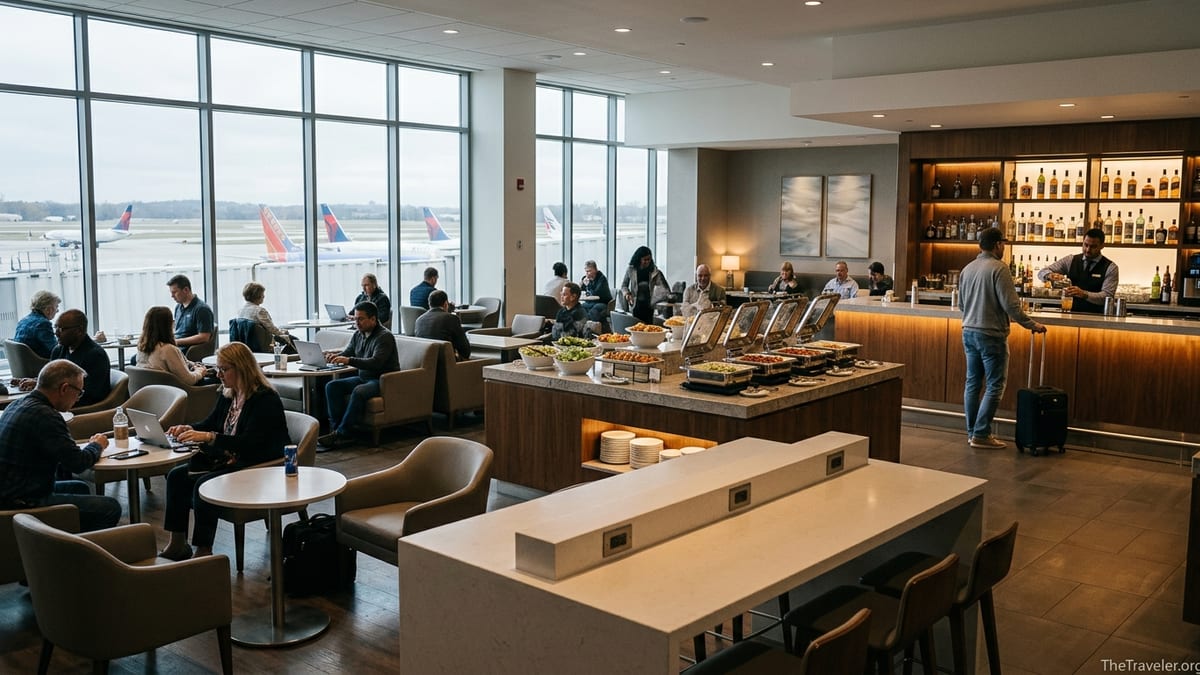
Across the US network, Escape Lounges lean into a contemporary but not overly flashy design language: soft neutral tones, wood or stone accents, local artwork and a mix of banquette seating, lounge chairs and high‑top communal tables with power outlets. The newly opened Cincinnati lounge, for example, highlights a large horseshoe‑shaped chef’s table and a 106‑seat layout that balances privacy with clear sightlines toward the airfield. In Minneapolis, the mezzanine‑level Escape space overlooks the main terminal with floor‑to‑ceiling windows that fill the lounge with natural light during daytime departures.
Standard amenities at most US Escape Lounges include high‑speed Wi‑Fi, abundant power and USB outlets, a staffed bar, self‑service coffee and soft drinks, and an all‑day buffet or menu service. At Fort Lauderdale and Sacramento, guests will find hot options like scrambled eggs and breakfast potatoes in the morning, transitioning to dishes such as roasted chicken, seasonal salads and vegetarian pastas later in the day. Snack stations with hummus, crudites, chips and cookies are typical, and baristas or bean‑to‑cup coffee machines provide far better coffee than the average gate‑area kiosk.
Unlike some of the newest airline flagships or international lounges, most Escape locations do not offer showers or sleeping pods, and quiet rooms are rare. Travelers connecting on long‑haul itineraries that require a full refresh may still prefer a Plaza Premium or airline‑operated lounge at large hubs where showers, spa treatments or nap suites are available. However, in many of the regional US airports where Escape operates, such features are not available in any competing lounge, which makes the comparison less critical in day‑to‑day use.
On the comfort front, Escape tends to outperform generic contract lounges by managing capacity reasonably well. At Sacramento Terminal B or Phoenix Terminal 3, afternoon crowds can appear, especially on peak days, yet seating usually remains easier to find than at a fully packed Centurion Lounge at popular hubs. This is not universal, and travelers have reported individual periods where certain Escape lounges reached standing‑room‑only conditions, but overall Escape has so far avoided the chronic overcrowding that has become synonymous with some larger networks.
Food and Beverage Quality vs Centurion, Priority Pass and Plaza Premium
The most consistent praise for Escape Lounges focuses on their food and beverage. Menus are curated by in‑house chefs and, in some locations, by well‑known local culinary partners, which elevates the dining experience beyond basic pasta and sandwiches. In Cincinnati, the chef’s table concept underlines Escape’s emphasis on freshly prepared hot dishes rather than solely pre‑packaged items. Regulars at Columbus and Phoenix frequently highlight the quality of the hot breakfast spread as a strong reason to arrive early.
When compared head‑to‑head with full American Express Centurion Lounges, Escape generally lands just a half‑step below in ambition but ahead of most Priority Pass contract lounges in the US. Centurion Lounges in places like Dallas or San Francisco still lead in terms of inventive, chef‑driven menus and premium bar programs that feature craft cocktails and higher‑end spirits. Escape’s bars, by contrast, usually include a selection of complimentary beers, wines and well spirits, with better labels and cocktails often available for a fee. For an everyday traveler, however, the difference between an Escape buffet with freshly made salads and hot mains and a typical third‑party Priority Pass lounge that offers mostly cold snacks and packaged foods is significant.
Plaza Premium, which has made a name for itself with strong food offerings in Canada, Europe and Asia, provides the closest comparison to Escape on a global scale. At airports like London Heathrow or Toronto Pearson, Plaza Premium lounges often feature full hot buffets, made‑to‑order noodle or omelet stations and family areas, and in some cases showers. Escape does not yet match that level of infrastructure across its regional US network, but at the local level an Escape Lounge in Sacramento or Fort Lauderdale will nearly always offer a better meal than the average US airline club and many domestic Priority Pass options.
One small but meaningful differentiator is that Escape’s food is included in the entry fee, with no restaurant credit model. Some Priority Pass programs in the US now rely heavily on restaurant credits rather than lounge spaces, which can be good value but do not provide the same quiet, all‑inclusive environment. Travelers who value a seated, unlimited buffet and a bar in a controlled setting often find Escape’s model more relaxing, particularly on long layovers when a single 28 dollar restaurant credit would not cover multiple rounds of food and drinks.
Comparing Crowding, Service and Overall Experience
Crowding is the single biggest complaint about many US lounges today, especially in networks that have grown quickly through credit card partnerships. In informal traveler feedback across forums and social media, Escape Lounges are frequently described as a “sweet spot” within the Priority Pass ecosystem in the US: generally calmer than airline clubs at the same airport and more consistent than some of the smaller contract spaces. Recent visitors to locations like Columbus, Phoenix Terminal 3 and Syracuse often report being able to find seating without circling endlessly, even at busy times.
The integrated American Express relationship helps explain part of this. Because Amex Platinum, Business Platinum and Centurion cardmembers receive complimentary access, Escape has an incentive to manage capacity so that these high‑value customers have a reliable experience. In several airports, Escape has either expanded square footage, as seen with new builds in Cincinnati and Kansas City, or selectively limited Priority Pass access when crowding risks became too high. This balancing act is not perfect, but it contrasts with some contract lounges that simply admit as many Priority Pass or DragonPass guests as possible until the space is visibly overfull.
Service levels at Escape Lounges tend to be solid but not ultra‑luxury. Staff usually greet guests at the entrance, verify cards and boarding passes quickly and provide a basic orientation to seating, buffet and bar areas. In lounge comparisons, travelers often rank Escape staff above average for friendliness and attentiveness, especially in smaller markets where repeat local passengers are common. Yet the service model remains more casual than in certain international Plaza Premium or airline flagship lounges where servers circulate to take drink orders and clear plates proactively in dedicated dining rooms.
Noise levels are another differentiator. With more varied seating zones and an emphasis on soft finishes, Escape Lounges generally maintain a calmer acoustic environment than terminal gate areas. Business travelers working on laptops will usually find enough quiet corners with power outlets, though conference rooms and fully enclosed workspaces are rare. In contrast, some newer airline and premium card lounges have added dedicated work pods or phone rooms that Escape currently lacks at most locations.
Real‑World Examples: When Escape Beats Other Options
To understand how Escape compares to other major lounge networks in real life, it helps to look at specific airports where travelers face a meaningful choice. At Minneapolis–St. Paul, for instance, a Platinum cardmember flying Delta may be able to choose between a Delta Sky Club and the Escape Lounge. The Sky Club might offer more showers, more extensive hot options and a larger footprint, but can be extremely crowded during morning and late‑afternoon banks of flights. The Escape Lounge, located on an upper mezzanine, typically feels calmer, with easier seating and a more boutique footprint, though without showers. A traveler who values a quieter atmosphere over breadth of amenities might prefer Escape in that scenario.
In Sacramento, Escape operates in both Terminals A and B. A Southwest passenger in Terminal B with a Priority Pass membership or Amex Platinum has the choice of sitting at the gate, buying food at one of the fast‑casual outlets or paying around 40 to 45 dollars for lounge access if they do not hold an eligible card. If that passenger plans to buy a full meal and a couple of drinks during a three‑hour wait, the Escape Lounge’s all‑inclusive model usually matches or slightly beats terminal pricing while adding Wi‑Fi, comfortable seating and a quieter environment to work or rest.
Cincinnati offers another instructive example. The new Escape Lounge in Concourse B sits in an airport that lacks a wide array of airline club options. A traveler flying Allegiant or Frontier has no affiliated airline lounge, and even a Delta passenger may find that Sky Club capacity or location is not ideal for their gate. For these travelers, Escape becomes the de facto premium space, offering a chef‑led hot buffet, full bar and views of the airfield. The lounge’s horseshoe‑shaped chef’s table, unique within the Escape network, underscores how Escape aims to be a destination in itself in airports where competition is thin.
At Fort Lauderdale, where cruise traffic generates heavy peak‑season crowds, the Escape Lounge competes less with airline clubs and more with the busy terminal restaurants and bars. Beach‑bound leisure travelers with Priority Pass or Amex Platinum often find that the lounge provides a welcome buffer from the bustling concourses, with a predictable buffet and standard bar selection that are particularly attractive before or after a cruise when airports are flooded with passengers on similar schedules.
The Takeaway
Escape Lounges have carved out an important role in the modern US lounge landscape. They deliver a consistently solid experience in airports that are underserved by airline or ultra‑premium card lounges, combining better‑than‑average food and a pleasant design aesthetic with flexible access models for both premium cardholders and pay‑per‑visit guests. While they do not yet match the most luxurious features of full Centurion or flagship airline lounges at mega‑hubs, they often outperform typical Priority Pass contract spaces and many domestic airline clubs in terms of food quality and crowding.
For American Express Platinum and Centurion cardmembers, Escape Lounges represent a valuable extension of the Global Lounge Collection into secondary markets, turning airports like Cincinnati, Syracuse and Sacramento into far more comfortable departure points. For travelers who rely on Priority Pass or are willing to buy day passes, Escape often offers an all‑inclusive, calm refuge at a price point comparable to what they would otherwise spend in the main terminal. When choosing between lounge options on a given trip, it is worth considering not just brand prestige but also airport layout, expected crowding and the specific amenities you need. In many real‑world scenarios, particularly outside the biggest hubs, Escape Lounges will quietly be the best choice.
FAQ
Q1. What is an Escape Lounge and how is it different from a Centurion Lounge?
Escape Lounges are common‑use airport lounges operated by a separate company that partners with American Express, airlines and access programs. In the US they are branded as “Escape Lounges – The Centurion Studio Partner,” which means they are part of the American Express Global Lounge Collection but are not full Centurion Lounges. Centurion Lounges are owned and directly branded by American Express, usually larger, and often have more elaborate food and bar programs, but they are available only in select major hubs.
Q2. Which credit cards get me into Escape Lounges for free?
In the United States, personal and business American Express Platinum and Centurion cardmembers typically receive complimentary access to Escape Lounges, subject to capacity and the three‑hour rule before departure. Delta SkyMiles Reserve and Reserve Business cardmembers may also have complimentary access when flying on a same‑day Delta‑marketed flight, depending on the location. Terms can vary by lounge, so travelers should confirm details in their card benefits or the Escape Lounges website before travel.
Q3. Can I use Priority Pass or DragonPass at Escape Lounges?
Many Escape Lounges in the US accept Priority Pass and DragonPass members for entry, but not all locations participate and policies can change as lounges manage crowding. For example, some newer or busier lounges may prioritize American Express and direct‑pay guests and limit or exclude Priority Pass access. Travelers should check their lounge program’s app or website for each airport and terminal on the day of travel to confirm whether a specific Escape Lounge is accessible.
Q4. How much does it cost to buy a day pass at an Escape Lounge?
Day‑pass pricing varies by airport and demand, but pre‑booked access at US Escape Lounges typically starts in the low‑ to mid‑30‑dollar range and often runs around 40 to 45 dollars per adult. Walk‑up pricing at the door may be slightly higher. Because prices can change and some locations offer promotions or discounts for certain groups, travelers should check current rates when booking and compare them with what they would otherwise spend on food and drinks in the terminal.
Q5. Are food and drinks included at Escape Lounges?
Yes. Standard hot and cold food options, soft drinks, coffee and tea are included in the entry price at Escape Lounges. Most locations also offer a selection of complimentary beers, wines and basic spirits, with an expanded list of premium drinks or cocktails available for a fee. The specific menu and drink list vary by airport and time of day, but Escape generally offers a more substantial spread than many domestic contract lounges in the US.
Q6. Do Escape Lounges have showers or sleeping areas?
Most Escape Lounges in the United States do not have showers, nap rooms or private sleeping pods. They are primarily designed as comfortable places to eat, work and relax for a few hours before departure, with lounge seating, dining tables and workstations. Travelers needing showers or more extensive rest facilities on long‑haul itineraries may be better served by certain airline or Plaza Premium lounges at major international hubs, where such amenities are more common.
Q7. Can families and children use Escape Lounges?
Families are welcome at Escape Lounges, and children and babies can enter with an adult. Children under a certain age, often under three, are usually admitted free of charge, while older children may pay a reduced rate when a day pass is purchased. High chairs and family‑friendly seating are common, though dedicated playrooms are rare. Because exact age limits and pricing can vary by location, parents should review the policy for their specific lounge in advance.
Q8. How long can I stay in an Escape Lounge?
In most cases, guests can use Escape Lounges for up to three hours before their scheduled flight departure time. This three‑hour rule is common across the American Express Global Lounge Collection and helps lounges manage capacity. During layovers, some locations may allow access between flights as long as you have a same‑day boarding pass, but travelers should be prepared for staff to enforce the three‑hour guideline during peak periods.
Q9. How does Escape compare with Priority Pass, Plaza Premium and airline clubs overall?
Broadly speaking, Escape Lounges often provide better food and a calmer environment than many domestic Priority Pass contract lounges in the US, though they do not match the global coverage of Priority Pass. Compared with Plaza Premium, Escape’s US lounges are competitive on food but usually less focused on showers and family areas. Against airline clubs such as Delta Sky Club or United Club, Escape often wins on crowding and food quality in secondary airports but may lose on extras like showers or network breadth in major hubs.
Q10. Is it worth going out of my way to use an Escape Lounge?
Whether it is worth making a detour depends on your airport, schedule and what you value. If you hold an eligible American Express card and can access Escape for no extra cost, it is usually worth a short walk for a quieter space, included food and drinks and reliable Wi‑Fi. If you are paying cash, it becomes most worthwhile when you have at least 90 minutes to spare and would otherwise buy a full meal and drinks in the terminal. For quick connections or when your gate is far from the lounge, it may make more sense to stay nearer to the departure area.