


More news on this day
Ethiopian Airlines is sharpening its Moscow network with new one-stop links to Mauritius, Mozambique and Oman via Addis Ababa, creating one of the most comprehensive Indian Ocean and southern Africa offerings now available to Russian travelers.
Get the latest news straight to your inbox!
New Routes Expand Options From Moscow
According to recent industry coverage, Ethiopian Airlines is preparing to launch new services that link its Addis Ababa hub with Mauritius, Mozambique and Oman, timed to connect with flights from Moscow. The move effectively turns Addis Ababa into a key transfer point for Russian holidaymakers and business travelers bound for the Indian Ocean and southern Africa.
Publicly available timetable data shows that Ethiopian already operates nonstop flights between Addis Ababa and Moscow Domodedovo, with a block time of just over eight hours. The additional connections to Mauritius, Mozambique and Oman are scheduled to offer through-ticketing for Russian passengers, reducing the need for multiple separate bookings and complicated self-transfers through other hubs.
Reports indicate that flights from Moscow to Mauritius will typically operate three times weekly, while services to Mozambique are planned on up to six days each week, subject to seasonal adjustments. Total journey times of around 16 to 17 hours position the routing as a competitive one-stop alternative to itineraries via Gulf or European hubs.
The new Addis Ababa to Oman link is expected to involve a longer layover for some itineraries, but the carrier promotes Addis Ababa as a stopover opportunity with hotels and transfers available through structured programs. For Russian travelers, this turns an extended connection into a short city break en route to Muscat and other Omani gateways.
Mauritius, Mozambique and Oman See Access Boom
The routing shift is especially significant for destination markets such as Mauritius, Mozambique and Oman, which have sought to diversify their visitor base and court travelers from emerging outbound markets, including Russia. Tourism board campaigns and aviation developments over the past decade have focused heavily on better air access as a prerequisite for growth.
Mauritius has long been a favored long-haul beach destination for Europeans, and Russian arrivals have gradually increased in line with expanding indirect connectivity. The new Ethiopian-operated path via Addis Ababa gives Russian travelers another option to reach Mauritius during peak holiday seasons, complementing routings through the Gulf and, to a lesser extent, Europe.
Mozambique, with its Indian Ocean coastline and growing portfolio of high-end resorts, stands to gain from the improved air link as well. Until recently, Russians heading to Mozambican destinations often relied on multi-stop itineraries or complex combinations of regional carriers. More streamlined connections through Addis Ababa could support both leisure demand and travel linked to energy and infrastructure projects in the country.
In Oman, tourism authorities have promoted the country as a quieter, heritage-focused alternative to some of the region’s larger hubs. A direct link from Addis Ababa that dovetails with Moscow services widens access to Muscat and beyond for Russian visitors seeking desert, coastal and cultural experiences, while also strengthening Oman’s own role as a regional connection point.
Russian Travelers Turn to African Hubs
Since 2022, Russian travelers have faced notable reductions in direct air links with parts of Europe and North America, prompting a reshaping of long-haul travel patterns. Publicly available booking and schedule data shows that carriers based in the Gulf, Türkiye and several African countries have stepped in to capture demand for connections to Asia, Africa and the Indian Ocean.
Ethiopian Airlines, which operates an expansive network across Africa and increasingly into Europe, Asia and the Americas, has positioned Addis Ababa as a geographically efficient hub between Russia and destinations south of the equator. The airline’s Moscow services, combined with its broad African network, give Russian passengers a way to reach countries that might otherwise require detours through multiple continents.
Industry analyses describe this as part of a broader trend in which African and Middle Eastern hubs handle more sixth-freedom traffic, carrying passengers between regions where direct connectivity has been reduced. For Russian travelers targeting leisure spots like Mauritius or Mozambique, Addis Ababa now joins Istanbul, Dubai and Doha as a prominent one-stop option.
At the same time, Russia’s own visa-waiver arrangements with some African and Gulf states, including Oman, have marginally eased administrative barriers, even as flight options remain constrained in some directions. By overlaying a denser route map on top of this evolving visa environment, Ethiopian’s strategy helps turn theoretical access into practical, bookable trips.
Ethiopia Emerges as a Strategic Connector
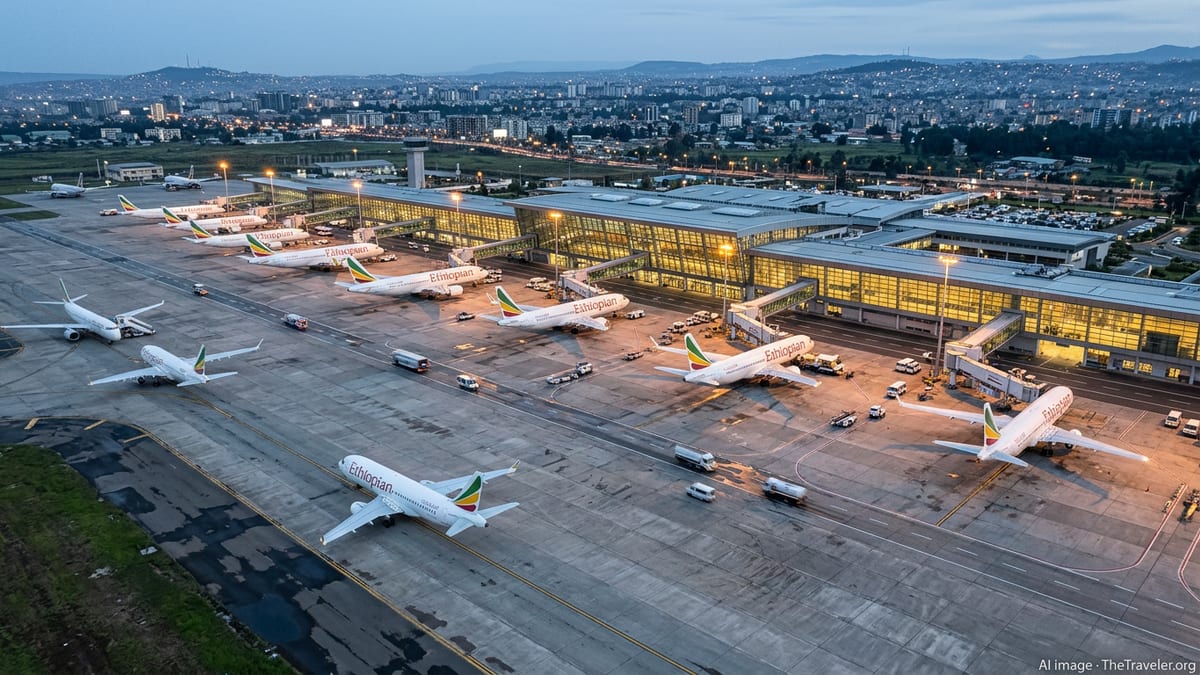
For Ethiopia, the route expansion underscores Addis Ababa’s emergence as a strategic connector between Russia, Africa and the Middle East. The country has invested heavily in modernizing Bole International Airport and in growing Ethiopian Airlines into a pan-African carrier with global reach, a strategy that hinges on transit traffic as much as on local demand.
According to airline fact sheets and fleet announcements, Ethiopian has continued to add long-haul aircraft, including new-generation widebodies, in order to sustain growth on intercontinental routes. The Moscow service, alongside links to key African and Indian Ocean destinations, fits into a pattern of deploying this capacity on corridors where demand is rising and competition remains limited.
The new connections also reflect how African carriers can leverage geographic position to capture traffic flows that were once dominated by European or Gulf rivals. Addis Ababa sits at a useful crossroads for flights that arc between northern Eurasia and the southern hemisphere, and more Russia-focused itineraries highlight that advantage.
For travelers, this translates into more choice rather than a wholesale shift away from established hubs. Russian passengers looking for pricing flexibility, different stopover experiences or alternative schedules may find the Ethiopian-operated path via Addis Ababa an appealing complement to other carriers, especially during peak holiday seasons when seats into Indian Ocean resorts are scarce.
Competitive Pressure and Future Growth
The decision to target Mauritius, Mozambique and Oman with enhanced connectivity from Moscow introduces new competitive pressure along routes that have been relatively fragmented. Airlines from the Gulf, Türkiye and Europe have traditionally captured a majority of Russian traffic into these markets, but a denser schedule from Ethiopian adds capacity and potentially exerts downward pressure on fares during off-peak periods.
Industry observers note that further route adjustments are likely as demand patterns evolve. Ethiopian has a track record of tweaking frequencies and destinations based on seasonal performance, and the new connections will be closely watched to gauge the strength of Russian-origin traffic to the Indian Ocean and southern Africa.
For destination governments and tourism bodies in Mauritius, Mozambique and Oman, the development offers an opportunity to retool marketing strategies in Russia, promoting itineraries that explicitly feature Addis Ababa as a transit or short-stay component. This could, in turn, support modest growth in stopover tourism for Ethiopia itself, layering additional benefits onto the airline’s network expansion.
If the new routes perform strongly, analysts suggest that more African destinations could eventually be marketed in Russia with similar single-stop itineraries. That would further entrench Addis Ababa’s status as a hub where Russian travelers can change planes once and access a widening ring of countries around the Indian Ocean and across the African continent.