


More news on this day
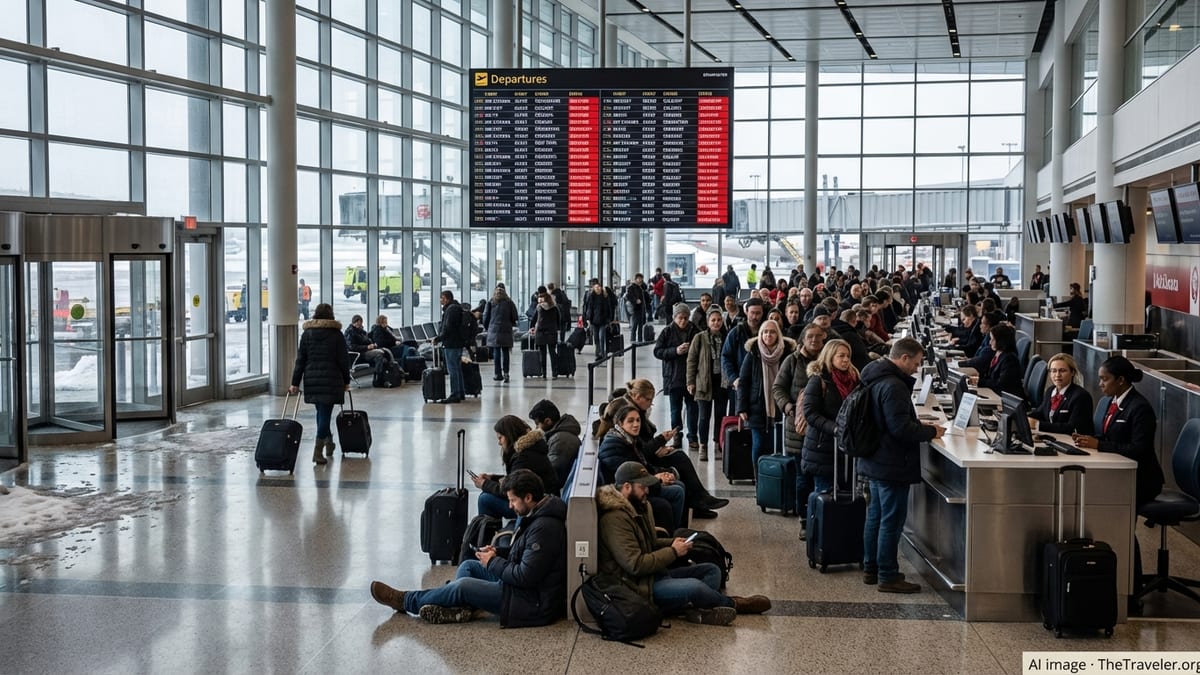
Thousands of travelers across Canada are facing long lines, missed connections, and unexpected overnight stays after a fresh wave of flight disruptions led to 87 cancellations and 529 delays at major airports including Ottawa, Toronto, Vancouver, Edmonton, and Montréal.
Get the latest news straight to your inbox!
Wave of Disruptions Hits Canada’s Busiest Hubs
Publicly available flight-tracking data for Monday, June 15, indicates a broad operational squeeze at Canada’s largest airports, with cumulative figures showing 87 cancellations and 529 delays across key hubs. The impact is concentrated at Toronto Pearson, Montréal Trudeau, Vancouver, Edmonton, and Ottawa, but ripple effects are being reported at secondary airports as aircraft and crews fall out of position.
WestJet, Air Canada, Porter, Jazz, and several regional partners all appear among the most affected operators, according to aggregated flight-status dashboards monitored throughout the day. Although the total number of disrupted flights represents a fraction of Canada’s daily schedule, the timing at the start of the busy summer travel period has magnified the strain on passengers and airport infrastructure.
Standard afternoon and evening peak periods have been particularly volatile, with departures pushed back repeatedly and a growing list of scrubbed flights. Travelers on popular domestic corridors between Toronto, Vancouver, Edmonton, and Montréal have reported multiple schedule changes within hours, in some cases seeing an initial delay escalate into a full cancellation as the day progressed.
Similar patterns of mass disruption have been documented several times in recent weeks at Toronto Pearson and Montréal Trudeau, underscoring how even a modest operational shock can cascade into extensive knock-on delays when aircraft and staff are already running close to capacity.
Operational Pressures Behind the Cancellations
Early assessments of today’s disruption point to a mix of operational factors rather than a single headline event. Recent Canadian aviation coverage has highlighted recurring pressure points including staffing gaps in ground handling and flight operations, aircraft maintenance backlogs, and tight turnaround schedules that leave little room to absorb late arrivals or technical issues.
Industry analyses earlier this year noted that carriers flying in and out of Toronto, Montréal, and Vancouver have periodically trimmed or suspended routes described as no longer economically feasible, often attributing the changes to high jet fuel costs and limited spare capacity in fleets. On busy days, even small delays on inbound flights can cascade into missed crew connections and aircraft rotations, forcing airlines to consolidate or cancel later departures.
Weather has also been a persistent variable. While no single nationwide storm system appears to be responsible for today’s figures, localized conditions such as low visibility, thunderstorms, and high winds around key hubs can trigger ground holds and flow-control measures. Once flight plans are re-sequenced, airlines may opt to prioritize long-haul or tightly booked international services over shorter domestic sectors, leaving some regional routes more vulnerable to cancellation.
Experts tracking Canada’s aviation performance say that a combination of lean scheduling, high demand, and limited backup resources has left the system more prone to visible disruption. As a result, passengers may increasingly experience clusters of cancellations and multi-hour delays even on days without extreme weather or major technical outages.
Travelers Face Missed Connections and Overnight Stays
The human impact of today’s disruptions is being felt most acutely by travelers relying on connections through Toronto, Vancouver, and Montréal. With dozens of flights delayed, many passengers arriving from overseas or cross-country have been unable to make onward departures to smaller Canadian cities, resulting in unexpected overnight stays or significant re-routing.
Social media posts and online travel forums are filled with accounts from passengers in Ottawa, Edmonton, and Montréal describing long customer service lines, rebooked flights departing many hours later, and hotel availability tightening near airport districts. Some travelers report being moved onto red-eye services or routed through alternative hubs simply to reach their final destinations within a reasonable timeframe.
Even where flights are operating, extended delays are reshaping itineraries. Families traveling with children, business travelers on tight schedules, and tourists with fixed tour or cruise departures all face the added burden of rearranging ground transportation, accommodations, and event bookings at short notice. For many, additional expenses such as meals, taxis, and last-minute hotel rooms are compounding the frustration.
Travel advisors note that such disruption clusters can create a days-long hangover effect. Passengers originally booked for later in the week may find their flights busier than expected as airlines accommodate stranded travelers and work to clear backlogs of displaced passengers.
Passenger Rights Under Canada’s Air Travel Rules
Public guidance from consumer-rights organizations and legal specialists emphasizes that Canada’s Air Passenger Protection Regulations set specific obligations for airlines when flights are delayed or canceled. The level of support and potential compensation depends on both the length of delay and whether the disruption is categorized as within the airline’s control, within its control but required for safety, or outside its control.
When disruptions are deemed within an airline’s control and not related to safety, carriers may be required to provide standards of treatment that can include meals, refreshments, and hotel accommodation for overnight waits, as well as free rebooking on the next available flight. Financial compensation may also be available in certain cases where passengers arrive at their final destination more than a specified number of hours behind schedule.
If delays or cancellations are attributed to safety-related maintenance or external factors such as severe weather or air traffic restrictions, obligations can be narrower. In those scenarios, airlines are still expected to rebook passengers or offer refunds when flights are canceled, but additional monetary compensation may not apply. Consumer advocates have urged travelers to keep detailed records of their disruptions, including boarding passes, receipts, and written explanations of delay codes where available.
Because classifications can significantly affect what passengers receive, travelers are advised to review updated guidance from the Canadian Transportation Agency and compare it with information on their airline’s own website. Several recent cases have drawn attention to disputes over how disruptions are labeled, with some passengers contesting whether cancellations were truly outside a carrier’s control.
What Affected Travelers Can Do Now
With hundreds of flights disrupted today, travel specialists recommend that passengers still hoping to fly check their flight status frequently through airline apps or airport departure boards and avoid heading to the airport before confirming that their service is operating. Same-day schedule changes have been common across WestJet, Air Canada, Porter, Jazz, and smaller regional carriers when disruption clusters have emerged in recent weeks.
For those already stranded at airports, publicly available advice from consumer groups suggests first securing a confirmed rebooking, either online or via call centers, and then requesting written confirmation of the reason for disruption. This documentation can be important later if travelers decide to pursue reimbursement for out-of-pocket expenses or potential compensation under the Canadian rules or relevant international conventions.
Passengers with flexible plans may find it worthwhile to ask about alternative routings, such as connecting through less congested hubs or switching to earlier departures the following day. In some past disruption events, travelers who were open to rerouting via a different city or accepting a nearby destination airport reported reaching their end points sooner than those waiting for the next direct service.
With summer demand steadily building, industry observers expect further pressure on Canada’s major hubs in the coming weeks. Today’s wave of 87 cancellations and 529 delays is likely to strengthen calls from consumer advocates for clearer communication, more robust contingency planning, and stricter enforcement of passenger protections when operational strains leave thousands of travelers unexpectedly grounded.