


More news on this day
Etihad Airways has extended its temporary change-fee waiver as airlines across the United Arab Emirates continue to rework flight schedules, giving passengers more flexibility while regional operations stabilize.
Get the latest news straight to your inbox!
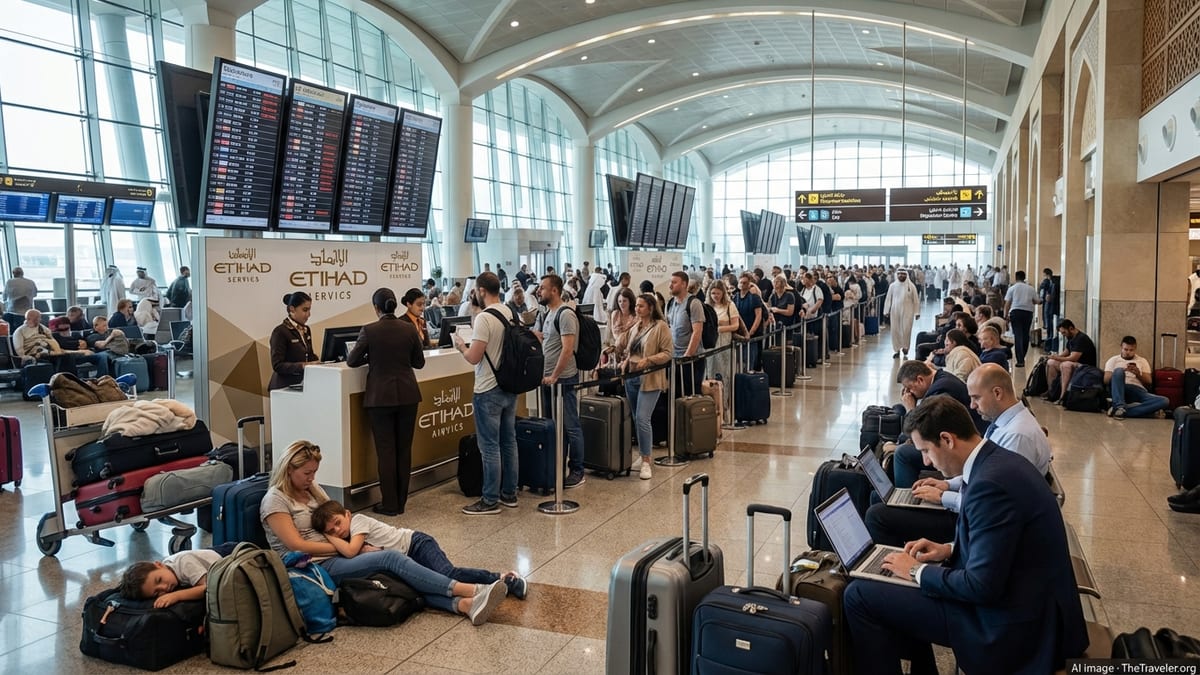
Extended Fee Waiver Gives Travelers More Breathing Room
Published policy updates indicate that Etihad has prolonged its special waiver allowing guests to change bookings without paying the usual change fees on eligible tickets. The extension covers travel dates pushed back in response to evolving operational constraints, although travelers may still need to pay any fare difference if they move to more expensive flights.
Internal policy summaries and customer communications shared online suggest that the waiver now runs through at least mid-April for itineraries touching Abu Dhabi, following earlier windows that initially applied only to travel in late February and March. The gradual expansion mirrors similar steps taken by other Gulf carriers in response to airspace restrictions and shifting demand across key long-haul and regional routes.
The move is intended to reduce the financial risk for travelers who might otherwise have been locked into itineraries that no longer align with the revised flight program. By waiving change fees while maintaining fare-difference rules, Etihad is trying to balance customer flexibility with the economic realities of rebuilding its network.
Available guidance also notes that changes are generally permitted on Etihad-operated flights within a defined date range, with separate rules for tickets issued through travel agencies or partner airlines. Passengers are encouraged to review the specific waiver conditions attached to their booking class and ticket-issuing channel before making changes.
UAE Airlines Continue to Rebuild Reduced Schedules
Reports tracking UAE aviation show that carriers are still operating on reduced or adjusted schedules after weeks of disruption. Both Abu Dhabi International Airport and Dubai International Airport have progressively increased daily flight movements, but services remain below normal levels on several routes, particularly in long-haul markets that rely on smooth connections through the hubs.
Abu Dhabi-based Etihad has restored a growing list of destinations, prioritizing core long-haul links and high-demand regional routes. Separate coverage notes that Dubai-based airlines are following a similar pattern, focusing on cities such as Amman, Cairo, Mumbai, and Dhaka while they rebuild wider networks in phases. The emphasis is on routes where passenger backlogs and essential travel demand are highest.
Operational bulletins indicate that passengers are being advised not to travel to the airport until they have received updated confirmation by email, app, or text message. This approach reflects the reality that schedules can still change at short notice as airspace permissions evolve and airlines rotate aircraft and crew to cover the most critical sectors.
Aviation analysts quoted across regional travel coverage say that the combination of reduced capacity and rolling schedule adjustments is likely to continue for several weeks, especially on secondary routes. Travelers may find that departure times move by several hours, or that connecting times are restructured, even when their flight numbers remain the same.
Financial Impact and Competitive Pressures Across the Gulf
Industry commentary suggests that the widespread use of fee waivers by Gulf carriers could amount to hundreds of millions of dollars in forgone change-fee revenue this quarter. While airlines will recover some funds through fare differences on rebooked tickets, the decision to suspend fees on a large scale represents a notable short-term financial sacrifice.
For Etihad, the extended waiver comes at a time when the carrier is working to strengthen its network and financial performance after several years of restructuring. Observers note that keeping pace with, or responding to, the policies of larger regional competitors adds pressure, particularly when rivals offer longer waiver windows or broader eligibility for full refunds.
At the same time, the policy is viewed as a strategic investment in customer confidence. With some travelers rethinking itineraries that route through the Gulf, flexibility on dates and the possibility of shifting travel to later in the year may persuade passengers to retain their bookings rather than cancel outright and move to non-Gulf carriers.
Travel data specialists highlight that fee waivers can also help airlines smooth demand across the calendar, nudging guests to switch from peak days when capacity is tight to off-peak departures where there is more space. This demand management effect can be particularly valuable when schedules are constrained by external factors outside the airline’s direct control.
What Passengers Need to Know Before Rebooking
Publicly available information indicates that Etihad’s waiver applies to a defined set of tickets, typically those issued before a specific cutoff date for travel within a certain disruption window. While change fees are waived, many communications stress that customers remain responsible for any increase in fare, taxes, or surcharges between the original and new travel dates.
Travelers are urged by travel advisories to check their booking details in the airline’s manage-booking portal or through their travel agent, focusing on the original issue date, the ticketing channel, and whether the itinerary is wholly operated by Etihad or includes partner segments. These factors can determine whether a free change is possible or whether standard fare rules still apply.
Coverage of recent cases shows that some passengers have encountered differences between the waiver rules published by the airline and the policies applied by third-party booking platforms, which may update more slowly. In those situations, travelers have sometimes needed to reference the latest publicly posted waiver conditions to align their agency or online travel site with the airline’s current stance.
Specialist guides on airline changes also point out that certain fare types, such as deeply discounted basic economy products, can have more limited flexibility even during waiver periods. Travelers holding these tickets may have fewer options for rerouting or may only be able to move to specific alternative flights, underscoring the importance of reading the fine print before making any decisions.
Managing Travel Plans Amid Ongoing Uncertainty
Regional travel advisories emphasize that, despite the return of many flights, uncertainty remains a defining feature of air travel to and through the UAE in the near term. Airlines are updating schedules frequently, sometimes multiple times a week, to reflect new airspace permissions, crew-rostering constraints, and rolling maintenance needs.
Passengers with imminent departures are widely encouraged to monitor their reservations closely in the days and hours before travel. This includes checking for notifications about departure time changes, gate updates, and potential aircraft swaps that might affect seating assignments. Some guidance also recommends having a backup plan for overnight stays if connections are disrupted.
For those planning trips further out on the calendar, the extended Etihad waiver and similar measures by other Gulf carriers create more scope to book with confidence while retaining the option to shift travel if the situation evolves. However, travel experts stress that flexibility in accommodation bookings, ground transport, and travel insurance remains just as important, given the interconnected nature of trip components.
As the UAE’s aviation sector works toward restoring full schedules, the combination of fee waivers, phased route reinstatements, and ongoing passenger advisories illustrates how airlines are attempting to balance operational constraints with traveler expectations. For now, flexibility and vigilance remain key for anyone flying into, out of, or through the country’s major hubs.