


More news on this day
European Union governments have agreed to preserve current cash compensation for flight delays, backing a compromise that keeps payouts from three hours of delay in place across the bloc after more than a decade of negotiations.
Get the latest news straight to your inbox!
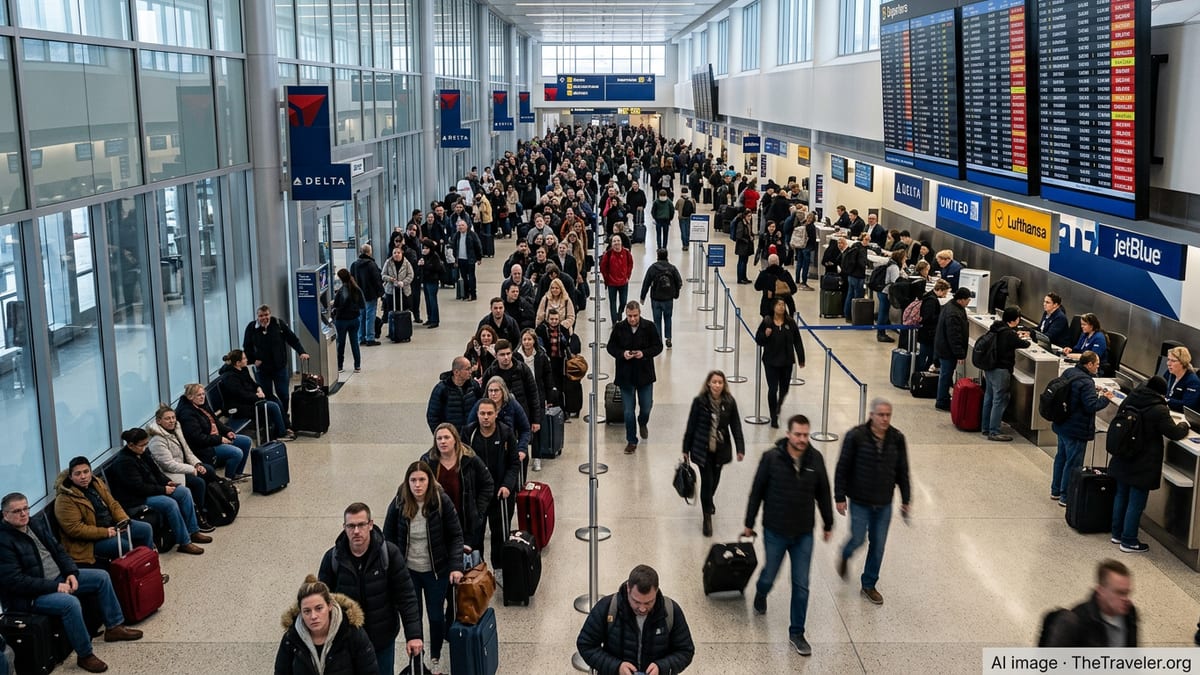
Deal preserves cornerstone of EU air passenger rights
The agreement by EU member states, reached in Brussels this week, confirms that passengers will continue to be entitled to compensation when they arrive at their final destination three hours or more after the scheduled time, provided the airline is responsible for the disruption. The decision maintains the core protection established under Regulation 261/2004, which has been in force for nearly two decades.
Compensation levels remain unchanged, ranging from 250 to 600 euros per passenger depending on flight distance and length of delay. According to published coverage, governments had previously floated plans to lengthen the delay threshold to between four and six hours and to reduce the upper payout to 500 euros on long haul routes, a shift airlines argued would better reflect their cost burden.
Consumer groups and the European Parliament had pushed back strongly against those proposals, warning that weaker entitlements would leave travelers more exposed to disruption at a time of record passenger volumes. Reports indicate that EU airports handled more than 1.1 billion passengers in 2024, with delays and cancellations remaining a regular feature of peak travel seasons.
The new compromise keeps the three hour trigger and existing payment bands, while also tightening timelines for airlines to respond to claims. Publicly available information shows that carriers will have to provide clearer justifications when they reject a request for compensation, an area that has generated frequent disputes between travelers and airlines.
Thirteen year reform battle shifts in favor of travelers
The outcome caps 13 years of on and off negotiations over how to update Europe’s air passenger rights framework. The European Commission first tabled reform plans in 2013, arguing that the rules needed clarification following a series of court rulings that expanded eligibility for compensation and defined what counts as “extraordinary circumstances.”
Member states then spent years divided over how far to adjust the balance between travelers and airlines. After a political agreement among transport ministers in June 2025 to lengthen delay thresholds, attention turned to talks with the European Parliament, which had formally endorsed keeping the three hour rule and existing compensation amounts.
According to coverage of the negotiations, lawmakers insisted that any reform must “improve, not weaken” passenger rights and refused to endorse a higher delay threshold. The stand off left the file at risk of collapse before the end of the current parliamentary term, a scenario that would have forced the Commission to restart the legislative process from scratch.
The compromise endorsed by governments this week mirrors the Parliament’s core demands on delays and payouts, while incorporating some of the Council’s priorities on clarifying airline obligations during major operational disruptions. The text now proceeds to formal approval in the European Parliament, which reports suggest is expected to endorse the deal.
Cabin baggage and seating rules fall short of activist demands
While the agreement preserves key cash entitlements, it stops short of enshrining several high profile demands made by consumer advocates and some lawmakers. In particular, EU countries did not back a general right to carry standard cabin trolleys free of charge, despite calls for a binding rule to curb what critics describe as opaque luggage pricing.
Published accounts of the negotiations indicate that the final text guarantees passengers the right to bring on board at least one personal item free of charge, such as a handbag, laptop sleeve or small backpack that fits under the seat in front, within dimensions proposed by lawmakers. However, the broader right to bring a larger wheeled cabin bag without an extra fee has been left to airline commercial policies, even though a previous ruling from the EU Court of Justice had favoured treating such items as part of the basic transport service.
The compromise also reacts to longstanding complaints about the treatment of children and vulnerable travelers. Reports indicate that the new rules will ensure minors and passengers with reduced mobility can be seated with accompanying adults or assistants without paying an additional seat selection fee, addressing a practice that has been widely criticized by consumer organisations.
Airlines had warned throughout the reform process that stricter baggage and seating rules, combined with unchanged compensation levels, could raise operating costs and ultimately ticket prices. Industry representatives have argued in public statements that the existing framework already goes beyond international norms and that further obligations risk undermining the competitiveness of European carriers.
Clearer claims process and “extraordinary circumstances” guidance
Beyond headline compensation thresholds, the agreement includes procedural changes intended to make it easier for passengers to navigate disruptions. According to information released by EU institutions, airlines will face more precise deadlines to acknowledge and process claims, and will have to offer reimbursement or rerouting in a clearer and more transparent way when flights are cancelled or significantly delayed.
The reform also updates guidance on what qualifies as an extraordinary circumstance, where carriers are exempt from paying compensation if they can show the disruption was outside their control. Examples typically include severe weather, security incidents, air traffic control strikes not affecting the airline itself, and certain types of unexpected safety issues identified by manufacturers or regulators.
Consumer advocates have frequently argued that airlines invoke extraordinary circumstances too broadly, leading to a high share of rejected claims. By spelling out the list in more detail and linking it to recent case law, lawmakers aim to reduce grey areas and cut down on disputes that currently end up in court or with national enforcement bodies.
For travelers, observers say the changes mean that the practical experience of claiming compensation should become more predictable, even though the headline entitlements are not increasing. Specialized claims agencies that handle paperwork in exchange for a fee are likely to continue playing a role, but passengers will also have clearer pathways to pursue cases directly with airlines or through public complaint channels.
What the decision means for summer travelers
With the agreement reached just ahead of the peak summer season, the confirmation of existing compensation rights is expected to reassure many travelers booking or taking flights within, to or from the EU. Any flight departing from an EU airport remains covered, regardless of carrier nationality, along with flights to the EU operated by EU airlines, giving broad geographic reach to the protections.
The decision arrives as airports and airlines prepare for another busy year, with traffic projected to match or exceed pre pandemic levels on many routes. Travel industry observers note that the combination of packed schedules, air traffic control constraints and extreme weather episodes continues to create a challenging operating environment, increasing the risk of delays and cancellations.
Although the new rules will not immediately raise compensation amounts, they confirm that passengers retain the ability to seek between 250 and 600 euros when qualifying delays or cancellations occur and the airline is at fault. Travelers are also expected to benefit from clearer information at airports and online about their rights to assistance, rebooking and refunds when their plans are disrupted.
Once the European Parliament completes its final vote and the legislation is formally signed, member states and airlines will have a transition period to adapt systems, train staff and update passenger communications. For now, Europe’s core promise to air travelers to compensate them after a three hour delay remains intact, reinforcing the region’s reputation for comparatively robust passenger protections.