


More news on this day
Travel across Europe is facing fresh disruption as airport and airline data point to 1,631 delayed and 36 cancelled flights in a single operational window, with knock on effects stretching from Italy and Spain to Switzerland, the Netherlands and beyond, hitting carriers including Lufthansa, easyJet and Ryanair in hubs such as Zurich and Amsterdam.
Get the latest news straight to your inbox!
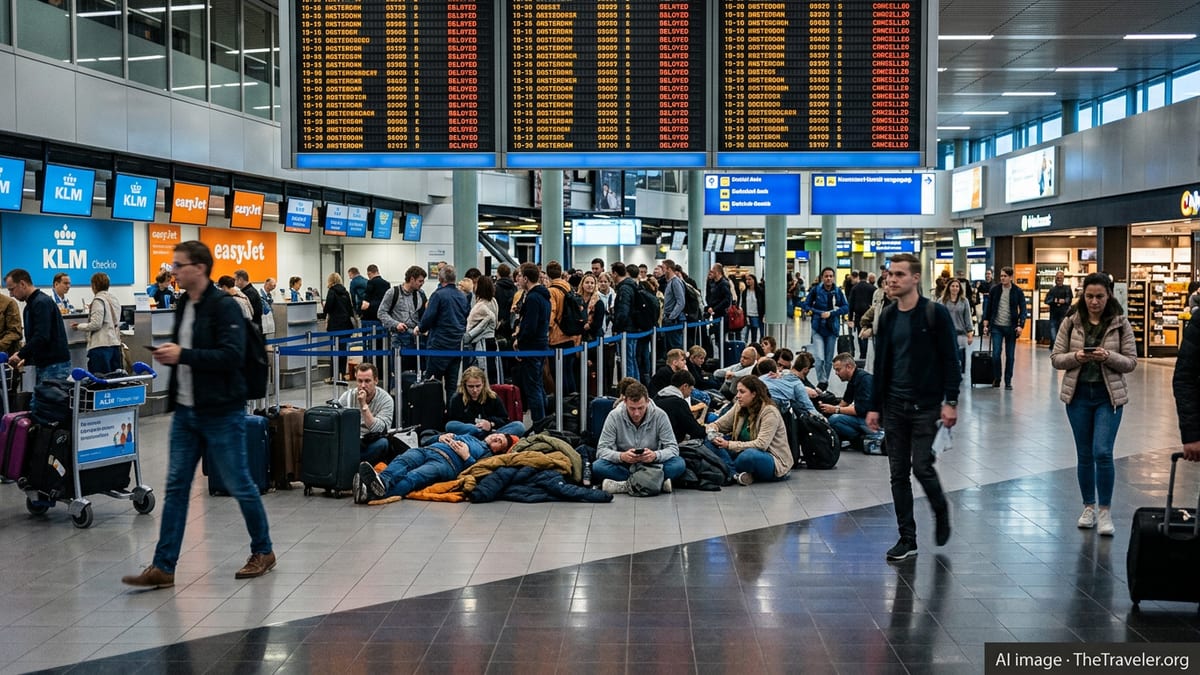
Wave of Delays Across Europe’s Core Aviation Network
Operational statistics compiled from major European hubs indicate that 1,631 flights have been delayed and 36 cancelled within a concentrated period, underscoring how fragile the continent’s aviation network remains as traffic continues to rebound. The impact is being felt most sharply on intra European routes, where short turnaround times leave little margin when disruption strikes.
Publicly available traffic and delay summaries from Eurocontrol show that Spain and Italy remain among the leading contributors to air traffic flow management delays, with weather, congestion and periodic industrial action combining to slow operations. When those constraints coincide with heavy schedules at large hubs, even modest local issues can translate into hundreds of knock on delays across the network.
The latest disruption has coincided with a busy late May travel window, as business travel blends with early summer leisure demand. With aircraft and crews already tightly scheduled, airlines have had limited flexibility to recover quickly, meaning that a single cancelled or heavily delayed sector can cascade into missed connections and overnight disruptions for passengers far from where the original problem began.
According to published data from passenger rights specialists that track disruption, low cost carriers such as Ryanair and easyJet and network airlines including Lufthansa routinely feature among the most affected airlines during Europe wide delay spikes, simply because they operate some of the largest schedules in the region.
Zurich and Amsterdam Emerge as Pressure Points
Zurich and Amsterdam Schiphol are again standing out as key bottlenecks in the current wave of disruption. Eurocontrol overviews and airport reporting highlight Amsterdam as one of Europe’s busiest and most delay prone hubs, while Zurich has been repeatedly cited as a hotspot when wider European industrial actions or weather patterns compress available airspace or runway capacity.
In the Netherlands, Schiphol has reported periods of severe disruption to intra European services, including current advisories linked to technology outages that are slowing processing and forcing schedule adjustments. Airport notices indicate that within Europe flights are particularly exposed, with airlines trimming rotations and warning of rolling delays throughout the day.
Zurich has been similarly vulnerable whenever flows through Italian or French airspace are restricted. Historical data released in recent months by passenger advocacy groups shows that Zurich regularly appears alongside Amsterdam and Athens as one of the first airports to register large numbers of delayed arrivals when there are strikes or capacity constraints in neighbouring countries. That pattern appears to be repeating as today’s disruption ripples outward.
Arrivals and departures data from both airports show a mix of late running services and isolated cancellations operated not only by national carriers but also by pan European airlines such as Lufthansa, easyJet and Ryanair that use these hubs and focus cities to connect secondary markets in Italy, Spain, Germany and Central Europe.
Lufthansa, easyJet, Ryanair and Others Caught in the Crossfire
The current situation is not tied to a single airline failure but rather to a convergence of operational strains that is catching a wide range of carriers. Lufthansa, easyJet and Ryanair, three of Europe’s largest operators by flights, are among those most exposed simply by virtue of the scale and spread of their networks.
Lufthansa has already been dealing with a volatile spring, marked by industrial tension in parts of its group and targeted strike days that forced cancellations at hubs such as Frankfurt and Munich earlier in May. Travel industry advisories published in recent weeks describe how the airline has at times relied on partner carriers and adjusted schedules to keep as many services running as possible, but that strategy can only partially shield passengers once broader European airspace restrictions come into play.
For easyJet, recent industrial action in Italy triggered the cancellation of scores of domestic and cross border flights, and analysis by specialist travel portals shows that missions touching Italian airspace continue to be more vulnerable to schedule changes. Ryanair, which remains the largest carrier in Europe by number of flights, is typically one of the last airlines to proactively cancel but is still affected by air traffic control limits and slot restrictions when congestion builds up around key hubs like Amsterdam and Spanish coastal airports.
Secondary and regional carriers, as well as subsidiaries within larger groups, are also being swept up, particularly on thin routes where there are few alternative frequencies. This amplifies the real world impact of the headline numbers, as the 36 cancellations represent journeys for which rebooking options may be scarce on the same day.
Italy, Netherlands and Spain Drive Network Wide Knock On Effects
Italy, the Netherlands and Spain are at the heart of the present disruption, each contributing different elements to the wider picture. Italian aviation has been repeatedly affected by national and sector specific strikes in 2026, with unions representing air traffic controllers, ground staff and cabin crew staging stoppages that have led to large portions of daily schedules being cancelled or rescheduled at short notice.
Travel advisories from corporate travel managers and visa service providers describe how Italian strike days typically force carriers to ground a substantial share of flights for several hours, concentrating cancellations on domestic and regional services and leaving nearby hubs to absorb diverted and delayed traffic. That dynamic has again been visible as today’s set of delays emerged, with services into and out of northern Italy pushing additional pressure onto airspace managed by Switzerland and Austria.
In Spain, Eurocontrol reporting highlights high levels of air traffic flow management delays linked to both weather and capacity issues at busy airports such as Barcelona and Madrid. Recent coverage by travel outlets has described how even modest disruption at Madrid Barajas, for example, can swiftly lead to more than two hundred delayed flights and cancellations that then propagate to onward connections across Europe, including Amsterdam and Zurich.
The Netherlands, meanwhile, continues to wrestle with structural capacity constraints and periodic technology problems at Schiphol. Airport statements in Amsterdam note that certain days have seen most intra European flights delayed or thinned out when IT systems falter, further tightening an already busy schedule and making it more likely that crews and aircraft will be out of position for subsequent rotations.
What Passengers Can Expect and How to Respond
For travellers, the headline figures of 1,631 delays and 36 cancellations translate into longer queues, missed connections and last minute changes across much of the continent. Given that the disruption is driven by a mix of airspace capacity, local strikes and operational bottlenecks, recovery is likely to be uneven, with some airports returning to near normal while others continue to experience residual delays as backlogs are cleared.
Public guidance from airports such as Amsterdam Schiphol advises passengers to check their flight status directly with airlines before travelling to the airport and to avoid turning up for flights that have already been cancelled. Travel management firms echo that advice and recommend allowing extra time for connections, especially when itineraries involve known pressure points like Zurich, Amsterdam or major Spanish and Italian gateways.
Under European passenger rights rules, many travellers affected by cancellations or very long delays may be entitled to rebooking, care and in some cases financial compensation, depending on the precise cause and classification of the disruption. Consumer advocates stress that passengers should keep boarding passes, booking confirmations and any written notifications from airlines, as these documents can simplify claims once operations have stabilised.
With the busy summer peak approaching and forecasts pointing to sustained high traffic levels across the European Civil Aviation Conference area, today’s disruption serves as a reminder that Europe’s aviation system remains vulnerable to simultaneous shocks in multiple countries. Travellers planning routes that rely on tight connections through hubs in Italy, the Netherlands, Spain, Switzerland or Germany may wish to build in additional buffer time or consider alternative routings while operators work to increase resilience.