


More news on this day
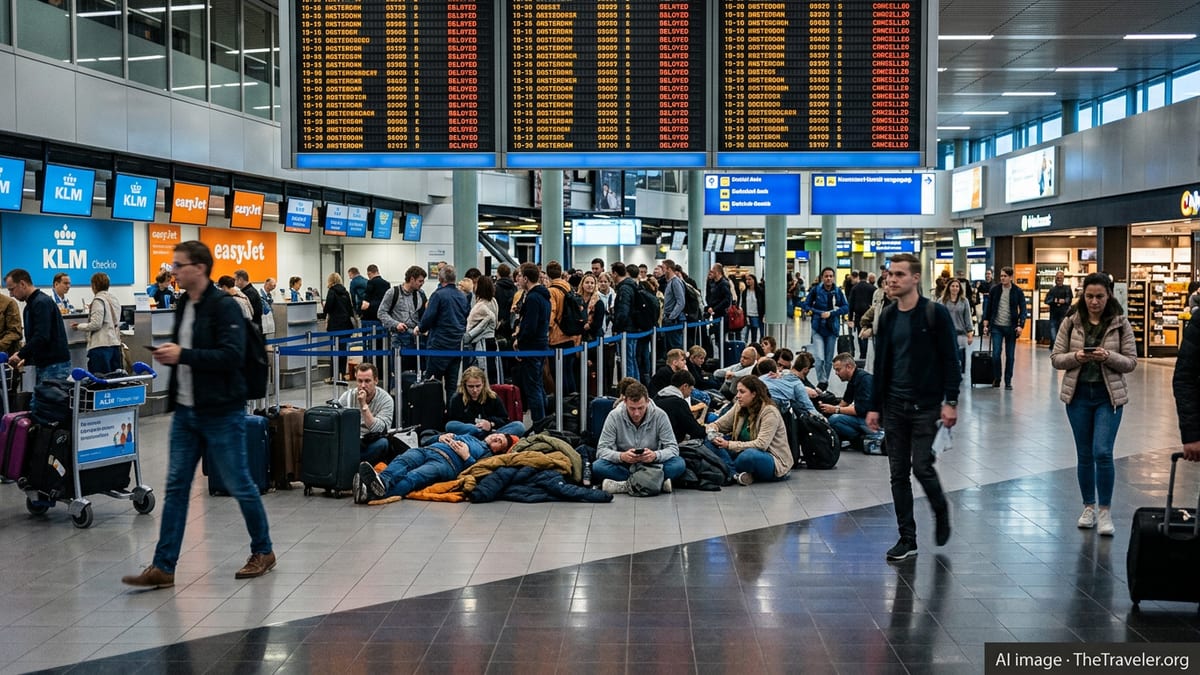
Air travel across Europe has been hit by another wave of disruption as more than 325 flights were cancelled and around 3,899 delayed in a single day, affecting passengers in Germany, France, the United Kingdom, the Netherlands, Switzerland, Greece and several other countries, according to operational data from airline and airport trackers.
Get the latest news straight to your inbox!
Major Hubs From Munich To Rome Buckle Under Pressure
The latest figures show widespread disruption at leading European hubs including Munich, Zurich, Paris, Rome and Amsterdam, with ripple effects reaching secondary airports across the continent. Operational summaries compiled from flight-tracking and passenger-rights platforms indicate that the brunt of cancellations and delays is concentrated at large connecting hubs where tight summer schedules leave little margin for recovery once problems begin.
Germany and France again stand out as epicentres of the disruption. Recent reports on European operations show that Frankfurt and Munich in Germany and Paris Charles de Gaulle and Orly in France have repeatedly featured among the worst-affected airports for delays and cancellations, particularly when weather, staffing gaps or industrial action coincide with peak travel periods. Similar patterns have been visible in Italy at Rome Fiumicino and Milan, as well as at Amsterdam Schiphol and London Heathrow.
In Switzerland, Zurich is reporting a persistent backlog of delayed services, while Geneva and Basel experience knock-on effects as aircraft and crews fall out of position. Publicly available data on recent disruption days shows that even a relatively small number of cancellations at these hubs can rapidly translate into hundreds of delayed flights as schedules throughout the network are adjusted and aircraft rotations are reworked.
Italy, Greece and other popular leisure markets are also being swept into the turbulence. Flight disruption trackers highlight mounting delays on services to and from Mediterranean destinations such as Athens, Thessaloniki, Heraklion and the Greek islands, as well as Spanish and Croatian coastal airports, as late-arriving aircraft from northern Europe miss their planned departure slots.
Lufthansa, Air France, easyJet, Swiss And Others Hit Hard
Among airlines, Lufthansa, Air France, easyJet and Swiss are listed among the most heavily affected by the latest wave of disruption, alongside other major European and leisure carriers. Operational overviews from recent disruption days across Europe show these airlines frequently at the top of rankings for both cancelled and delayed flights, reflecting their extensive networks and dependence on congested hubs.
On one recent disruption day tracked by industry monitoring services, carriers such as Lufthansa, easyJet, KLM, Air France and Swiss recorded some of the highest numbers of delays and cancellations across the continent, with easyJet alone facing several hundred delayed services at airports including Geneva, Paris Charles de Gaulle, Amsterdam Schiphol, Munich, Rome Fiumicino and Zurich. Other operators, including British Airways, ITA Airways, Austrian Airlines, Eurowings, Ryanair and Vueling, have also been repeatedly impacted.
The current pattern echoes earlier episodes this year in which widespread staffing shortages, air traffic control restrictions and weather-related constraints led to similar spikes in cancellations and delays. Reports focused on Europe-wide flight disruption in recent months describe repeated clusters of problems where a combination of storms over central Europe, tight turnarounds and saturated airspace have forced airlines to thin out schedules or cancel rotations at short notice.
For passengers, the impact is being felt through long queues at check-in and security, repeated gate changes and, in some cases, missed connections requiring overnight accommodation. Publicly available accounts from passenger-rights organisations show an uptick in claims and inquiries whenever these large disruption days occur, particularly when delays extend beyond three hours or cancellations are announced close to departure.
Weather, Staffing And Airspace Constraints Driving Disruption
Reports on recent days of disruption point to a familiar mix of factors behind the latest figures: unsettled weather over key air corridors, air traffic control capacity limits, and resource constraints at both airlines and airports. Aviation analysis published over the past year highlights how even moderate thunderstorms or low-visibility conditions can sharply cut runway capacity at hubs such as Munich, Zurich and Paris, forcing controllers to increase spacing between aircraft and leading to a rapid build-up of delays.
In parallel, air traffic control staffing shortages in several European states continue to reduce the number of flights that can pass through certain sectors of airspace at any one time. Eurocontrol capacity measures, which are designed to maintain safety, can require airlines to accept revised departure slots that push flights back by an hour or more. When these flow restrictions coincide with busy summer or holiday schedules, punctuality quickly deteriorates.
Industry coverage also notes the ongoing sensitivity of airline operations to industrial action, with strike action among airline staff or ground handlers earlier this year triggering substantial knock-on impacts across Germany, France, Italy and other markets. Even after such events end, it can take days for aircraft and crews to return to their planned positions, leaving schedules vulnerable to further disruption when the next bout of poor weather or congestion hits.
Operational experts quoted in recent analysis of European flight performance point out that hub-and-spoke networks are particularly exposed. When a single bank of flights at a hub such as Munich or Zurich is disrupted, the effect cascades through onward connections to cities across Europe and beyond, compounding the scale of cancellations and delays seen in aggregated statistics.
Passenger Rights And What Travellers Can Do
With hundreds of cancellations and thousands of delays recorded in the latest disruption, passenger-rights organisations are once again drawing attention to compensation and care rules under European regulations EC261 and UK261. Public guidance from these organisations explains that travellers departing from an airport in the European Union, or flying into the region with an eligible carrier, may be entitled to compensation when cancellations or long delays are not caused by extraordinary circumstances such as severe weather or full airspace closures.
In recent advisories, consumer groups have urged passengers to keep detailed records of their disruption, including boarding passes, booking confirmations and any written notifications from airlines about the reason for delays or cancellations. Many recommend that travellers request written confirmation of the cause of disruption where possible, as this can be important in later compensation claims.
Travel industry experts stress that, regardless of compensation eligibility, airlines are generally expected to provide rerouting or refunds when flights are cancelled, and to offer meals, refreshments and, where necessary, overnight accommodation when long delays occur. Passenger-rights platforms tracking the latest disruption across Munich, Zurich, Paris, Rome and other hubs report an increase in travellers seeking clarity on these entitlements, particularly where rebooking options are limited due to full flights.
Consumer advice published in recent days also suggests that passengers build in additional time for connections through major hubs and check flight status repeatedly before leaving for the airport. Where possible, booking longer minimum connection times and avoiding tight same-day transfers through the most congested airports can reduce the risk of being caught by rolling delays when Europe’s air traffic system comes under strain.
Outlook For Summer Travel Across Europe
The latest figures of more than 325 cancellations and close to 3,899 delays add to a growing body of evidence that European air travel remains vulnerable to repeated disruption spikes, particularly around peak travel periods. Data from multiple recent disruption days shows that similar patterns have emerged across Germany, France, the UK, the Netherlands, Switzerland, Italy, Greece and other markets whenever weather, staffing and capacity issues align.
Travel analysts note that airlines and airports have taken steps to bolster resilience, including modestly trimming schedules, hiring additional staff and investing in improved planning tools. However, with demand for flights across Europe returning to or exceeding pre-pandemic levels on many routes, even these adjustments may not fully offset the pressures created by constrained airspace and occasional industrial action.
For now, travellers planning flights through major hubs such as Munich, Zurich, Paris, Rome, Amsterdam and London are being advised by publicly available guidance to remain flexible, monitor their bookings closely and consider travel insurance policies that specifically cover missed connections and extended delays. As Europe heads deeper into the busy holiday season, the recent wave of 325 cancellations and nearly 3,900 delayed flights underscores how quickly conditions can deteriorate across the continent’s tightly interconnected aviation network.