


More news on this day
Regional Rail trains are beginning to roll again through North Philadelphia after an overnight SEPTA derailment at a critical junction halted multiple commuter lines and forced thousands of riders onto alternate routes across the region.
Get the latest news straight to your inbox!
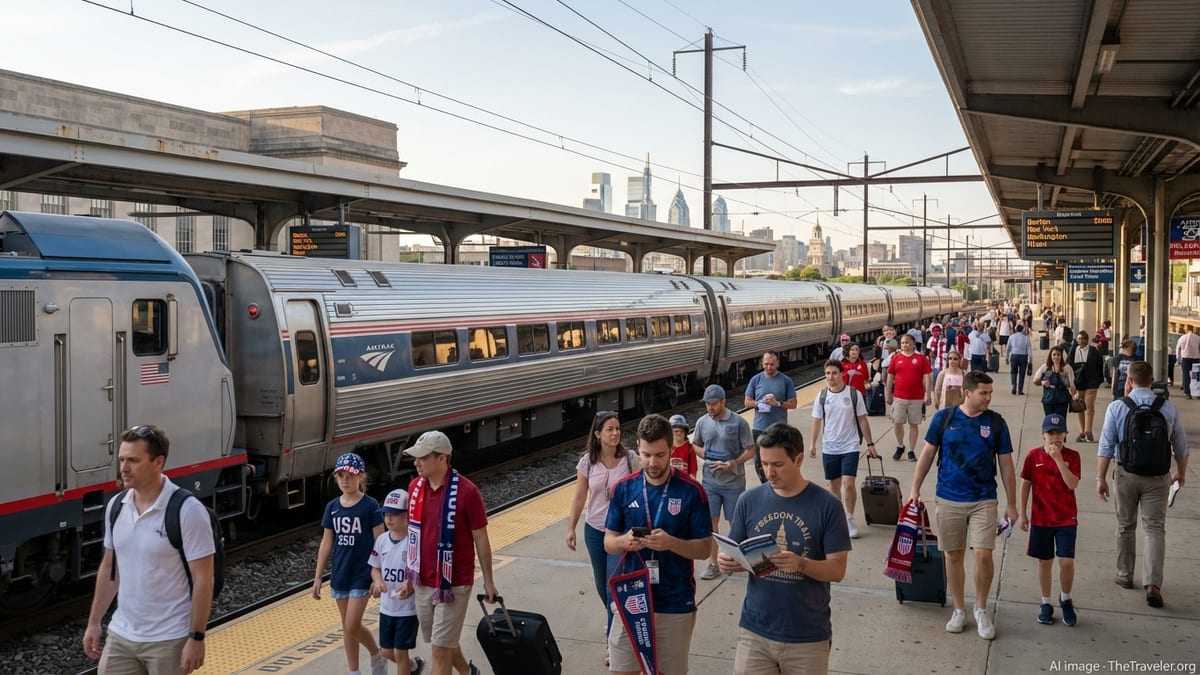
Service Resumes Through North Philadelphia Junction
Published coverage indicates that a SEPTA Regional Rail train derailed shortly after midnight near the North Philadelphia rail junction, a busy convergence point where several commuter lines funnel toward Center City. The disabled train blocked key tracks, triggering widespread suspensions and delays across the network during the Wednesday morning rush.
By later in the day, publicly available service updates showed that trains were again moving through the area on a limited schedule, with SEPTA shifting from systemwide disruption to a gradual restoration of Regional Rail service. Some lines returned with reduced frequencies or modified stopping patterns while crews remained on site to fully clear equipment and inspect the track.
Real-time advisories described residual delays across much of the network as dispatchers worked trains through the junction under temporary operating plans. Riders were urged to allow extra travel time, but reports indicated that the most severe suspensions from the morning had eased once at least two tracks through the junction were reopened.
Transit observers note that restoring even partial service through North Philadelphia significantly reduced the pressure on subway and bus routes that had been absorbing displaced rail riders since the early hours of the morning.
Widespread Morning Disruptions Ripple Across the Network
According to multiple local news outlets, the derailment initially forced the suspension of three Regional Rail lines outright, while the remaining routes experienced extensive delays, consolidations, and short turns. Early-morning riders reported crowded platforms, abrupt service changes, and directives to transfer to the Broad Street Line or Market-Frankford Line to reach Center City.
Coverage from television and radio outlets described a morning commute in which some trains turned back short of their usual terminals, others were rerouted over alternate tracks, and many scheduled trips were canceled entirely. Photos and broadcast footage showed station ambassadors and signage directing riders toward subway connections at Fern Rock, Temple University, and other transfer points.
Social media posts and rider accounts compiled by local media highlighted inconsistent information as the situation evolved, with some passengers only learning of suspensions upon arriving at outlying stations. As the morning progressed, updated timetables and alerts clarified which trains would operate, but delays of 30 minutes or more remained common on several lines.
The outage underscored how dependent the Philadelphia region has become on the chokepoint at North Philadelphia, where lines to Trenton, Chestnut Hill, the northern suburbs, and the western branches converge before entering the Center City tunnel.
Safety Checks and Track Repairs Continue After Incident
While the full cause of the derailment had not yet been detailed in early reports, publicly available information indicated that the incident involved a set of cars leaving the track at low speed as the train navigated a complex series of switches. There were no immediate reports of life-threatening injuries, but several passengers were evaluated for minor complaints.
Transportation coverage described an intensive recovery effort at the junction, with crews using heavy equipment to re-rail or remove damaged cars and to examine turnouts, rail fastenings, and signaling equipment in the area. Rail safety specialists note that such inspections typically extend beyond the immediate point of derailment to verify that no secondary defects exist along adjacent tracks.
Until those inspections are complete, operations through the junction are expected to remain constrained, even as trains resume. Published coverage points out that regional railroads often impose lower speeds and additional spacing between trains while investigators document the scene and infrastructure teams confirm that the track structure is sound.
The incident comes against the backdrop of broader safety scrutiny of passenger rail operations in the Northeast, including recent federal investigative reports examining equipment, track conditions, and operating practices on commuter networks.
Commuters Face Longer Trips and Lasting Delays
The derailment’s timing created immediate challenges for riders commuting into Philadelphia on one of the hottest weeks of the summer. Radio and television segments gathered accounts of passengers leaving home early only to find their usual morning trains canceled, and of others opting to work remotely after seeing disruption alerts.
With several key Regional Rail lines curtailed, many riders shifted to the Broad Street and Market-Frankford subway lines, pushing peak-hour crowding higher than normal. Bus routes feeding into regional hubs such as Fern Rock and 30th Street also saw heavier loads as commuters sought alternate paths into Center City.
Local travel bloggers and transit-focused outlets observed that the derailment highlighted persistent concerns about redundancy in the region’s rail network. When one junction fails, few parallel options exist, meaning that a single incident can upend commuting patterns from Bucks, Montgomery, and Delaware counties all at once.
Even after service restoration, riders were urged by publicly available advisories to check schedules closely for the remainder of the day and to expect lingering gaps in frequency as SEPTA rebalanced rolling stock and crew assignments.
Regional Travel and Tourism Feel the Impact
The disruption reverberated beyond daily commuters. Regional Rail connects Center City Philadelphia with key suburban destinations, universities, and regional attractions, and the derailment coincided with the busy summer travel period. Visitors arriving on Amtrak or intercity buses often rely on SEPTA trains to reach neighborhoods and towns not served directly by long-distance carriers.
Travel industry coverage noted that some hotels and event venues adjusted arrival guidance for guests, pointing them toward subway or rideshare options while Regional Rail service remained limited. Tourism partners emphasized that central city attractions remained accessible, but acknowledged that the unexpected suspension added complexity for travelers unfamiliar with the transit system.
For residents and visitors planning upcoming trips, transportation reporters advised monitoring transit updates closely over the next several days. While core service through North Philadelphia has been restored, further schedule changes are possible as railcar inspections continue and the incident review progresses.
The episode serves as another reminder of how closely the region’s economic activity, commuting patterns, and tourism depend on the reliability of the Regional Rail network, and how quickly a disruption at a single junction can ripple across greater Philadelphia.