


More news on this day
Thousands of air passengers across Europe are facing severe disruption as a fresh wave of cancellations and delays ripples through major hubs in Italy, the United Kingdom, Portugal, Germany, Russia, Norway and Iceland, with nearly 216 flights cancelled and more than 2,300 delayed, affecting services operated by Air France, Swiss, Vueling, Transavia France and several other carriers.
Get the latest news straight to your inbox!
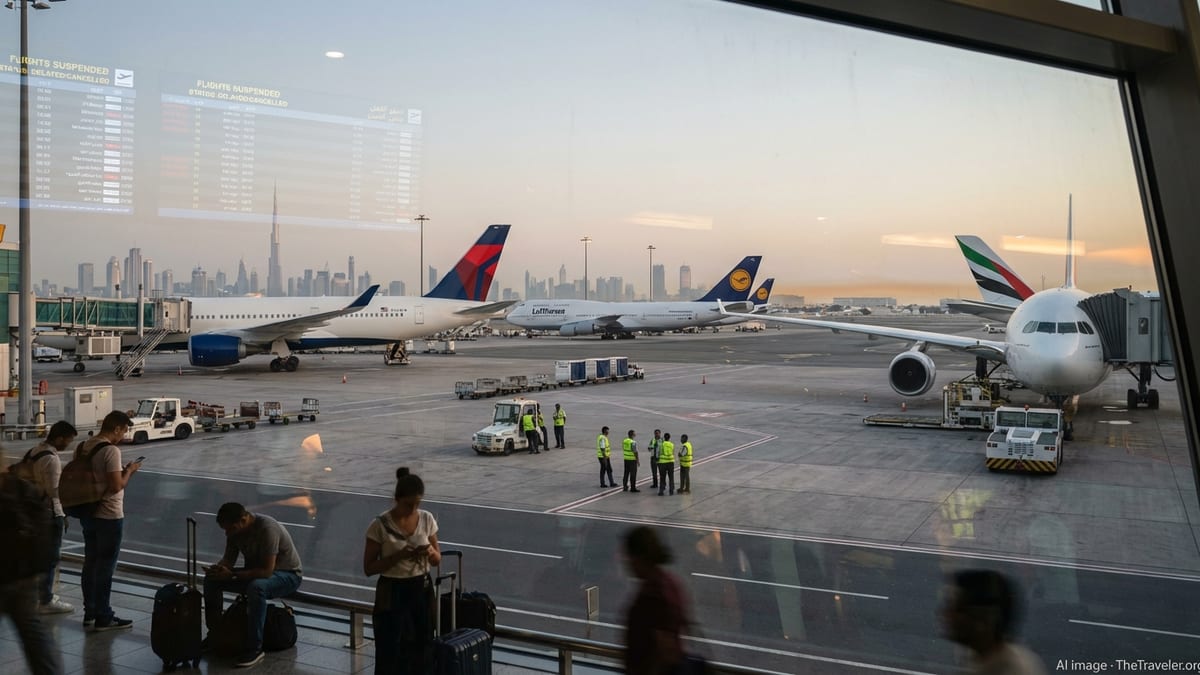
Gridlock Spreads From Southern Europe To The North Atlantic
The latest bout of travel disruption has unfolded over several days, coinciding with the early summer peak as leisure and business demand rises sharply. Published data from aviation tracking platforms and airport dashboards shows hundreds of delayed departures and arrivals across the European network, with a smaller but still significant number of outright cancellations.
At Rome Fiumicino, one of Europe’s busiest Mediterranean gateways, recent reporting indicates around 270 delayed flights and multiple cancellations in a single day, largely attributed to congestion, staffing constraints and reactionary knock-on effects from earlier disruptions. Similar patterns are visible at Lisbon and Porto, where a nationwide strike in Portugal this week prompted airlines to trim schedules and warn of disruption on services to and from the country.
Further north, Keflavík International Airport in Iceland has reported a cluster of cancellations and at least a dozen delays as severe weather combined with surging transatlantic traffic. Coverage from regional outlets notes that Icelandair and British Airways were among the carriers affected, with passengers bound for the United Kingdom, mainland Europe and North America facing extended waits and rebookings.
These localized crises have combined to create a continent-wide ripple, with schedules tightening at London, Paris, Amsterdam, Geneva, Oslo and Moscow as aircraft and crews fall out of position, amplifying the impact far beyond the original disruption points.
Rome, Geneva, Oslo And Moscow See Cascading Knock-On Delays
In Italy, the focus has been on Rome Fiumicino, where published accounts describe long queues, crowded terminals and rolling departure boards marked by late-running flights. ITA Airways and several low-cost rivals face mounting operational pressure as delays in aircraft turnaround times compound throughout the day.
Geneva has emerged as another pressure point, with publicly available tracking data showing rising departure and arrival delays involving Swiss, easyJet, Air France and regional carriers. The airport’s role as a key hub for both leisure travelers heading to Southern Europe and business passengers moving between France, Switzerland and the wider continent has left it particularly vulnerable to network shocks originating elsewhere.
In Norway, Oslo Gardermoen has seen its own wave of knock-on disruption following earlier issues in Scandinavia and the North Atlantic corridor. Travel update pages from Nordic carriers highlight operational challenges and advise passengers to monitor flight status closely, underscoring how a relatively small number of cancellations can cascade into widespread timetable slippage.
Russian airports, led by Moscow, are also registering elevated delay levels on flights linking to European hubs such as Rome, Geneva and London. Publicly available information from flight status aggregators points to late departures and missed connections as aircraft arriving from already delayed European services struggle to recover their schedules.
Legacy And Low-Cost Airlines Hit, Including Air France, Swiss And Vueling
The disruption is cutting across the full spectrum of European airlines, impacting both traditional network carriers and low-cost operators. Flight-monitoring services indicate that Air France, Swiss, Vueling and Transavia France are among the brands experiencing notable schedule interruptions on routes touching Rome, Geneva, Oslo and other congested hubs.
For full-service carriers, the complexity of hub-and-spoke networks magnifies the shock. A delayed departure from a Mediterranean airport can quickly lead to missed connection banks at Paris, Zurich or Amsterdam, leaving travelers stranded and forcing airlines to arrange rerouting or overnight accommodation. Even when flights are not cancelled, extended delays of several hours can trigger significant knock-on costs.
Low-cost airlines, which typically operate tight turnarounds and high aircraft utilization, are likewise exposed. When a single aircraft falls substantially behind schedule, it can disrupt multiple legs in a single day, affecting passengers across several countries. Recent coverage from European consumer travel outlets notes growing frustration among travelers booked on budget carriers who are seeing last-minute schedule changes or late-night arrivals far beyond the original timetable.
Operational reports across multiple airports suggest that the current wave of disruption is not concentrated on one or two carriers but is instead diffused across many airlines, complicating efforts by passengers to switch providers or reroute easily.
Weather, Strikes And Capacity Constraints Drive The Disruption
Several overlapping factors appear to be driving this latest surge in cancellations and delays. In Portugal, a general strike has led to reduced staffing and constrained airport operations at Lisbon and Porto, prompting airlines to proactively cancel some services and warn of potential last-minute changes on others. Travel alerts from major European carriers referencing the industrial action have advised passengers to check their bookings frequently and consider flexible options.
In the North Atlantic, adverse weather has been a key contributor. Reports from Iceland highlight strong winds and challenging conditions around Keflavík, contributing to a cluster of cancellations and extended delays that have impacted connections to the United Kingdom, mainland Europe and North America. Given Keflavík’s role as a transfer hub, even a handful of cancelled transatlantic sectors can upend travel plans for hundreds of passengers.
Underlying these immediate triggers are broader structural pressures. Recent analyses from European air traffic management bodies show that average delays per flight have been creeping upward compared with pre-pandemic norms, as airspace complexity, staffing shortages and record passenger demand all strain the network. Seasonal peaks, such as the early summer holiday period now underway, make the system more vulnerable to any new shock.
With many airlines already operating at high load factors and tight schedules, their ability to absorb sudden shocks from weather, strikes or technical issues without disrupting passengers is limited, increasing the likelihood that relatively localized events will propagate across multiple countries.
Passengers Confront Long Queues, Missed Connections And Limited Options
For travelers on the ground, the practical consequences are lengthy queues at check-in and security, crowded departure halls and uncertainty over when or whether flights will depart. Images shared across news outlets and social platforms from Rome and Keflavík show passengers clustered around information screens and service desks as they attempt to secure new itineraries.
Consumer guidance widely circulated in recent weeks encourages affected passengers to familiarize themselves with European air passenger protection rules, including EU261 in the European Union and UK261 in the United Kingdom, which can provide compensation or assistance in certain delay and cancellation scenarios. Travel experts caution, however, that eligibility often depends on the cause of the disruption and the operating carrier.
Publicly available advice from airlines across the region recommends that passengers whose flights are scheduled over the coming days monitor booking apps and airport status pages closely, arrive early for departures, and be prepared for potential last-minute gate changes or rebookings. Travelers connecting through major hubs such as Rome, Geneva, London, Paris and Amsterdam are being urged to allow extra time between flights where possible.
With the summer travel season only just beginning, aviation analysts cited in recent European coverage warn that the current wave of disruption may be a sign of further turbulence to come, particularly if operational bottlenecks, high demand and periodic industrial action continue to align across the continent.