


More news on this day
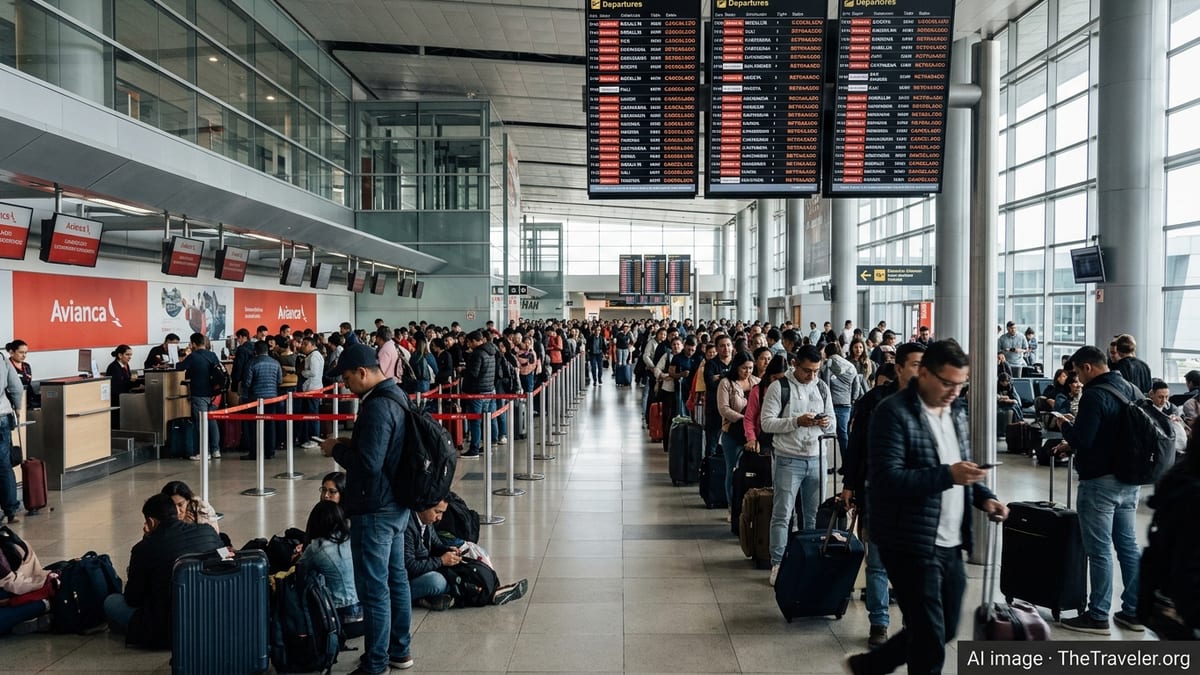
Hundreds of travelers have been left stranded in Colombia as a fresh wave of delays and cancellations disrupted at least 64 flights and grounded 10 services across Bogotá and Medellín, impacting operations by Avianca, Air Canada, Aerolíneas Argentinas, United Airlines and several other carriers, according to live tracking data and local media coverage on June 5.
Get the latest news straight to your inbox!
Major Hubs in Colombia Struggle With Knock-On Disruptions
El Dorado International Airport in Bogotá and José María Córdova International Airport serving Medellín are once again under pressure as delays ripple through domestic and international networks. Publicly available airport boards and tracking platforms on June 5 show a growing list of late departures and arrivals on key trunk routes between the two cities and onward connections to North and South America.
Avianca, Colombia’s largest carrier, appears to be bearing the brunt of the disruption, with multiple Bogotá–Medellín services running behind schedule and select departures to North America and other regional hubs also affected. Schedules involving code-share partners and alliance carriers have added complexity, leaving passengers on tickets issued by foreign airlines dependent on Avianca-operated sectors particularly vulnerable when irregular operations occur.
Industry-focused trackers indicate that the operational strain is delay-driven rather than dominated by wholesale cancellations, but even short hold-ups are compounding across the day. Congested departure banks at peak times in Bogotá and weather-sensitive approaches into Medellín’s mountainous valley are combining to create a fragile operating environment where minor issues can quickly escalate into missed connections.
For travelers, the result has been long lines at service desks, missed onward flights and improvised overnight stays as carriers try to rebook disrupted passengers. Online accounts describe travelers forced to rearrange entire itineraries when a single delayed domestic leg in Colombia caused them to miss long-haul departures to North America and Europe.
International Carriers Entangled Through Shared Itineraries
While Avianca’s own network is central to the disruption, partner airlines are increasingly entangled. Flights sold by Air Canada and United Airlines that rely on Avianca-operated segments within Colombia have been among those impacted, according to booking and itinerary data shared in public forums and trip-tracking tools.
Travelers connecting between Canada or the United States and secondary Colombian cities commonly route through Bogotá or Medellín, with the long-haul portion operated by a North American carrier and the domestic link flown by a local partner. When the shorter regional flight is delayed or cancelled, passengers can miss transcontinental legs that may only operate once per day, intensifying the impact of even moderate schedule changes.
Reports indicate that Aerolíneas Argentinas passengers using Colombian hubs as a bridge between Argentina and other parts of the region have also been caught up in the disruption. Mixed-carrier itineraries across South America are particularly exposed to operational challenges, because each airline’s options to reaccommodate disrupted passengers are shaped by bilateral agreements, available seat capacity and local regulations.
In practical terms, this means that a delay on a domestic flight between Bogotá and Medellín can ultimately reverberate onto flights bound for Toronto, New York or Buenos Aires. As aircraft and crew rotate through multiple sectors in a single day, recovery from a morning disruption can take many hours, and in some cases pushes knock-on delays into the late evening departure banks.
Weather, Congestion and Fleet Pressures Behind the Numbers
The tally of at least 64 delayed flights and 10 outright cancellations across Bogotá and Medellín on June 5 reflects a combination of operational constraints rather than a single root cause. Weather-related restrictions in Colombia’s Andean corridor are a recurring challenge; low cloud, heavy rain and reduced visibility can force spacing between arrivals and departures, leading to airborne holding patterns and ground delays.
Congestion at El Dorado, one of Latin America’s busiest airports, further amplifies these weather effects. When traffic is heavy, even routine runway inspections, minor technical checks or slow boarding processes can trigger a chain reaction of delays. Airlines must also manage aircraft rotations that link domestic Colombian sectors with international flights, making it harder to isolate local issues from the broader network.
Fleet availability is another key factor. Regional and international carriers alike are managing maintenance schedules, high utilization and, in some cases, lingering supply chain constraints related to parts and repairs. Publicly accessible policy documents from airlines such as Avianca highlight how unplanned technical interventions can force last-minute equipment changes or cancellations, especially when spare aircraft are limited during peak travel periods.
These structural pressures mean that even when the number of outright cancellations remains relatively low, passengers can still experience severe disruption. Lengthy delays often result in missed connections, rebookings on later flights or rerouting through alternative hubs, effectively transforming a single delayed segment into an overnight interruption.
Stranded Travelers Face Long Waits and Limited Options
For the hundreds of travelers caught in this latest disruption, the most immediate challenge has been uncertainty. Many passengers only learn of delays or cancellations upon arrival at the airport, or through last-minute app notifications, leaving limited time to adjust plans. Seats on subsequent departures can quickly fill as multiple affected flights compete for the same limited spare capacity.
Travelers stranded in Bogotá and Medellín have described waiting hours to speak with staff at counters or call centers as airlines work through queues of disrupted bookings. Some have resorted to purchasing fresh tickets on competing carriers or rearranging ground transport and accommodations at their own expense while seeking reimbursement later under applicable policies.
Consumer guidance documents and tariff rules published by several of the affected airlines outline potential remedies in cases of significant delay or cancellation, including rebooking on the next available service, meal vouchers or hotel accommodation during overnight disruptions. However, the level of support and eligibility criteria can vary by airline, route, ticket type and the underlying cause of the disruption, leaving many travelers unsure of what assistance they can reasonably expect.
In this context, experts often recommend that passengers keep boarding passes, booking confirmations and receipts for incidental expenses, and to monitor flight status continuously via both airport displays and airline channels. During multi-carrier itineraries, it can also be crucial to understand which airline is operating each leg, since responsibility for care and compensation typically rests with the operating carrier rather than the company that sold the ticket.
What Travelers Through Colombia Should Watch in the Coming Days
Looking ahead, the situation at Bogotá and Medellín will depend on how quickly airlines can clear backlogs and stabilize rotations. If weather conditions remain stable and no additional technical or staffing issues arise, carriers may be able to absorb delays over the next several operating cycles, gradually reducing wait times and restoring more predictable departure patterns.
Travel industry observers note, however, that peak travel periods in Colombia and across the wider Americas network leave little slack in airline schedules. Any further operational shocks, whether from adverse weather, air traffic control restrictions or additional aircraft maintenance needs, could reignite clusters of delays and cancellations similar to those recorded on June 5.
Passengers planning to travel through Bogotá or Medellín in the near term are therefore being encouraged by publicly available advisories and travel forums to allow extra time for connections, particularly when transferring between domestic and international flights. Where possible, selecting longer layovers and earlier departures in the day can provide a buffer against rolling delays.
With major carriers such as Avianca, Air Canada, Aerolíneas Argentinas and United Airlines all intertwined in Colombia’s hub operations, the latest wave of disruptions underscores how quickly localized issues can become a region-wide challenge for travelers. Until conditions ease and schedules normalize, anyone flying through these airports may need to prepare for a less predictable journey than usual.