


More news on this day
An intense August heatwave is driving temperatures to record or near-record levels across much of Europe, straining power systems, disrupting river transport and forcing changes to travel plans, while Italy accelerates new energy and infrastructure partnerships with Hungary and other neighbors to keep goods and people moving.
Get the latest news straight to your inbox!
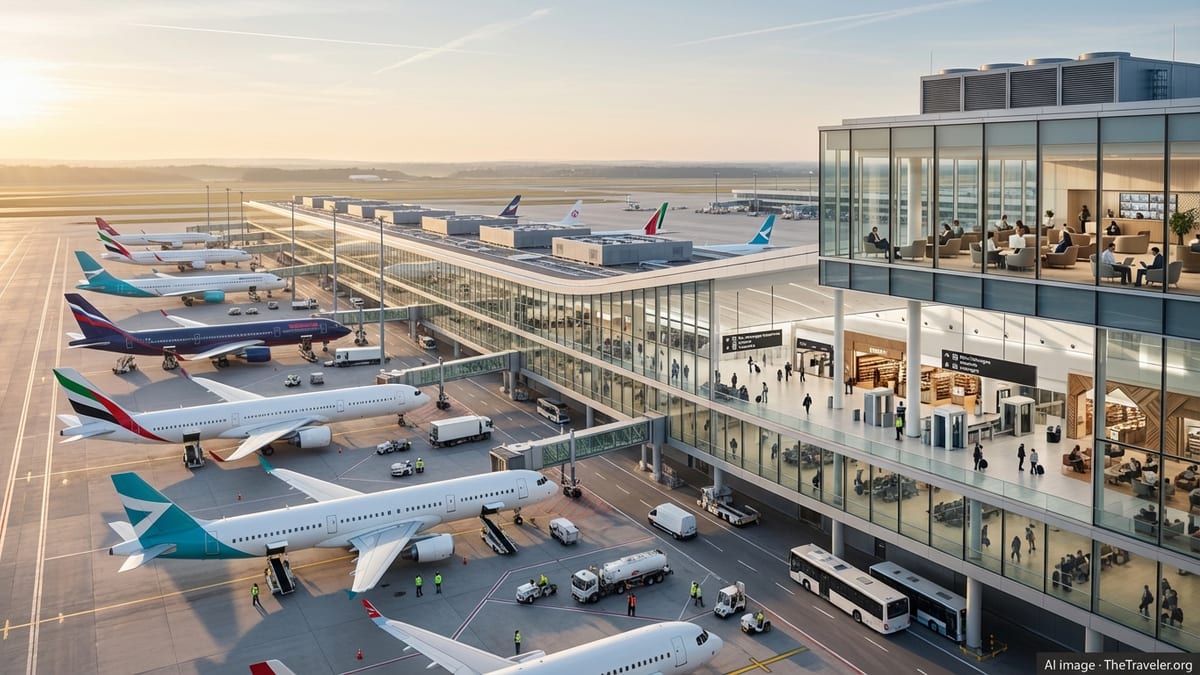
Heatwave Pushes Europe’s Infrastructure to the Limit
The current heatwave sweeping Europe is bringing multiple systems close to breaking point. Publicly available information shows that major cities across Italy are under top-level heat alerts as temperatures climb well above seasonal norms, while parts of Central and Eastern Europe report prolonged drought conditions and elevated wildfire risk.
High temperatures are translating directly into infrastructure stress. Electricity demand for air conditioning is surging at the same time that some power plants, particularly those reliant on river water for cooling, are facing operational constraints. Reports from Hungary describe mounting pressure on the country’s energy network as drought reduces the cooling capacity of the Danube, the river that runs alongside its main nuclear facility.
The heat is also challenging transport systems. Rail networks are imposing speed restrictions on some routes because of the risk of track deformation, while airlines and airports in several countries are adjusting schedules to cope with storms, turbulence and heat-related runway limitations. Travel industry updates indicate scattered delays and itinerary changes, especially for long-distance and cross-border journeys.
Tourism flows, a critical part of Europe’s summer economy, remain strong but more complicated. Travelers are being urged by operators and national meteorological services to adjust plans, carry out more careful timing of outdoor activities and prepare for last-minute changes in river cruises and rail connections.
Rivers at Critically Low Levels Disrupt Trade and Cruises
The impact of the heatwave is most visible on Europe’s great rivers. Monitoring data cited in recent coverage show extremely low water levels along large stretches of the Rhine and Danube, with similar conditions reported on Italy’s Po. In some locations, river depth has dropped close to or below key navigation thresholds for heavily loaded cargo vessels.
These low levels are disrupting both freight and tourism. Container ships and fuel barges are reported to be carrying lighter loads or facing navigation bottlenecks on the Rhine corridor, a central artery for industrial supply chains. On the Danube, emerging sandbanks and narrow channels are forcing captains to proceed more slowly and, in some cases, to alter or suspend routes entirely.
River cruising, a popular option for visitors in summer, is particularly exposed. Travel discussion forums and industry bulletins describe cruise vessels on both the Rhine and Danube being forced to modify itineraries, bus passengers around unnavigable stretches or consolidate journeys across different ships. Some departures have been canceled at short notice, leaving travelers rebooking overland segments or shifting to coastal destinations.
In Italy, low flows along the Po are again affecting river-based tourism and local transport, while also feeding concerns about irrigation and hydropower capacity. The combination of agricultural stress, reduced inland shipping options and limits on some power plants is sharpening the focus on how repeated heatwaves could reshape the continent’s economic geography over the next decade.
Italy and Hungary Build a Strategic Energy and Transport Corridor
Against this backdrop, Italy and Hungary are stepping up cooperation on energy security and resilient transport links. Recent statements from Italian and Hungarian ministries highlight a growing strategic axis connecting the Adriatic port of Trieste with the Danube region, aimed at improving logistics, fuel diversification and connectivity across Central and Eastern Europe.
In February 2026, Italy’s Ministry of Infrastructure and Transport reported a high-level meeting in Rome between senior Italian and Hungarian representatives focused on strengthening collaboration in logistics, connectivity and infrastructure investment, with Trieste identified as a central hub. Parallel reporting by European trade and logistics outlets describes the development of a Hungarian-managed terminal at the port as a key link between the Mediterranean, Central Europe and the Balkans.
Energy security is at the heart of this strategy. Hungary, which has historically relied heavily on Russian gas, is pursuing new routes that allow access to liquefied natural gas arriving at Italian terminals and moving north through Slovenia. Industry communications from regional gas operators and trade agencies detail a planned Slovenian-Hungarian pipeline connection designed to enable an Italy-Slovenia-Hungary gas corridor, framed as a contribution to regional supply diversification and resilience during future supply shocks or climate-driven disruptions.
Rail cooperation adds another layer. Earlier agreements between Italian and Hungarian rail companies, along with more recent European work on climate-resilient rail corridors, are being interpreted by analysts as part of a broader effort to shift more freight from vulnerable river routes to electrified rail lines. This could become especially important when prolonged low-water episodes reduce the capacity of the Rhine and Danube for heavy cargo.
What Travelers Are Experiencing on the Ground
For travelers, the combined effect of heat and infrastructure strain is being felt in a series of smaller, cumulative disruptions rather than a single continent-wide shutdown. Airline operations remain largely intact, but high temperatures and convective storms are contributing to localized delays and occasional cancellations at busy hubs. Travelers connecting between southern Europe and Central or Eastern Europe are being advised by carriers and online travel agencies to allow extra time for transfers.
Rail remains one of the more reliable options, yet climate-related adjustments are visible. On some cross-border routes, including those linking Italy to Austria and Hungary, operators are reportedly reducing speeds on certain sections during the hottest hours to protect track integrity and overhead lines. This can lengthen journey times, particularly on popular overnight or long-distance services.
On the rivers, passengers booked on Rhine and Danube cruises are facing the greatest uncertainty. Public posts from cruise customers and operator notifications describe last-minute changes from full-length river itineraries to combinations of shortened sailings and coach transfers, or re-routing to segments that still offer sufficient depth. Those planning river cruises in late August and early September are being encouraged to monitor operator advisories closely and review booking conditions relating to low-water contingencies.
Heat itself is also reshaping daily travel behavior. City tourism offices in Italy and neighboring countries are promoting earlier start times for sightseeing, expanded shaded areas and increased access to drinking water in historic centers. Travelers are being reminded to factor in higher cooling costs, potential air conditioning limitations in older buildings and the prospect of restrictions on outdoor events during peak afternoon heat.
How Europe Is Responding and What Comes Next
The current heatwave is reinforcing a trend that scientists and European agencies have been tracking for years: climate extremes are no longer isolated shocks but recurring stress tests for transport and energy systems. Recent reports from European technical bodies emphasize the need to adapt river shipping rules, raise design standards for rail and road infrastructure, and update energy planning to reflect hotter, drier summers and more volatile demand.
Italy’s expanding partnerships with Hungary, Slovenia and other regional neighbors are viewed by many analysts as a practical example of that adaptation. By consolidating Trieste’s role as a gateway to the Danube basin, building new gas interconnections and promoting rail freight along north-south corridors, the countries involved aim to reduce their exposure to single points of failure such as low river levels or disrupted pipeline flows.
For governments, the short-term focus remains on managing acute risks: ensuring sufficient power supply during heat spikes, maintaining navigation where possible, and providing timely information to transport operators and travelers. Medium-term planning is concentrating on diversified energy routes, upgraded cooling systems for critical plants and the gradual redesign of river infrastructure to cope with more frequent low-water episodes.
Travelers planning trips to Europe in the coming weeks are unlikely to see a halt to mobility, but they can expect a more dynamic environment in which itineraries may adjust rapidly to local conditions. The emerging Italy-Hungary corridor, and similar cross-border projects, are intended to keep that mobility viable in a future where extreme heat and water scarcity are expected to become a regular feature of the summer landscape.