


More news on this day
Air travelers flying to and within Europe can continue to claim cash compensation when arrival delays reach three hours, after European Union institutions agreed in mid-June 2026 to retain the core protections of the long-standing Regulation 261/2004.
Get the latest news straight to your inbox!
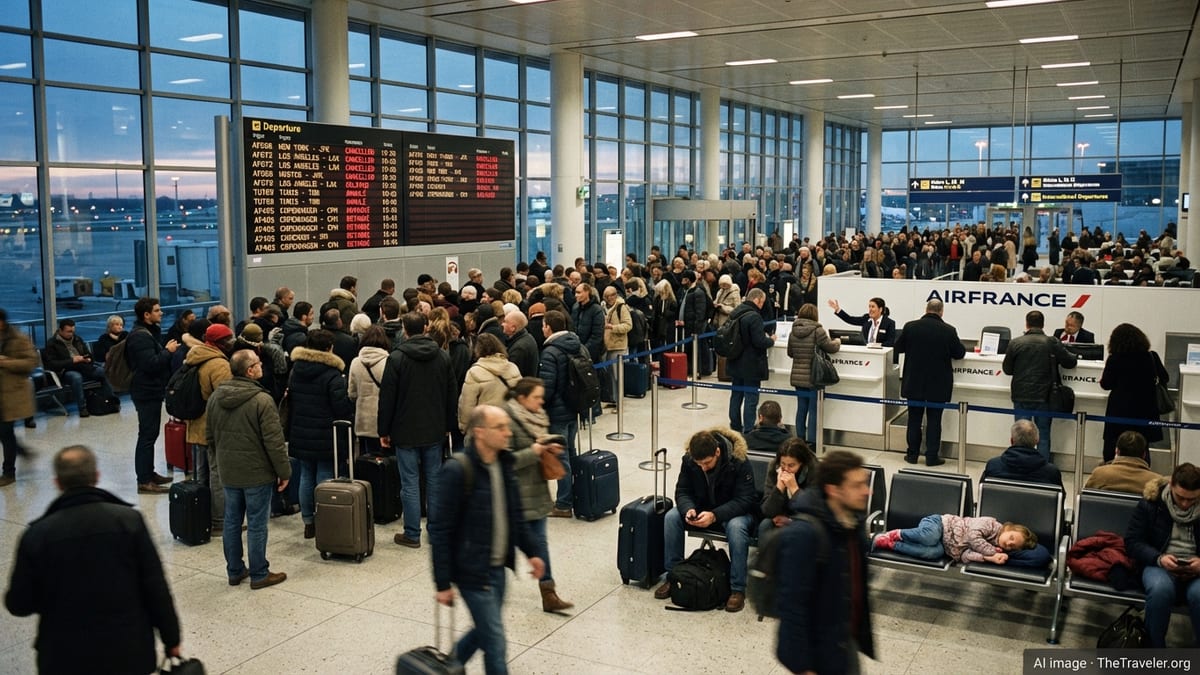
Landmark EU Deal Confirms the Three-Hour Threshold
A political agreement reached on 15 June 2026 between the European Parliament and EU member states confirms that passengers will keep the right to compensation when they arrive at their final destination three hours or more after the scheduled time, provided the disruption is not caused by extraordinary circumstances. The deal follows years of debate over whether to relax the rules in favor of airlines.
Publicly available information from EU institutions indicates that the revised framework keeps the existing compensation bands for most journeys. Travelers delayed by at least three hours can generally claim 250 euros for flights up to 1,500 kilometers, 400 euros for flights between 1,500 and 3,500 kilometers, and 600 euros for longer routes. These levels apply across the European Union, including key markets such as Germany, France, Spain, Italy and the Netherlands.
The compromise text also confirms that compensation rules will continue to apply to both cancellations and long delays, aligning with past case law from the Court of Justice of the European Union. That court previously held that passengers on severely delayed flights should be treated in a similar way to those whose flights are canceled, provided they suffer a comparable loss of time in reaching their destination.
While some governments and airline groups had pressed to raise the delay threshold to four or even five hours on longer routes, reports from Brussels-based outlets show that consumer protection advocates and the Parliament resisted those changes. The final agreement keeps the three-hour trigger that has been in place in practice across Europe since the late 2000s.
Who Is Covered: Germany, France, Spain, Italy, Netherlands and Beyond
The three-hour compensation rule is anchored in EU law and applies in the 27 member states, including major hubs such as Germany, France, Spain, Italy and the Netherlands. It also typically covers flights departing from airports in these countries to other EU destinations, as well as to non-EU destinations when the operating carrier is an EU airline.
Passengers flying from outside the EU into Europe are also protected when the operating airline is based in the European Union, according to guidance widely circulated by passenger rights portals. For example, a traveler flying with a French or Dutch carrier from New York to Paris or Amsterdam can still rely on the three-hour compensation rule if arrival in Europe is significantly delayed and the airline is responsible.
The protection extends to connecting itineraries on a single booking when the journey starts in the EU. If a delay in Madrid, Paris, Frankfurt, Rome or Amsterdam causes a missed onward connection to another European city and the traveler reaches the final destination three or more hours late, they may be entitled to compensation, even when one of the flight legs involves a non-EU airport.
Separate but largely similar rules remain in force in associated jurisdictions such as the United Kingdom, which retained its own version of the regime for flights covered by UK law after Brexit. Travelers, however, should check carefully which regulation applies to a specific journey, especially when itineraries combine EU, UK and non-European airports and carriers.
How the Three-Hour Compensation Works in Practice
The key factor for compensation is the delay at arrival, not the delay at takeoff. Publicly available case summaries from European courts underline that the decisive moment is when passengers can disembark at their final destination. If boarding was late but the pilot made up time in the air and the aircraft arrived two hours and fifty minutes late at the gate, cash compensation would not usually be due.
When the delay at arrival reaches three hours or more, the fixed compensation amounts apply, unless the airline can prove that extraordinary circumstances caused the disruption. Examples cited in official and industry guidance include severe weather, certain air traffic control restrictions or hidden manufacturing defects. Routine technical issues, staffing problems or rotation delays are typically seen as falling within the airline’s responsibility.
In parallel to compensation, airlines must still provide care and assistance once delays exceed specific thresholds. Depending on the flight distance and waiting time, this can include meals and refreshments, hotel accommodation when an overnight stay becomes necessary, and ground transport between airport and hotel. The recent reform discussions also focused on clarifying rerouting obligations if carriers cannot offer a new itinerary within a reasonable period.
Reports on the June 2026 deal indicate that airlines will be required to give passengers standardized information on their rights and on how to claim compensation within a set timeframe after a major delay or cancellation. This is intended to reduce confusion at busy airports and to limit disputes over eligibility and amounts.
What Passengers Should Do When a Flight Is Delayed
Travelers facing a long delay in Germany, France, Spain, Italy, the Netherlands or any other EU country are advised by consumer organizations to keep detailed records from the moment disruption is announced. This typically means saving boarding passes, booking confirmations and any emails or app notifications, as well as noting what explanation the airline provides at the airport.
Passengers should check the actual arrival time at their final destination and calculate whether the three-hour threshold has been met. Online flight trackers and airline communications can help demonstrate the exact delay, although the most important evidence is usually the scheduled and actual arrival times listed in the booking or carrier records.
Most airlines now offer online forms for EU 261 claims. Travelers usually need to provide the booking reference, flight number, dates, route and a short description of the disruption. If the carrier rejects a claim on the grounds of extraordinary circumstances, passengers may contact national enforcement bodies or dedicated alternative dispute resolution schemes in the country where the incident occurred or where the airline is based.
Specialist claim services also operate in many European markets, particularly in Germany, Spain, Italy, France and the Netherlands, but these typically charge a success fee. Publicly available consumer guidance suggests that many straightforward cases can be handled directly with the airline, especially when the delay is clearly above three hours and no exceptional external factor is involved.
Planning Ahead for Summer and Winter Travel in Europe
The confirmation that the three-hour compensation rule will remain in place comes just ahead of the busy European peak seasons, when congestion, storms and airspace restrictions often test airline schedules. Major hubs such as Frankfurt, Munich, Paris Charles de Gaulle, Amsterdam Schiphol, Madrid Barajas and Rome Fiumicino frequently experience knock-on delays when a single disruption cascades through the network.
Travel specialists recommend building buffer time into itineraries that rely on tight connections, particularly when traveling onward to smaller regional airports or long haul services departing from Europe. Leaving additional time between flights can reduce the risk of missed connections, even if compensation might be available in the event of major disruptions.
Passengers booking trips for 2026 and 2027 can factor the preserved EU protections into their planning, especially when comparing carriers on similar routes. While the regulation does not distinguish between low cost and network airlines, on time performance and customer service policies can differ significantly between companies.
For travelers from outside Europe, the retention of the three-hour rule provides a degree of predictability when flying into or within the European Union. Understanding when compensation applies, what documentation to keep and how to submit a claim can help passengers assert their rights with confidence if their journey through Germany, France, Spain, Italy, the Netherlands or any other EU destination does not run to schedule.