


More news on this day
New York’s LaGuardia Airport has reopened one of its primary runways after a newly discovered pavement depression prompted a temporary closure, coming only weeks after a sinkhole in the same area forced days of disruptions at the busy travel hub.
Get the latest news straight to your inbox!
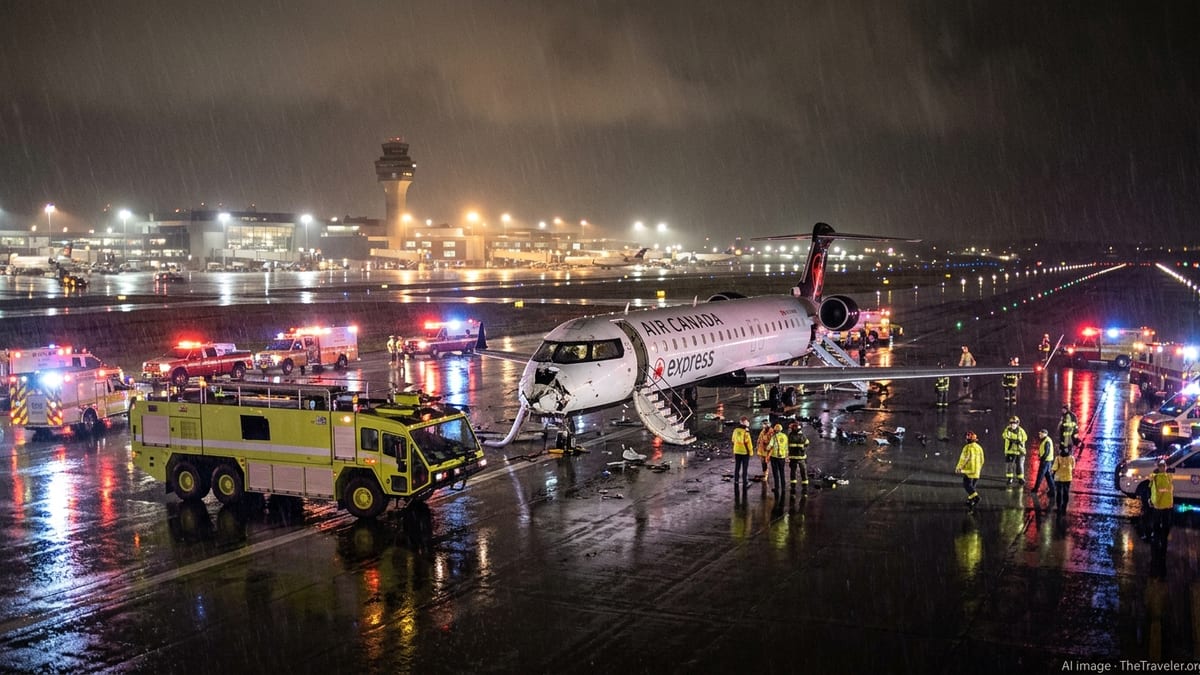
Runway 4/22 returns to service after latest safety checks
According to published coverage, LaGuardia’s Runway 4/22 was taken out of service on June 17 after inspectors identified an approximately two inch depression adjacent to the pavement. The discovery led to a pause in operations on the runway so that engineers could carry out testing and short term stabilization work.
Reports indicate the shutdown lasted through the night while crews examined the affected section and surrounding subgrade. By early June 18, the runway had been cleared to return to service, allowing the airport to resume dual runway operations ahead of peak daytime traffic.
Publicly available information shows the affected surface area was limited, but the precautionary closure reflected the airport operator’s current approach of treating any irregularity near the repaired segment with heightened scrutiny. The area has been under close observation since emergency work following a sinkhole in May.
With Runway 4/22 back online, departure and arrival flow at LaGuardia is expected to normalize, although airlines have advised travelers to continue monitoring flight status as residual delays work through the system.
Fresh depression follows May sinkhole and multi day closure
The latest closure came less than a month after a sinkhole near the same runway forced LaGuardia to suspend operations on Runway 4/22 for several days in the lead up to the Memorial Day holiday. At that time, Reuters and other outlets reported that a void opened close to the runway surface, prompting extensive repairs and inspections of adjacent pavement.
Subsequent coverage from regional outlets described how the May incident contributed to long security lines, diversions and cancellations as one of the United States’ busiest airports shifted to single runway operations. Runway capacity at LaGuardia is tightly managed, so any loss of infrastructure during peak travel periods has an outsized effect on airline schedules.
The new depression detected this week was significantly smaller than the earlier sinkhole, according to multiple reports, but its proximity to the previously affected area prompted immediate caution. Engineers have focused on determining whether the depression is a superficial settlement of repair materials or a sign of a deeper stability concern within the underlying fill.
The recurrence has renewed attention on how weather, aging infrastructure and ground conditions around Runway 4/22 may be interacting, particularly given the airport’s history of being built on reclaimed shoreline and fill material.
Operational impacts and traveler experience
During the latest closure, airlines were required to funnel traffic onto LaGuardia’s remaining primary runway, leading to congestion on taxiways and extended holding patterns for arriving flights. Published flight tracking data and local broadcast reports showed departure queues forming through the afternoon and evening while crews worked along the affected stretch.
Carriers responded by trimming some services, consolidating flights where possible, and issuing travel waivers for customers prepared to shift itineraries to later departures or alternate New York area airports. Some passengers reported significant delays as aircraft waited for clearance slots during the peak of the disruption.
By the time Runway 4/22 reopened, most airlines had resumed regular schedules, though some knock on impacts continued into the morning as aircraft and crews were repositioned. Industry observers noted that the quick turnaround from detection to reopening helped limit the overall scale of disruption compared with the longer closure that followed the May sinkhole.
For travelers, the episode underscores the sensitivity of New York’s aviation network to localized infrastructure issues. With LaGuardia operating near capacity on a normal day, any runway outage can quickly affect not just local flights but also connections across airline networks in the United States and Canada.
Infrastructure challenges at a high pressure urban airport
LaGuardia’s recent runway issues are emerging against the backdrop of a broader modernization program that has rebuilt terminals and overhauled much of the airport’s landside infrastructure. Runway areas, however, continue to present complex engineering challenges because of constant use, weather exposure and the geotechnical conditions of the site.
Historic and technical documentation describes large portions of the airfield as having been constructed over former shoreline and marsh using layers of fill material. Experts note that such sites can be more susceptible to settlement and water related voids, particularly as buried utilities and drainage systems age or shift.
Federal Aviation Administration construction impact reports for LaGuardia in recent years reference recurrent overnight runway closures during the warm months for maintenance work, reflecting the ongoing need to manage pavement life cycles and address any emerging irregularities before they affect safety or capacity.
The appearance of both a sinkhole and a subsequent depression in the same general area has prompted calls from some aviation analysts for a more detailed geotechnical assessment of the subsurface conditions beneath Runway 4/22 and adjacent taxiways. Such investigations could point to longer term mitigation measures beyond localized repairs, potentially including improved drainage, soil stabilization or partial reconstruction of affected segments.
What the reopening means for summer travel
The decision to return Runway 4/22 to service before the height of the summer travel season is expected to ease some pressure on carriers that rely heavily on LaGuardia for short haul business routes and regional connections. Full runway capacity gives airlines more flexibility to recover from weather related delays and manage peak morning and evening departure banks.
Travel industry analysts suggest that passengers flying through LaGuardia in the coming weeks may still see occasional schedule adjustments as infrastructure monitoring continues around the repaired area. Airlines are likely to keep contingency plans ready in case additional work is needed.
For now, however, the reopening restores a measure of normalcy at a facility that has already navigated a runway collision investigation, a sinkhole and a second surface irregularity in the space of a few months. The sequence of events highlights both the resilience and vulnerability of a dense urban airport that remains a critical gateway to New York City.
With summer demand building, attention is expected to remain focused on the long term integrity of LaGuardia’s airfield as much as on its newly renovated terminals, as passengers, airlines and regulators look for assurance that the infrastructure beneath the runways is keeping pace with the airport’s modernized public face.