


More news on this day
Europe is accelerating efforts to connect its high-speed rail lines and dense flight networks into a single, more sustainable system, as new regulations and commercial alliances push rail and air operators toward integrated, one-ticket journeys.
Get the latest news straight to your inbox!
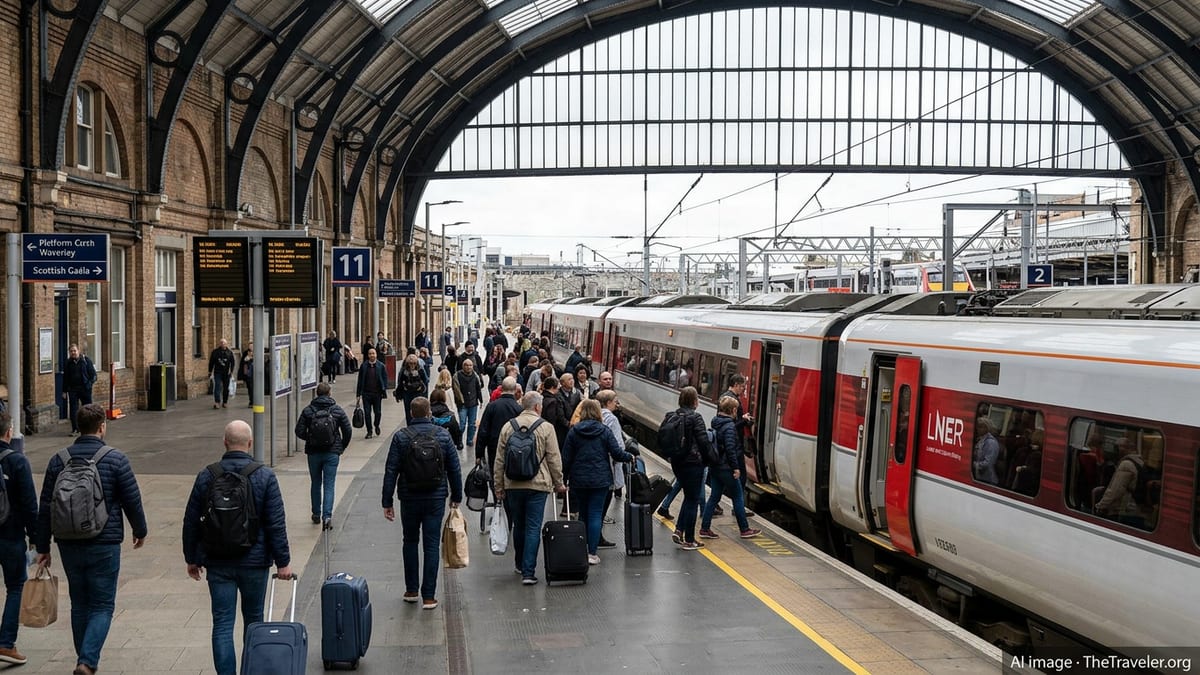
EU Regulatory Push for Seamless Multimodal Travel
European policymakers are moving to make cross-border journeys easier to book and greener to complete by tightening rules around multimodal ticketing and data sharing. A recent initiative promoted by the European Commission under the banner "One journey, one ticket, full rights" aims to simplify Europe-wide bookings by allowing passengers to search, compare and purchase rail services from different operators within a single transaction, with aligned passenger rights across borders.
According to published EU documents on the Single European Railway Area and the Trans-European Transport Network (TEN-T), Brussels is tying infrastructure investment more closely to digital interoperability. Union guidelines adopted in 2024 emphasize that new and upgraded corridors should be planned with multimodal data access in mind, so that rail segments can be combined more easily with air and local transport in digital booking systems.
Preparatory work for a Single Digital Booking and Ticketing Regulation and related rules on multimodal digital mobility services is also under way, based on policy papers that identify lack of integrated ticketing as a major barrier to sustainable tourism and long-distance rail use. These frameworks are designed to require operators to share timetable, fare and real-time information on fair, non-discriminatory terms, creating the conditions for cross-border, cross-mode itineraries to be sold on a wide range of platforms.
Industry analyses indicate that these changes are part of the EU’s broader Sustainable and Smart Mobility Strategy, which seeks to shift a significant share of medium- and long-distance travel from air and road to rail. Integrating air and rail networks is viewed as one of the most effective tools for cutting emissions on intra-European legs that connect with intercontinental flights.
Air–Rail Alliances Expand Beyond Europe’s Borders
Alongside regulatory developments, a growing number of commercial agreements are linking airlines and rail operators into shared networks. Air–rail alliances, sometimes branded as AirRail products, combine flights and train journeys under a single booking reference, offering coordinated schedules and protected connections if delays occur. Public databases and industry summaries list several categories of such cooperation, including dedicated rail services for airline passengers, broad network access, overnight "night and fly" options and re-protection agreements during disruption.
One prominent example is the integration of Eurostar’s high-speed routes with airline alliances. In 2024, Eurostar signed a memorandum of understanding to join the SkyTeam alliance as its first non-airline partner, with the stated aim of enabling combined air–rail travel in the United Kingdom, France and the Netherlands. Background material on the agreement notes that a significant share of long-haul passengers flying into major European hubs already continue their journeys by rail to secondary cities, and that formalizing these links is expected to make such itineraries more visible and convenient.
Individual carriers have also expanded air–rail portfolios. Air France and KLM, for example, market combined tickets that link international flights with high-speed trains from selected stations in France and Belgium, allowing passengers to check in once and connect at Paris Charles de Gaulle or Amsterdam Schiphol. Publicly available information on these products emphasizes the ability to replace short feeder flights with rail segments while retaining through-check arrangements, including in many cases baggage handling and delay protection.
Industry associations are updating the technical backbone of these agreements. The International Air Transport Association is promoting a new interline framework based on "Offers and Orders" technology, which is designed to handle not only traditional airline-to-airline cooperation but also intermodal partnerships. Documentation on the emerging Standard Retailer and Supplier Interline Agreement describes how future platforms could dynamically bundle flights, rail segments and other ground services into a single offer and manage post-booking changes using modern APIs instead of legacy ticketing systems.
Integrated Ticketing Pilots Across European Rail Markets
On the rail side, national operators and international consortia are testing integrated ticketing that brings multiple countries together. Services marketed under the Eurostar brand connect Belgium, France, the Netherlands, the United Kingdom and parts of Germany, while partnerships with French, German, Belgian and other rail companies offer onward travel deeper into national networks using a mixture of through-tickets and coordinated schedules.
Travel platforms such as Rail Europe promote coverage across roughly 25 European countries, using connections to operators in France, Germany, Italy, Spain, Belgium and others to sell cross-border journeys on a single interface. Although these platforms still depend on the underlying commercial and technical rules of each carrier, they are often cited in policy discussions as early examples of how pan-European distribution can work once more standardized data and ticket formats are in place.
Member States are also experimenting with national and regional passes that can plug into this wider ecosystem. Regulatory reports highlight initiatives such as Austria’s "Klima-ticket" and similar integrated public transport offers, which bring together rail and local services under flat-rate or discounted pricing. While these products are primarily domestic, they provide a template for interoperable fares that could eventually connect with air segments or neighboring rail systems.
At EU level, the Europe’s Rail Joint Undertaking, which coordinates research and innovation for rail, has made digitalization and multimodal integration key priorities in its recent activity reports. Projects supported under this framework focus on technical enablers such as common data standards, journey planners that combine modes, and interoperability between national signaling and ticketing systems, all of which are prerequisites for large-scale air–rail integration.
Global Context: Other Regions Move Toward Rail–Air Integration
Europe’s efforts to knit together rail and air networks sit within a wider global shift toward intermodal mobility. International policy forums hosted under United Nations economic commissions point to integrated, harmonized rail infrastructure and improved ticketing as essential conditions for making rail a more competitive alternative to road and short-haul aviation. These documents call for better electronic ticketing, dynamic travel information and coordinated investment strategies to unlock the full benefits of cross-border rail corridors.
Beyond Europe, air–rail cooperation is also emerging in regions with expanding high-speed rail networks. Industry roundups of air–rail alliances note that carriers in Asia and the Middle East increasingly rely on rail partners to distribute passengers from major hubs to nearby cities, particularly where high-speed lines can match or outperform short domestic flights. In some markets, entire airline–rail networks are marketed together so that passengers can reserve seats and manage their journeys through a single booking channel.
Nevertheless, analysts frequently describe Europe as the testing ground for large-scale integration, given its dense rail infrastructure, liberalized air market and strong climate targets. Policy documents and sector reports underline that lessons from European regulation and commercial practice, especially around data access and passenger rights, are likely to inform future frameworks in other regions that are considering similar multimodal systems.
Observers also point out that competition rules and state aid guidelines play a role in shaping how far integration can go. The EU’s updated guidance on state aid for land and multimodal transport, issued in 2024, clarifies the conditions under which public support may be granted to rail facilities and multimodal hubs without distorting competition, potentially smoothing the way for new interchanges that physically and digitally connect rail stations with airports.
Opportunities and Challenges for Travelers
For passengers, the promise of integrated rail and air networks lies in being able to search, book and manage an entire door-to-door journey through a single interface, with clear rights if connections are missed. EU surveys referenced by the European Commission show strong public demand for such seamless, reliable booking systems, especially among travelers who want to reduce their environmental footprint without sacrificing convenience.
However, published analyses also stress that significant hurdles remain before one-ticket journeys become the norm. Fragmented national regulations, differing passenger rights regimes and commercial reluctance to share fare data all complicate efforts to build universal platforms. Rail infrastructure capacity, particularly on popular cross-border routes, can further limit the ability to substitute trains for short-haul flights, even when new ticketing solutions are available.
Technical work on interoperability, such as the EU’s Interoperable Europe Act and associated digital initiatives, is intended to remove some of these obstacles by promoting common standards and reusable solutions across public administrations. In practice, this means that systems managing station data, transport permits or real-time disruption information can be more easily linked, providing the back-end support that multimodal travel planners require.
As Europe refines its rules and pilots more integrated services, other countries and regions are watching closely, both as potential partners in global itineraries and as laboratories for similar reforms at home. The emerging web of air–rail alliances, regulatory frameworks and digital tools suggests that the concept of a single, coherent rail and air network, while still incomplete, is moving steadily closer to reality for international travelers.
European Commission: One journey, one ticket initiative
Europe’s Rail Joint Undertaking: Annual Activity Report
Air France: Combined plane and train tickets