


More news on this day
International rail passengers crossing Germany face growing disruption as construction closures, heavy congestion and operational issues on Deutsche Bahn routes trigger significant delays, missed connections and re-routed services across Europe.
Get the latest news straight to your inbox!
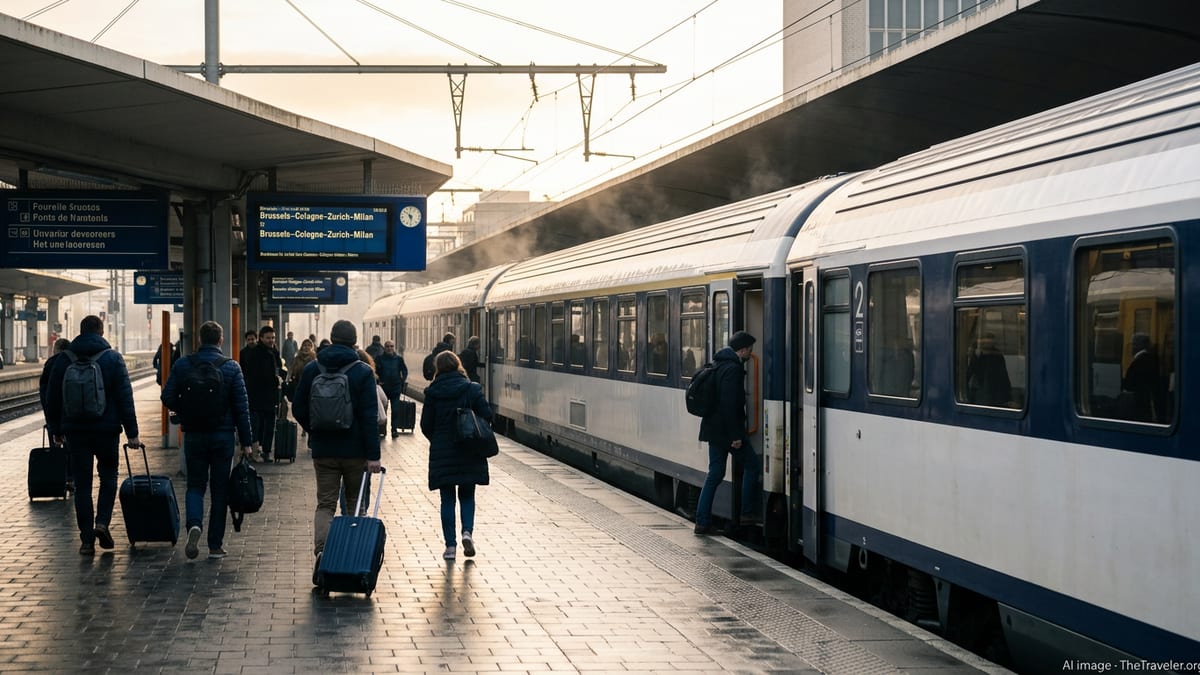
Cross-Border Itineraries Snagged by German Network Bottlenecks
Reports from Germany and neighboring countries on August 27, 2026 indicate that long-distance trains crossing the country are encountering mounting delays, with knock-on effects for journeys linking Belgium, the Netherlands, France, Switzerland and Austria. Publicly available information shows that Deutsche Bahn’s long-distance arm serves as a backbone for EuroCity and Intercity-Express services that interconnect major European hubs, meaning disruptions on German tracks can quickly cascade into wider network problems for international travelers.
Passenger accounts collated on travel forums describe itineraries extended by several hours, missed onward connections and replacement routes that bypass planned intermediate stops. In some cases, travelers report backtracking along congested lines before being diverted, leading to confusion over real-time arrival times and platform changes. These experiences highlight how fragile complex, multi-country itineraries can become when a central transit corridor like Germany experiences sustained operational strain.
Published coverage of rail operations in Germany notes that Deutsche Bahn’s long-distance division cooperates closely with neighboring railways to operate cross-border services, including EuroCity and high-speed links to France, Belgium, the Netherlands, Switzerland and the Czech Republic. When those shared services are delayed or rerouted inside Germany, the impact can extend beyond national borders, leaving passengers stranded far from their final destinations and complicating recovery options.
Major Construction Closures Intensify Summer Disruption
Construction activity on some of Germany’s busiest corridors is adding a further layer of disruption during a peak travel period. Recent notices from Deutsche Bahn and regional operators highlight a full closure of the line between Düsseldorf and Cologne-Mülheim from late August into early September 2026, affecting long-distance, regional and S-Bahn traffic. Long-distance services are being rerouted, while some regional trains are replaced by buses or diverted via alternate lines, lengthening journey times for travelers heading to and from the Ruhr area.
For passengers using international services that rely on this north–south axis, the closure complicates access to key hubs such as Cologne and Düsseldorf, forcing detours that add time and increase the risk of missed onward connections. Online guidance suggests that trains may be sent across alternative Rhine crossings or routed through secondary lines, potentially bypassing Cologne’s central station and the Messe/Deutz interchange that many international travelers use for transfers.
Elsewhere in Germany, regional infrastructure works and temporary station closures continue to affect long-distance paths. Recent announcements point to weekend shutdowns at major junctions such as Lübeck Hauptbahnhof and engineering projects in southern Bavaria, with replacement buses substituting for some regional trains. While these interventions are focused on local and regional services, they can still ripple into long-distance timetables by limiting available track capacity and forcing altered routings that interfere with international schedules.
Operational Pressures and Border Controls Compound Delays
In addition to planned construction, operational pressures and changing border-control procedures are contributing to irregular running times on international routes. Travel updates from Eurostar, which markets services between France, Belgium, the Netherlands and Germany through partner connections, show that on August 27, 2026 several trains were delayed at London St Pancras and Lille-Europe due to late inbound stock and operational restrictions. Other notices cite extended stops linked to European Union border-control checks at stations such as Amsterdam Centraal.
Deutsche Bahn’s own service bulletins acknowledge that intensified border checks at some crossings can lengthen dwell times and create secondary delays throughout the timetable. Rail information pages describe close coordination between rail operators and police to limit the impact of checks on passengers, but emphasize that traffic conditions can change at short notice. For travelers on through journeys that combine domestic German legs with cross-border segments, this can leave very tight margins for making scheduled onward trains in neighboring countries.
Longer-term performance data made available in Deutsche Bahn’s quality reporting already pointed to infrastructure bottlenecks, weather-related impacts and past industrial action as constraints on punctuality. Although most international trains still arrive within 60 minutes of schedule, the same reporting acknowledges that individual incidents, such as significant line closures or station outages, can disrupt entire days of operations along core routes that support international travel.
Passenger Rights and Practical Steps for Disrupted Journeys
European Union regulations provide a common framework of rights for rail passengers whose international journeys are derailed by delays or cancellations. Official EU guidance on rail passengers’ rights states that travelers on cross-border services arriving at their final destination at least 60 minutes late may be entitled to compensation, typically starting at 25 percent of the ticket price for delays between one and two hours and rising to 50 percent for longer disruptions. These rights apply regardless of the underlying cause of the delay in many cases, though newer rules allow some exemptions in extraordinary circumstances.
Deutsche Bahn’s passenger-rights pages set out a harmonized compensation process for international tickets, explaining that the company which issued the ticket handles delay claims even when several operators are involved. For itineraries booked entirely through Deutsche Bahn, travelers are advised in public information to request documentation of delays, keep unused seat reservations and submit claims through the Passenger Rights Service Center. Guidance also notes that where extensive disruption occurs, passengers may be allowed to switch to alternative trains without additional fare, particularly once a delay threshold is reached.
Independent travel resources have developed detailed flowcharts to help passengers navigate disruptions on multi-country journeys. These materials recommend confirming the real-time status of each segment through national journey planners, carrying proof of delays and, if stranded overnight, retaining receipts for essential accommodation and meals, which may be reimbursable within certain limits. For travelers linking Deutsche Bahn services with night trains, Eurostar or regional operators in neighboring states, this structured approach can reduce the risk of being left without clear options when a crucial German leg fails.
What Travelers Should Do Now
Given the current pattern of disruptions, rail passengers planning to cross Germany in the coming days and weeks are being urged by travel information services and online communities to build additional buffer time into itineraries and avoid extremely tight transfers. Several commentators suggest checking for alternative routings that bypass heavily affected corridors, particularly between Düsseldorf and Cologne, where large-scale works are ongoing, and around other nodes where closures or diversions have been announced.
Publicly available journey planners on Deutsche Bahn’s website and app incorporate many of the short-term changes, but community reports emphasize that live updates can still lag when incidents occur suddenly. As a result, experienced travelers recommend cross-checking schedules with destination-country operators, such as SNCF in France, NS in the Netherlands, SBB in Switzerland or ÖBB in Austria, to confirm the status of onward trains and understand which connections remain protected under international agreements.
For those already en route, experts advise seeking written confirmation of delays, either via printed documentation or digital notifications, in order to simplify subsequent claims. Passengers are also encouraged to monitor official travel-updates pages for both Deutsche Bahn and partner operators before departure and throughout their journey. With international demand on long-distance European rail now surpassing pre-pandemic levels, the combination of heavy traffic, construction works and operational constraints on the German network is likely to keep pressure on timetables and maintain an elevated disruption risk for cross-border travelers in the near term.
Deutsche Bahn current traffic information
Deutsche Bahn passenger rights and EU rules overview