


More news on this day
Air travel across Europe is facing another bout of disruption, with monitoring data indicating at least 93 flights delayed and 24 cancelled across Italy, Spain, Denmark and several neighboring countries, affecting services operated by easyJet, Wizz Air, Cathay Pacific and other major carriers through hubs such as Madrid and Copenhagen.
Get the latest news straight to your inbox!
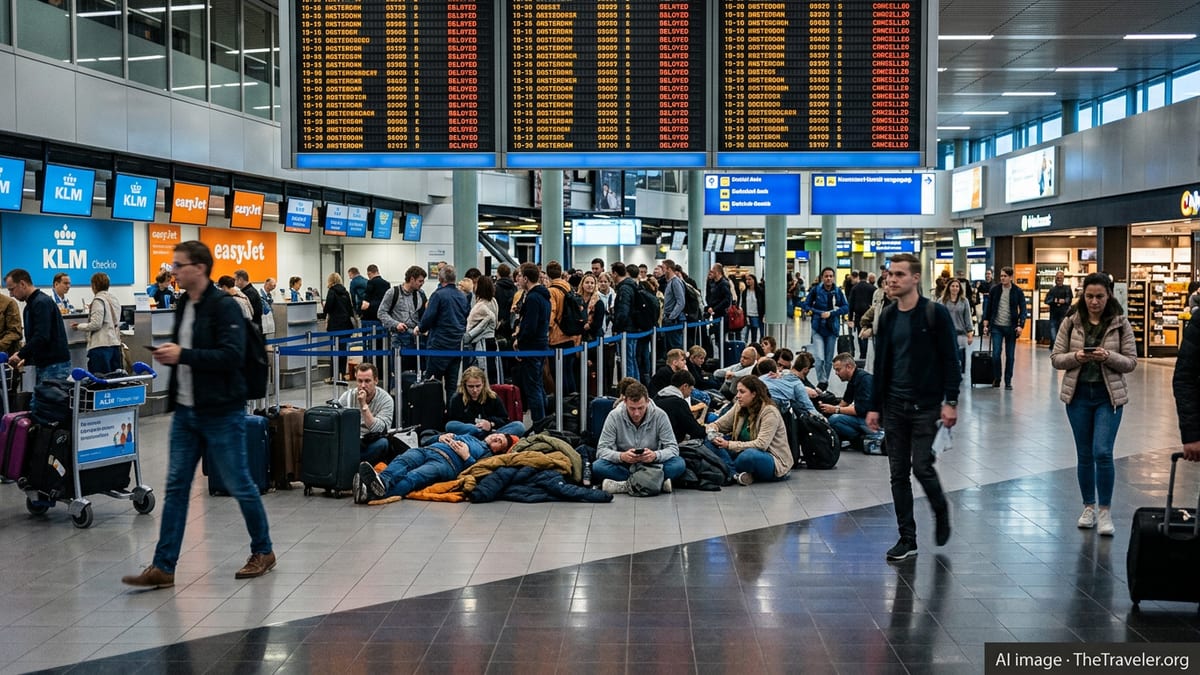
Operational Strains Ripple Across Multiple European Hubs
Publicly available flight tracking and airport operations data for the latest travel day show an uneven but significant wave of disruption across the European network. Delays and cancellations have clustered around major transfer points including Madrid Barajas, Copenhagen, and several large Italian airports, creating knock-on effects on connecting traffic across the continent.
The tally of at least 93 delayed flights and 24 cancellations appears modest compared with headline disruption days dominated by large-scale strikes or severe weather, yet industry trackers note that the impact is magnified by the concentration on busy intra-European and long haul routes. Services operated by easyJet, Wizz Air and Cathay Pacific feature among those affected, alongside a broader mix of European and non European carriers.
Recent months have already seen a series of similar events, with previous operational pressure days disrupting hundreds of flights across Spain, Italy, France, Germany and the Nordic region. The latest figures fit into a pattern in which relatively small numbers of cancellations, when combined with a wider field of delayed departures, are enough to trigger missed connections and force widespread rebooking.
Madrid and Copenhagen, both key transfer points for European and intercontinental traffic, are again appearing prominently in disruption round ups. Travel industry analysis suggests that bottlenecks at such hubs can quickly cascade through secondary airports, leaving passengers on smaller point to point routes vulnerable to last minute schedule shifts.
Carriers From Low Cost to Long Haul Caught Up
The disruption has not been confined to a single business model or alliance grouping. Data compiled from delay trackers and airport reports shows that low cost operators such as easyJet and Wizz Air have experienced a share of the delays, particularly on short haul leisure and city break routes linking Spain, Italy and Scandinavia. These flights often operate on tight turnarounds, so even short ground delays can accumulate across the day.
At the same time, long haul services have also been affected. Publicly available schedules and status boards indicate that some intercontinental flights, including those operated by Asian and Middle Eastern carriers such as Cathay Pacific, have faced altered departure times where crews or aircraft have been caught behind schedule elsewhere in the network. When such flights depart late, the resulting delay can disrupt onward connections at both ends of the route.
Industry coverage over recent months has repeatedly highlighted how even moderate levels of disruption can reverberate across airline networks. When aircraft and crews end up out of position, airlines may be forced to consolidate services, swap equipment or implement rolling delays. For carriers that rely heavily on high aircraft utilization, any slowdown can affect large numbers of passengers in a relatively short period.
Analysts note that the current pattern resembles earlier waves of disruption in which a mix of staffing constraints, airspace bottlenecks and localized weather issues combined to stress operations. Although the specific causes of each delayed or cancelled flight differ, the overall outcome for travelers is similar: longer days at the airport, missed meetings and vacations cut short or extended unexpectedly.
Italy, Spain and Denmark Again Among the Hardest Hit
Italy, Spain and Denmark continue to feature prominently in European disruption statistics, reflecting both the volume of flights that pass through these countries and their sensitivity to wider network pressures. Previous transport strike days in Italy and localized slowdowns at Spanish hubs have already underscored how quickly performance can deteriorate when even a fraction of scheduled movements are delayed.
In Denmark, Copenhagen Airport has repeatedly appeared in regional punctuality and disruption reports as a focal point for delays affecting northern European traffic. Recent data shows that clusters of delayed departures and scattered cancellations at Copenhagen can create bottlenecks for travelers bound for Norway, Sweden, Finland and the Baltic states, especially when connection times are short.
Spain’s role as both a major holiday destination and a gateway to Latin America and North Africa also magnifies the visibility of any operational problems. When Madrid and Barcelona experience extended departure queues or airspace restrictions, knock-on effects are often felt at resort airports and secondary cities, where ground handling resources may be more limited.
Italy’s large network of busy airports, from Rome and Milan to key regional gateways, continues to experience periodic strain. Earlier waves of disruption linked to local transport issues and broader European congestion have shown that traffic flows through the country remain susceptible to fluctuations elsewhere on the continent.
Passenger Impacts and Rights Under European Rules
For passengers, the most immediate impact of the latest disruption is uncertainty. Travelers on affected easyJet, Wizz Air and Cathay Pacific services have reported extended waits at departure gates, missed onward flights and last minute changes to itineraries as airlines work to reshuffle capacity. Even those whose flights operate on time often encounter longer queues at check in, security and border control when airports are handling a backlog of delayed departures.
European and UK air passenger rights frameworks provide some protection in such situations, though eligibility depends on factors including the cause of the disruption, flight distance and whether the delay or cancellation was within an airline’s control. Public guidance from consumer organizations notes that travelers on eligible routes may be entitled to assistance at the airport, re routing at the earliest opportunity and, in certain circumstances, financial compensation.
Travel advisers consistently recommend that passengers document their experience, retain receipts for any out of pocket expenses and submit claims directly to airlines where relevant. Independent compensation services and legal platforms also offer tools to help passengers assess potential entitlements, particularly when flights fall under established European regulations covering delays and cancellations.
Even when no compensation is due, airlines commonly provide practical support such as meal vouchers or hotel accommodation during overnight disruptions, although the level of assistance can vary between carriers and specific events. In the current environment of frequent but uneven disruption, understanding the limits of these obligations has become an important part of trip planning for regular travelers.
What Travelers Can Do Ahead of Summer Peak
The latest disruption comes as Europe moves toward the busy summer travel period, when schedules are densely packed and spare capacity is limited. Travel industry observers warn that even modest operational shocks during peak weeks can lead to outsized effects, especially at popular leisure hubs in Spain, Italy and the Mediterranean, and at transfer airports such as Copenhagen and Madrid.
Passenger advisories published by airlines, airports and consumer groups emphasize the importance of checking flight status frequently on the day of travel and making full use of mobile apps and alert services. Real time notifications can sometimes give travelers early warning of a likely delay, allowing more flexibility in adjusting ground transport or, in some cases, rebooking options.
Experts also highlight the value of building extra time into itineraries, particularly for journeys involving self connections or separate tickets. Allowing a wider buffer between flights can reduce the risk of missed onward travel when the first leg is delayed. For long haul trips that rely on single daily departures, travelers may wish to consider arriving at the connecting hub earlier in the day or choosing routings with multiple alternative services.
With Europe’s aviation system still operating under periodic strain, the latest figures on delays and cancellations underline that travel plans remain vulnerable to sudden changes. While the scale of disruption affecting 93 delayed and 24 cancelled flights is far from the worst seen in recent years, it reinforces a broader trend of fragility in the network that both airlines and passengers will have to navigate in the months ahead.