


More news on this day
Travelers at Reno Tahoe International Airport in Reno, Nevada faced mounting frustration on May 20 as a series of delays and cancellations left passengers stranded and scrambling to rebook already busy domestic and international routes.
Get the latest news straight to your inbox!
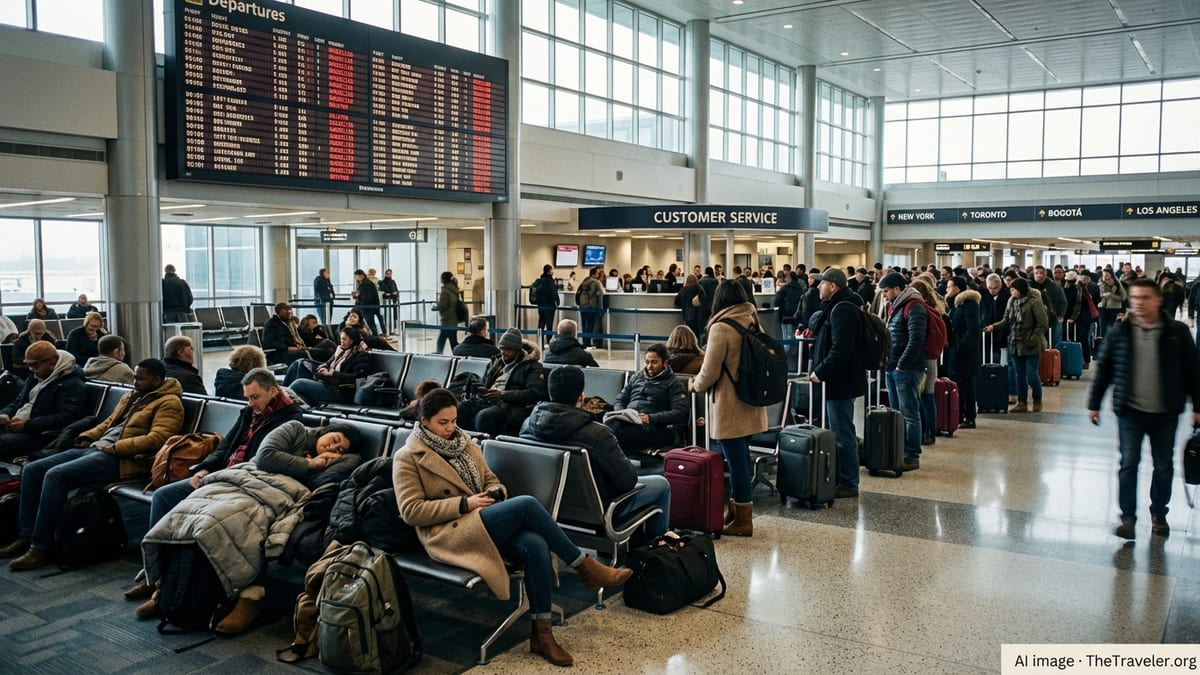
Cluster of Delays and Cancellations Hits Key Carriers
Publicly available flight-tracking data and airport information indicate that 19 flights into and out of Reno Tahoe International Airport were delayed on Wednesday, May 20, while five services were canceled, affecting a mix of regional, domestic, and transborder routes. The disruption affected operations marketed or operated by large network carriers including Air Canada, American Airlines, and WestJet, along with their codeshare partners.
Several of the affected departures were part of interconnected schedules linking Reno with larger hub airports such as San Francisco and other West Coast gateways, where flights are often sold under multiple airline codes. For example, a United service between Reno and San Francisco has recently operated as a codeshare for Air Canada, Lufthansa, Air New Zealand, and other partners, meaning a single delayed aircraft movement can ripple across multiple brands and itineraries.
The pattern of delays and cancellations at Reno coincides with a broader period of schedule volatility for North American carriers in spring 2026, driven by tight aircraft availability, weather-related constraints at major hubs, and evolving route strategies. In recent weeks, some airlines have also been adjusting transborder and U.S. services, including reductions or pauses on selected routes between Canada and key U.S. cities.
Although Reno Tahoe International Airport is classified as a small hub, recent statistics show it handling millions of passengers per year with a network of domestic and limited international or transborder flights. That scale means even a concentrated wave of two dozen disrupted flights can quickly fill gate areas with waiting passengers and strain rebooking options on already full services.
Stranded Travelers Face Missed Connections and Limited Options
The disruptions on May 20 primarily impacted passengers with connections beyond Reno’s immediate nonstop network, including those booked through major U.S. and Canadian hubs to Toronto, New York, and London. Because many Reno departures feed into single daily or limited-frequency long haul services, a delay of several hours or a same-day cancellation can cause travelers to miss onward flights with little same-day recovery capacity.
Reports from flight-status platforms show some Reno departures operating significantly behind schedule in the days leading up to May 20, with late evening and early morning services especially vulnerable due to tight turnaround windows and aircraft arriving late from other cities. When those inbound flights arrive off-schedule, the following leg from Reno can be pushed back or, in some cases, dropped from the schedule entirely.
For stranded passengers, options typically include rebooking on the next available departure on the same carrier, rerouting via a different hub, or, when possible, shifting to another airline that has spare seats. However, during peak spring travel periods, published information indicates that load factors on many North American routes remain high, limiting the availability of same-day alternatives for travelers trying to reach eastern cities or overseas destinations.
Travel-forum discussions over the past month also reflect heightened anxiety among Reno-bound and Reno-originating passengers, with some recounting recent experiences of last-minute itinerary changes and overnight stays after missed connections. While not all of these incidents are tied to the May 20 disruptions, they highlight the broader challenges travelers face when flying through smaller hubs reliant on a handful of key daily services.
Recent Airline and Airport Trends Add Pressure
The latest wave of disruptions comes as Reno Tahoe International Airport navigates a period of change in its airline mix and infrastructure. In early May, local television coverage highlighted that Spirit Airlines had halted its flights at Reno, reducing ultra-low-cost options on some leisure-oriented routes and potentially redirecting demand to other carriers serving Las Vegas and West Coast hubs.
Airport management has also been preparing for higher passenger volumes in 2026, with previous spring announcements noting expectations of roughly 16,000 travelers per day on peak dates during busy holiday periods. At the same time, winter storms earlier in the year temporarily reduced on-site parking capacity, illustrating how weather and infrastructure constraints can compound the impact of airline schedule disruptions.
On the airline side, publicly reported schedule adjustments by Canadian carriers show ongoing fine-tuning of U.S. services, including selective reductions on certain routes as operators respond to costs and demand patterns. Industry commentary suggests that carriers such as WestJet have been operating with limited spare aircraft, meaning that a mechanical issue or operational delay on one flight can cause a series of knock-on disruptions across the network.
These factors create a fragile operating environment in which a cluster of delays and cancellations on a single day can have outsized effects on a mid-sized airport like Reno. When multiple carriers and codeshare partners are involved, the disruption can quickly extend from local point-to-point travelers to those connecting onward to large hubs and transatlantic gateways.
Guidance for Passengers Traveling Through Reno
In light of the recent disruptions, travel experts generally recommend that passengers flying through smaller hubs such as Reno build additional buffer time into itineraries, especially when connecting to long haul services to destinations like Toronto, New York, or London. Longer connection windows can reduce the risk of missing onward flights when a regional leg experiences delays.
Publicly available airport materials emphasize the importance of checking real-time flight information on the day of travel and signing up for airline or third-party alerts where available. Given the potential for last-minute schedule changes, passengers are also encouraged to monitor both the operating and marketing carriers on codeshare flights, since disruptions may be posted under different flight numbers for the same aircraft movement.
Travelers affected by cancellations or substantial delays may be eligible for assistance under airline policies, which can include meal vouchers, hotel accommodation, or rebooking on the next available flight. Eligibility can vary depending on the cause of the disruption, ticket type, and applicable regulations, so passengers are advised to review the contract of carriage and any travel insurance coverage they may hold.
With Reno Tahoe International Airport continuing to experience steady passenger growth and evolving airline schedules, industry observers expect occasional clusters of disruption to remain a risk, particularly during busy holiday periods and times of operational stress across the wider North American network. For now, reports from May 20 serve as a reminder that even a moderate number of delayed and canceled flights can significantly impact travelers when they occur close together in a tightly scheduled system.