


More news on this day
As solo female travel continues to surge in 2026, a growing body of indices and travel analyses is converging on a group of European cities where women report feeling notably safe, supported and culturally enriched on the road.
Get the latest news straight to your inbox!
How 2026 Data Is Redefining Urban Safety for Women
Across Europe, new rankings that combine crime statistics, gender equality indicators and perception surveys are providing a sharper picture of how safe major cities feel for women in 2026. Composite studies drawing on sources such as the Global Peace Index, the Women, Peace and Security Index and the World Economic Forum’s gender gap data consistently place Northern and Western European countries at the top, with their capitals and major cities benefiting from broader social stability and strong institutional protections.
Travel-focused analyses released in early 2026 highlight that safety for solo female travelers depends on more than low crime figures. Reports emphasize factors such as women’s confidence walking alone at night, the visibility of women in public life, access to responsive public services and clear legal frameworks around gender-based violence. Cities that score well tend to pair robust policing strategies with social policies that address harassment, domestic violence and discrimination.
Online safety indices that track quality of life, crime and infrastructure also show a clear link between overall liveability and women’s travel experience. Cities that perform strongly on quality of life rankings often combine reliable public transport, well-lit public spaces and predictable urban design, elements that reduce the likelihood of risky situations and make navigation easier for visitors unfamiliar with local neighborhoods.
Researchers and travel insurers focusing on solo female tourism increasingly stress that perception matters. Surveys that measure how safe women say they feel in specific cities are now used alongside hard crime data. This approach has pushed some mid-sized European cities with strong community cohesion and high social trust into the spotlight, even when they do not dominate traditional tourism lists.
Copenhagen and Reykjavik: Nordic Benchmarks for Female Safety
Nordic capitals continue to set the tone in 2026, and Copenhagen frequently appears near the top of both liveability and safety assessments. The Danish capital benefits from low violent crime, extensive cycling networks, compact urban planning and a culture that strongly supports gender equality. Travel guides aimed at solo female visitors describe the city as one where walking or cycling between central districts at most hours of the day feels routine rather than risky.
Publicly available information shows that Denmark scores highly across multiple gender-focused indices, reflecting strong legal protections, generous social policies and high female participation in the workforce and public life. For travelers, these structural advantages translate into everyday details such as well-staffed public transport, widely spoken English and clear wayfinding, all of which lower stress for first-time visitors navigating the city alone.
Reykjavik, while smaller in scale, similarly stands out in 2026 analyses of solo female travel. Iceland’s long-standing record near the top of global peace and women’s safety rankings has given its capital a reputation as one of the most comfortable places in the world for women exploring independently. Reports indicate low levels of street harassment, high social trust and a nightlife scene where many women say they feel able to move between venues without unusual concern.
For travelers weighing their first solo trip, both Copenhagen and Reykjavik offer relatively straightforward arrival experiences, compact historic centers and strong connections between airports and city centers. These factors, combined with extensive tourism infrastructure and clear emergency services, make the Nordic capitals prominent recommendations in 2026 travel planning resources aimed at women.
Amsterdam, Vienna and Munich: Safe, Efficient and Culturally Dense
In continental Europe, cities such as Amsterdam, Vienna and Munich are repeatedly highlighted in 2026 travel coverage as reliable choices for women who want both safety and cultural depth. These cities rank well in European safety and quality of life indices that assess crime, healthcare, infrastructure and environmental quality, and they are long established on the tourism circuit, which means extensive support services for international visitors.
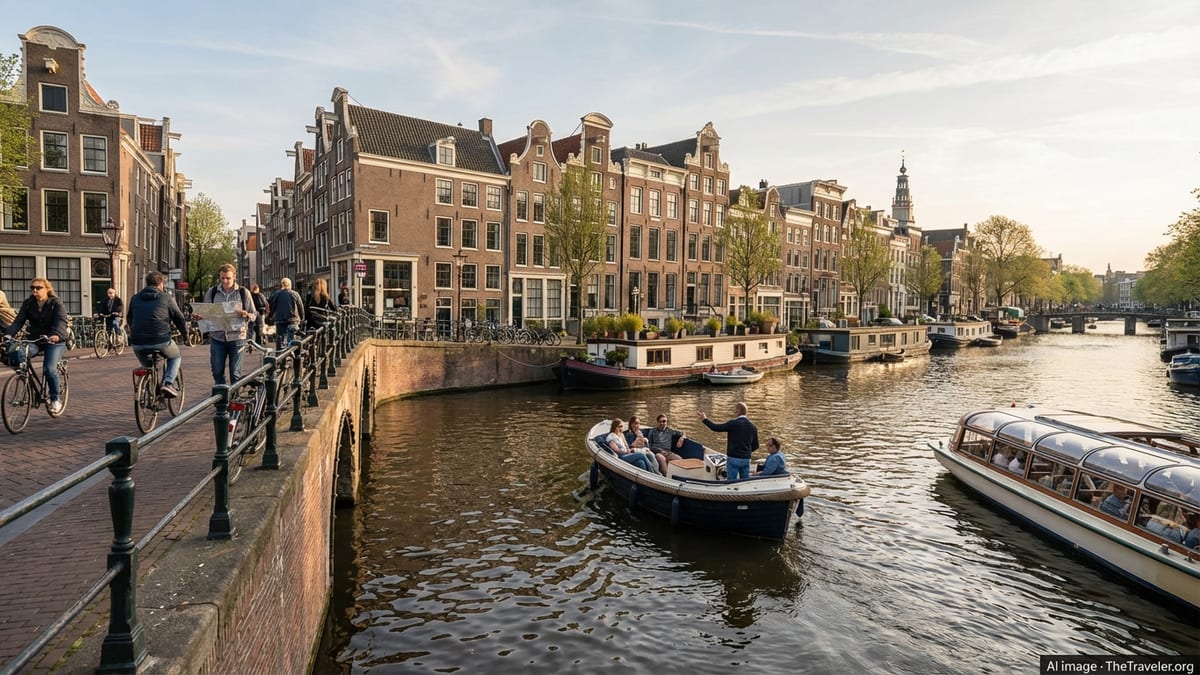
Amsterdam’s layout of canals and compact neighborhoods, combined with a comprehensive public transport and cycling network, allows solo travelers to navigate without relying heavily on taxis or ride-hailing services. Travel analyses that draw from crowd-sourced safety perception platforms note that women often report feeling comfortable moving between districts, particularly in central and residential areas that benefit from steady foot traffic and lighting.
Vienna continues to feature near the top of global liveability rankings, with stability, healthcare and infrastructure cited as key strengths. For solo female visitors, this typically manifests as clean, punctual public transport, predictable timetables and clearly signposted transit hubs. Centrally located accommodations place major museums, concert halls and historic sites within easy reach, reducing the need for long late-night journeys across the city.
Munich, a major entry point to southern Germany and the Alps, appears frequently in safety-focused city lists used by travel insurers and advisory platforms. These assessments associate the city’s appeal for women travelers with relatively low violent crime rates, orderly streetscapes and strong public services. For many visitors, the ability to combine cultural institutions, parks and day trips with a sense of security makes Munich a recurring recommendation in 2026 solo female travel roundups.
Dublin, Porto and Krakow: Smaller-Scale Cities With Strong Safety Reputations
Beyond the headline capitals, several mid-sized European cities are emerging in 2026 coverage as particularly welcoming to women traveling alone. Dublin, Porto and Krakow appear in multiple safety-oriented travel guides that synthesize crowd-sourced safety indices, tourism infrastructure assessments and affordability data, creating attractive options for travelers who prefer a more compact urban environment.
Dublin’s reputation as a friendly, walkable city continues to be reinforced by recent solo female travel reports that highlight its manageable size and active nightlife districts concentrated in a few central neighborhoods. While visitors are advised, as in any city, to stay aware of their surroundings in busy bar areas, many women describe the Irish capital as a place where they can rely on straightforward public transport, English-language signage and a visible street presence during peak travel seasons.
Porto, often cited as Portugal’s safest large city for women, benefits from lower tourist density than Lisbon, extensive riverside promenades and a historic center that remains lively into the evening. Analyses from telecommunications and travel service providers focusing on women travelers describe Porto as offering a strong mix of safety, affordability and authentic local culture, making it a recurring suggestion for first-time solo visitors to the Iberian Peninsula.
Krakow receives particular attention in 2025 and 2026 travel insurance and destination reports that examine solo female safety worldwide. These studies note the city’s relatively low crime rates, well-preserved historic center and growing tourism infrastructure, which includes hostels, boutique hotels and organized excursions designed with solo travelers in mind. For many visitors, Krakow’s combination of medieval architecture, university-town atmosphere and perceived safety makes it a compelling alternative to some of Western Europe’s more crowded hubs.
What Solo Female Travelers Should Watch for in 2026
Even in Europe’s safest cities, travel specialists advising women in 2026 stress that preparation remains essential. Publicly available guidance from insurers, government travel advisories and women-focused travel platforms encourages visitors to review neighborhood-level information, understand local customs around nightlife and alcohol, and familiarize themselves with emergency contact procedures before arrival.
Analysts note that certain risks cut across city rankings, including petty theft in tourist-heavy districts, late-night harassment near bar areas and occasional incidents on poorly lit side streets. Solo female travelers are often advised to favor accommodation near public transport hubs or central districts, use licensed taxis or reputable ride-hailing apps when traveling late at night and keep valuables secure in crowded areas such as transport interchanges and major attractions.
Experts who compile solo female safety indices argue that digital tools are increasingly useful in 2026. Real-time public transport apps, location-sharing with trusted contacts, and mapping services that show lighting levels or crowd density can all help women make informed decisions on the ground. Social media communities and dedicated forums also provide up-to-date anecdotal information on how particular districts feel at different times of day.
Ultimately, the latest data indicates that a significant number of European cities now combine strong safety records with rich cultural offerings and efficient infrastructure, giving women more options than ever for independent travel. From the Nordic capitals to Central Europe’s historic centers and Iberia’s riverfront cities, the 2026 landscape suggests that security, comfort and cultural richness can coexist for female travelers who plan carefully and stay informed.