


More news on this day
HX Expeditions has closed its 2025–2026 Antarctica season with record results, reporting its strongest polar program to date as bookings climbed, onboard activities expanded and environmental credentials moved to the forefront of expedition cruise marketing.
Get the latest news straight to your inbox!
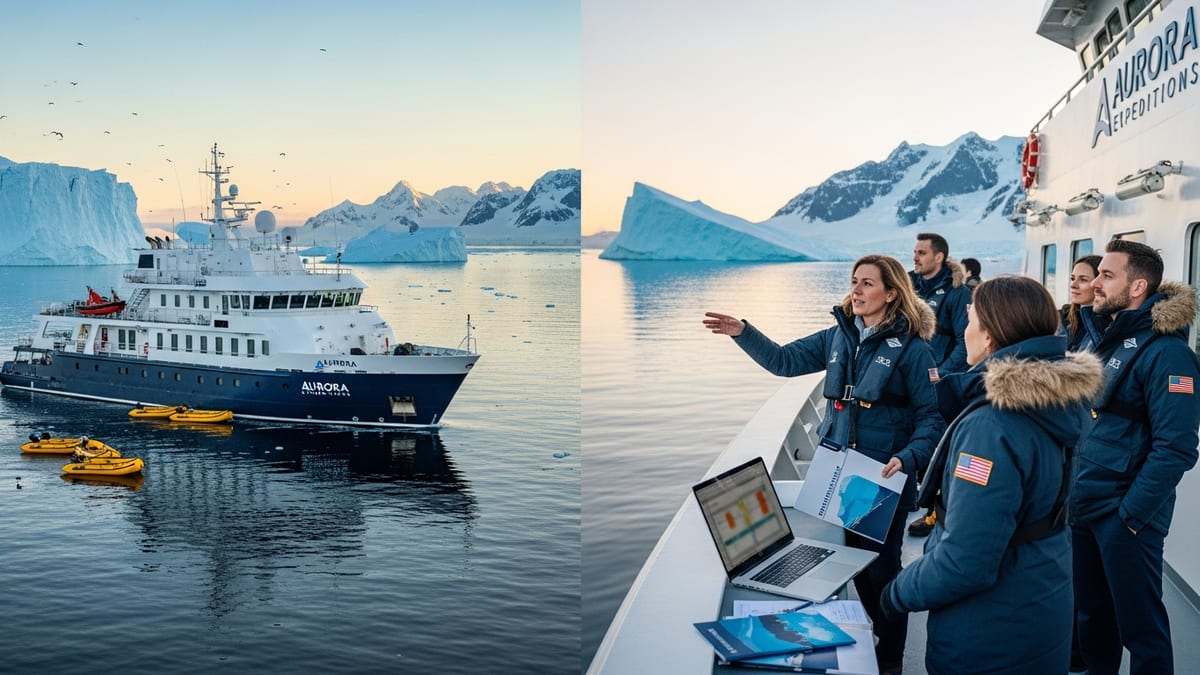
Record Sailings and Stronger Global Demand
Publicly available information from industry coverage indicates that HX Expeditions completed 34 sailings to Antarctica between October 2025 and March 2026, the highest number in the company’s history for a single season. The expanded schedule reflects how quickly demand has returned to high-end expedition cruising, and particularly to the Antarctic Peninsula, after the disruption of global travel in the early 2020s.
Reports on the season show that HX recorded a 5 percent increase in global bookings compared with the previous Antarctica program, with some regional markets posting growth of up to 80 percent. Analysts note that such gains are significant in a niche segment where vessels are small, itineraries are highly specialized and capacity is tightly controlled by environmental and safety regulations.
The company, which rebranded from Hurtigruten Expeditions as part of a wider group restructuring, is positioning the Antarctica performance as a bellwether for its broader polar portfolio. Travel trade data suggests that strong repeat rates, higher awareness of expedition cruising and the continued appeal of remote destinations have all contributed to the surge in demand.
Market research on the wider Antarctica travel sector points to visitor numbers remaining above 100,000 per season, even as growth moderates from the immediate post-pandemic rebound. Against this backdrop, HX’s ability to expand operations and still fill capacity is being interpreted as a sign that established brands with year-on-year experience continue to hold an advantage in an increasingly crowded field.
Expanded Camping, Kayaking and Citizen Science
The record season followed a series of product changes announced ahead of 2025–2026, with HX signaling a substantial expansion of its camping and kayaking programs. Cruise industry coverage in mid 2025 highlighted plans to increase capacity for overnight camping on the ice and guided paddle excursions, as operators respond to traveler expectations for more active, immersive experiences in the polar environment.
According to publicly available program details, passengers this season could combine traditional shore landings and wildlife viewing with optional activities such as small-group kayaking, snowshoeing and, in selected areas, overnight stays in tented camps set up under International Association of Antarctica Tour Operators guidelines. These offerings are promoted as low-impact alternatives to more resource-intensive adventure concepts that have emerged elsewhere on the continent.
Citizen science also played a more visible role in the 2025–2026 itineraries. Reports indicate that expedition teams on HX vessels engaged guests in simple data collection projects, such as photographing wildlife for identification databases or logging sea ice conditions. While the scientific value of such initiatives is still being debated, operators increasingly present them as a bridge between leisure travel and environmental awareness.
Industry observers suggest that this blend of soft adventure and participatory science has become a key differentiator in the expedition market. It allows companies like HX to add value without dramatically increasing group sizes ashore, which remain limited by IAATO rules that cap the number of passengers on land at any one time.
Environmental Technologies and Operational Measures
The company’s record Antarctica season also spotlighted the role of newer vessel technologies in managing the impact of cruise tourism. HX operates hybrid-powered ships such as the MS Roald Amundsen and MS Fridtjof Nansen, which combine conventional engines with large battery systems designed to cut fuel consumption and reduce local emissions in sensitive areas.
Annual reports and technical documentation show that these ships can operate for limited periods on battery power alone, particularly during maneuvering and low-speed operations near landing sites. The use of shore power where available and readiness to run on advanced biofuels are described as additional tools for trimming the carbon footprint of polar voyages, even as critics argue that any long-distance cruise travel to Antarctica remains emissions-intensive.
Beyond propulsion, HX publicizes measures aligned with IAATO’s environmental framework, including strict biosecurity procedures before landings, careful routing to avoid wildlife disturbance and limits on the number of passengers ashore. The company’s marketing materials emphasize that all expanded activities, from kayaking to camping, are structured within this regulatory envelope.
Environmental organizations and researchers continue to question whether such steps are sufficient given the rapid warming of the Antarctic region and the cumulative impact of tourism. Nonetheless, industry groups point to hybrid ships, better waste and wastewater management and more systematic monitoring of fuel use as indications that the most established operators are at least moving in the direction of lower-impact practices.
Cruise Tourism Growth and Competitive Pressures
HX’s results come as the Antarctic cruise sector enters a new phase of competition, with more operators, new ships and a broader range of price points than at any time in the past. Data from industry associations shows that the majority of visitors to Antarctica now arrive by cruise ship, with expedition-style vessels carrying fewer passengers but offering more frequent landings and specialized programming.
Market forecasts to the early 2030s anticipate continued growth in polar travel, driven by aging but affluent demographics in North America and Europe and rising interest from Latin American and Asia-Pacific markets. Some studies project that the overall Antarctica travel market will expand steadily over the next decade, although IAATO and scientific bodies have called for caution, noting that growth is closely tied to macroeconomic trends and regulatory constraints.
In this context, HX’s 5 percent booking increase in Antarctica is being watched by competitors as an indicator of how much room remains for capacity growth under the current framework. The season’s performance suggests that demand can still absorb added sailings when they are accompanied by distinctive itineraries, experienced guides and a persuasive sustainability narrative.
At the same time, analysts warn that the sector’s reputation depends on avoiding visible overcrowding or high-profile environmental incidents. Companies that expand too quickly or offer increasingly extreme activities risk drawing regulatory scrutiny and public criticism, which could prompt tighter limits on both ship numbers and onshore operations.
Balancing Access, Experience and Protection
The debate around HX’s record season echoes a broader conversation about the future of tourism in the world’s most remote regions. On one side, operators and some researchers argue that carefully managed visits can foster global awareness of polar science and conservation, and that expedition guests often become vocal supporters of climate action after seeing Antarctica first-hand.
On the other, several academic studies and environmental reports highlight the high per-capita emissions associated with Antarctic travel and the risk that local ecosystems could be stressed by a steady rise in landings and recreational activities. The tension between offering bucket-list experiences and safeguarding a fragile environment has become central to how the cruise industry presents its polar operations.
HX’s 2025–2026 season illustrates how leading operators are attempting to navigate this balance. By investing in hybrid ships, promoting science partnerships and emphasizing low-impact adventure, the company is trying to align commercial growth with environmental messaging. Whether such measures can meaningfully offset the climate cost of flying and sailing thousands of kilometers to the White Continent remains an open question in policy and scientific circles.
For now, the record-setting results underline the enduring appeal of Antarctica as a once-in-a-lifetime destination and suggest that, if market conditions remain favorable, polar expedition cruising will continue to expand. How quickly regulators, scientists and operators can agree on firm limits and shared standards will determine whether future seasons look like HX’s latest success story or trigger a reassessment of what sustainable tourism in Antarctica should really mean.