


More news on this day
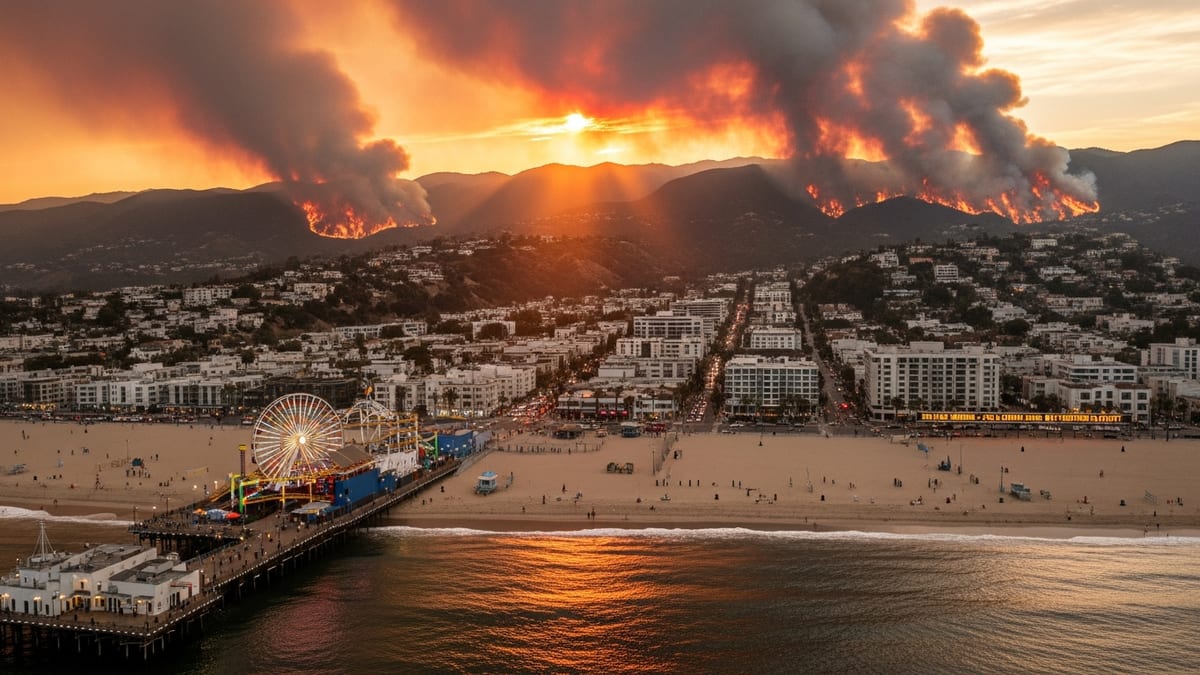
Relentless summer heat and intensifying wildfires are exposing a widening insurance gap across Europe, raising questions over who pays when popular holiday destinations burn and millions of visitors are caught in the fallout.
Get the latest news straight to your inbox!
Heat, Fire and an Expanding Protection Gap
Recent summers have brought record-breaking wildfire seasons to Mediterranean countries, with fires tearing through islands, coastal resorts and inland forest regions that are central to Europe’s tourism economy. Published assessments from the European Environment Agency indicate that weather and climate related extremes caused more than 45 billion euros in economic losses in 2023 alone across dozens of European countries, with only a fraction of that total covered by insurance.
The difference between total economic losses and insured losses is commonly referred to as the insurance protection gap. Data compiled by European agencies for the period from 1980 to 2023 show that uninsured losses continue to dominate, particularly for climate related hazards such as wildfire, drought and heat. In several southern member states, wildfire related damages to private property, local infrastructure and tourism businesses are still largely borne by households and governments rather than private insurers.
At the same time, climate projections used by European institutions point to more frequent and intense heatwaves in coming decades, especially in the Mediterranean basin. Official briefings on extreme weather preparedness describe heatwaves, droughts and forest fires as key drivers of fatalities and economic losses, underscoring that current levels of financial protection lag far behind the speed of climate change.
The result is a growing imbalance between where tourists travel in summer and where insurance markets remain shallow. As wildfire seasons lengthen and overlap with peak holiday months, that mismatch is becoming harder for the travel industry to ignore.
Tourism Hotspots Under Strain
Europe remains the world’s leading tourism region, attracting hundreds of millions of visitors a year. Council of the European Union figures for 2024 indicate that the bloc drew more than 750 million international arrivals, with tourism accounting for roughly a tenth of gross domestic product and employment. Much of that activity is concentrated in southern coastal regions that are highly exposed to summer heat and wildfire.
Greece, Spain, Italy and Portugal have all experienced high-profile fire seasons that disrupted travel plans, strained evacuation systems and damaged the image of flagship destinations. On the Greek island of Rhodes in 2023, wildfires led to mass tourist evacuations and prompted extensive debate about how visitors should be compensated, while events in Madeira in 2024 reportedly drove cancellations sharply higher as images of burning hillsides circulated globally.
Travel advisories from several governments now highlight wildfire risk alongside more traditional safety concerns for destinations such as Greece. Guidance typically urges visitors to check local fire danger maps, monitor heat warnings and ensure that travel insurance covers emergency medical costs and trip disruption. However, disclosures from travel companies and insurers suggest that many standard policies provide limited protection when a resort closes due to smoke, evacuation orders or civil protection measures rather than direct damage to a booked hotel.
Tourism operators are beginning to confront the commercial implications. Reports from industry and academic analysts warn that repeated summer crises could push peak travel demand away from the hottest months or toward cooler northern destinations, at least among more risk conscious travelers. For southern economies where tourism is a core source of income and employment, that shift adds another reason to strengthen financial resilience.
Why Homes, Hotels and Holidaymakers Remain Underinsured
European and international bodies describe several overlapping reasons for the wildfire insurance gap. Research coordinated by the European Insurance and Occupational Pensions Authority points to affordability constraints, low risk awareness, limited availability of comprehensive natural catastrophe coverage and behavioral biases that lead households and small businesses to underestimate long term climate risks.
For property owners in fire prone rural or coastal zones, premiums for optional wildfire and natural catastrophe cover can be significantly higher than standard home policies. In some areas, insurers are reportedly tightening underwriting standards, adjusting deductibles or declining to renew high risk contracts after consecutive loss years. This can leave hotels, guesthouses and short term rental properties exposed just as heat and fire risk intensify.
On the demand side, many small tourism enterprises operate on thin margins and may prioritize immediate operating costs over comprehensive insurance. Public information from European regulators notes that voluntary take up of catastrophe coverage remains low in several member states, especially where there is an expectation that governments will step in with reconstruction aid after major disasters.
For individual travelers, the gap can be even more opaque. Policy documents often distinguish between cancelation due to illness or defined events, and broader disruption linked to extreme heat, wildfire smoke or preventive closures of cultural sites and beaches. Consumer advocacy discussions highlight that smoke alone, poor air quality or general anxiety about fire risk rarely trigger payouts unless authorities formally restrict access to a destination or a traveler’s accommodation becomes uninhabitable.
Policy Experiments and Calls for Shared Solutions
European institutions are attempting to respond to the mounting financial exposure. The European Commission’s adaptation strategy and a multiyear Climate Resilience Dialogue have identified the climate protection gap as a systemic risk, recommending stronger data, more consistent national approaches and expanded use of insurance to spread losses. Parallel work streams led by EIOPA explore public private partnerships, risk based pricing that rewards prevention, and potential mechanisms to support affordability for vulnerable households.
New policy initiatives are also emerging at national level. In Greece, authorities introduced a scheme to compensate tourists who were evacuated from Rhodes during the 2023 wildfires with future free stays, an approach described in European media as a world first. While limited in scope, the measure illustrated growing recognition that visitor confidence is a strategic asset for tourism dependent economies and that traditional disaster relief tools may not be enough.
At the European Union level, governments agreed in June 2026 on a recommendation to strengthen wildfire prevention and preparedness after more than one million hectares reportedly burned across the bloc in 2025. The text emphasizes land management reforms, early warning systems and coordinated civil protection capacities. However, references to financial protection for households and businesses remain relatively general, reflecting the fact that insurance regulation and disaster funding frameworks differ widely between member states.
International organizations, including the OECD, argue that narrowing catastrophe insurance gaps will require combined efforts from insurers, regulators and treasuries, including incentives for risk reduction investments and more systematic use of climate risk data. Some analysts suggest that tourism specific instruments, such as destination level contingency funds, parametric triggers or regional reinsurance pools, could help cushion future wildfire shocks.
Implications for Future Holiday Seasons
As heatwaves become more frequent and disruptive, travelers, businesses and policymakers face difficult choices about how to balance leisure demand with safety and financial resilience. Published research on climate and tourism points to scenarios in which midsummer visits to the hottest Mediterranean locations decline, while shoulder seasons and cooler northern regions gain popularity, especially among older or health conscious visitors.
For now, demand for classic sun and sea destinations remains robust, but each season of evacuations, smoke filled skies and infrastructure strain raises new questions about acceptable risk. Tourism authorities are under pressure to demonstrate that contingency plans, evacuation routes and shelter capacities are in place, while insurers are weighing how to price escalating hazards without rendering coverage unaffordable.
Travelers themselves are starting to scrutinize policy wording more closely, checking whether wildfire, extreme heat or government evacuation orders are explicitly covered. Consumer guidance from public authorities encourages visitors to confirm medical coverage, emergency assistance and trip interruption benefits before departure, and to consider how they would respond if a destination suddenly became inaccessible.
With climate models pointing to continued warming through mid century, analysts increasingly describe wildfires and extreme heat not as exceptional shocks, but as recurring features of European summers. Unless insurance coverage, public policy and private preparedness evolve at a similar pace, the gap between mounting losses and what is financially protected is likely to widen further, reshaping both the geography and the experience of European holidays.