


Siena is one of those Tuscan cities that looks impossibly cinematic in photos and somehow feels even more intense in real life. Before you plug it into your Tuscany itinerary as a quick half-day stop, it is worth understanding how the city actually works: the steep medieval lanes, the traffic restrictions, the rhythm of local life, and the way major events like the Palio can completely transform the atmosphere and prices. A bit of context and planning goes a long way toward making Siena a highlight rather than a stressful detour.
Get the latest updates straight to your inbox!
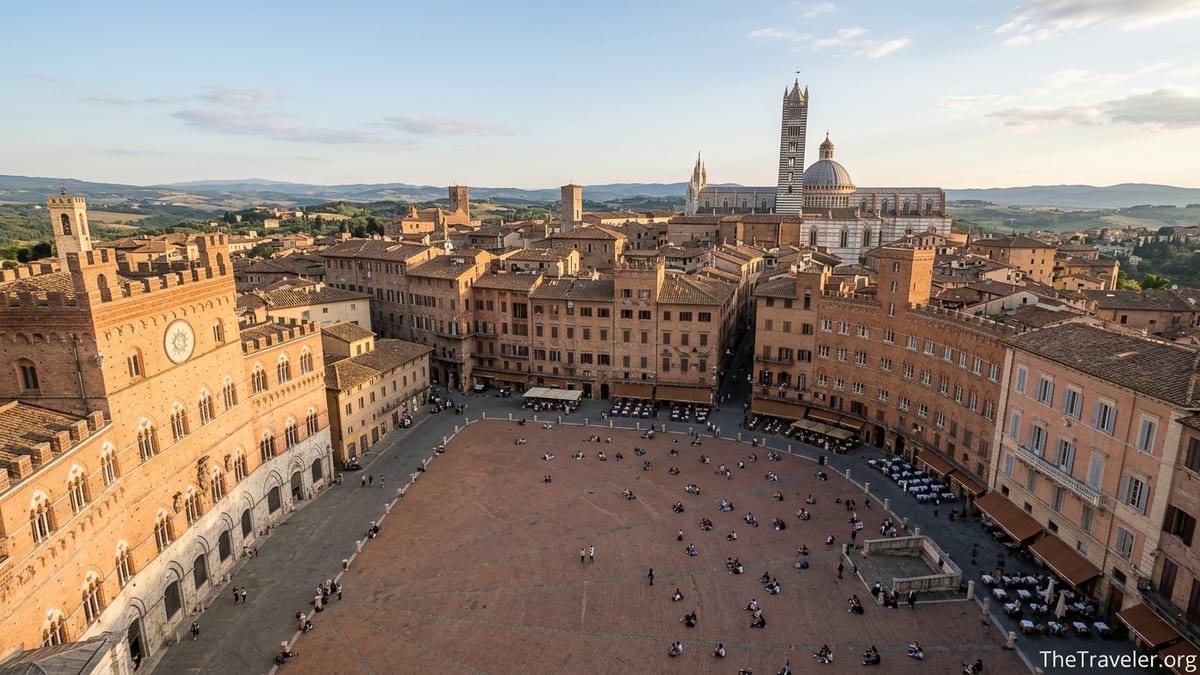
Why Siena Belongs on Your Tuscany Itinerary
For many travelers, Siena competes with Florence, Pisa, and Lucca for time in a packed Tuscany schedule. What sets it apart is its remarkably intact medieval core, still contained within walls and organized around the shell-shaped Piazza del Campo. The historic center is a UNESCO World Heritage site, and walking into the Campo for the first time feels like stepping into an open-air amphitheater carved from terracotta and brick. Cafes ring the square, students from the university sprawl on the sloping pavement, and the Palazzo Pubblico and Torre del Mangia rise above the rooftops.
Unlike Florence, which can feel like a Renaissance museum, Siena’s identity is inseparable from its contrade, the 17 neighborhood districts that structure social life and fiercely support their horses in the Palio. Even if you visit months away from race days, you might stumble on a contrada dinner in a lantern-lit courtyard or see flags fluttering above a tiny oratory tucked between houses. That lived-in layer gives Siena a different energy from hill towns like San Gimignano, which are more purely touristic.
For a typical Tuscany trip of one week, many visitors allocate either one very full day trip to Siena from Florence, or better, one or two nights based in the city. Staying overnight lets you experience the quiet early morning in the Campo and the golden hour from the Fortezza Medicea, when day-trippers have gone and the city feels like it belongs to locals again.
In practical terms, Siena is also a convenient base for southern Tuscany. Vineyards in the Chianti Classico area, the rolling Crete Senesi, and wine towns like Montalcino and Montepulciano are all reachable by car within roughly an hour, which is why some travelers split their time between Florence in the north and Siena or the countryside nearby for the second half of their trip.
When to Visit: Seasons, Weather and the Palio
Siena can be visited year-round, but the experience shifts noticeably with the seasons. Spring and autumn are generally the most comfortable in terms of weather. In April and May, daytime temperatures are often mild, the countryside around the city turns intensely green, and you have a good chance of sunny days mixed with some showers. Late September and October bring softer light, grape harvest activity in nearby vineyards, and cooler evenings that make climbing up to viewpoints like the Facciatone or the Torre del Mangia more pleasant.
Summer, particularly from late June through mid August, is hot and crowded. Daytime temperatures routinely feel intense on the stone pavements of the Campo and in the narrow streets that trap heat. Hotels and guesthouses in and around the center often raise rates in July and August, especially in the week surrounding the Palio races. If your Tuscany trip falls in high summer and you are sensitive to heat, planning your walking-intensive Siena sightseeing for early morning and late afternoon, with a long lunch or museum visit in the early afternoon, will make the day more manageable.
The city’s most famous event, the Palio di Siena, takes place each year on 2 July and 16 August. On those dates and in the days immediately before, Siena changes character. The Piazza del Campo is transformed into a racetrack with packed earth, wooden barriers, and temporary stands. Crowds surge into the center, and hotel prices increase sharply. If your goal is to see the Palio, you need to plan many months ahead, often booking a room and, if desired, a seat in the stands almost a year in advance. If you simply want to explore the city, avoiding those specific dates and the surrounding days will make your visit calmer and less expensive.
Winter is quieter. From roughly November through early March, you will find fewer crowds, shorter opening hours at some attractions, and an increased chance of dreary or rainy days, but hotel prices are generally lower. An example: a central three-star hotel that might charge well over mid-range rates during the August Palio period could drop to a much more moderate price point in late January. For travelers prioritizing atmosphere over sunshine, wandering nearly empty alleys in the off-season can feel magical.
Getting to Siena and Navigating the City
Most international visitors reach Siena via Florence, Pisa, or Rome. From Florence, you can choose between regional trains and buses. Trains to Siena depart from Firenze Santa Maria Novella and usually require a change at Empoli, with a typical journey time of about 1 hour 30 minutes. Tickets for these regional trains are usually inexpensive and can often be bought on the same day without advance price penalties. The Siena train station sits below the historic center; from there, escalators and local buses connect you up the hill, or you can take a short taxi ride to the Campo area.
Buses from Florence often offer a more direct option. Companies operate frequent coach-style buses that run from the area around Florence’s main bus hub toward Siena, with journeys that can be slightly quicker than the train depending on the route and traffic. Travelers often note that these buses drop you closer to the historic center, near the city walls, which can save some uphill walking or an additional local bus ride. Ticket prices are typically comparable to the regional train, making the choice more a matter of schedule and convenience.
If you are driving, you will encounter one of the most important practical aspects of Siena: the ZTL, or limited traffic zone. The entire historic center is tightly controlled by cameras. Non-resident cars entering without authorization risk automatic fines, which can later appear on your rental car bill. The usual strategy is to park in one of the designated parking structures just outside the walls, such as those near the stadium or the Fortezza Medicea, and then walk into the center. Daily parking fees apply, and during busy weekends or Palio periods, these lots can fill and require patience to find a space.
Once you are inside the walls, Siena is essentially a walking city. The historic center is compact, but it is built on several ridges, so you will go up and down more than a map suggests. Good walking shoes are important; narrow lanes paved with worn stone can become slippery in the rain. Public buses circulate on the periphery and can help connect the train station and some outer districts, but most visitors find they rarely need them once settled near the center. Taxis exist but are not typically hailed on the street; instead, you find them at designated taxi ranks or call a radio taxi service via your accommodation or a restaurant.
What Things Cost in Siena
On a typical 2026 visit, Siena generally feels slightly more affordable than Florence but more expensive than smaller Tuscan villages. A mid-range double room in a well-located three-star hotel or guesthouse inside or just at the edge of the walls can often run from moderate to higher double-digit euro amounts per night outside peak periods, with rates rising notably during summer weekends and the Palio. Guesthouses a short walk beyond the very center can offer better value while still keeping you within a 10 to 15 minute walk of the Campo.
Eating out can be tailored to your budget. A simple lunch of a panino with local salumi and pecorino cheese from a deli off Via di Città, plus a coffee, might cost a modest amount, whereas sitting down in a restaurant overlooking the Campo and ordering a plate of pici all’aglione, a salad, and a glass of Chianti could bring your meal into a comfortable mid-range bracket per person. Traditional Sienese sweets like ricciarelli (soft almond cookies) and panforte (dense spiced fruit and nut cake) are sold by weight in historic pastry shops; picking up a small box as a gift typically costs roughly the same as a modest souvenir from a museum shop.
Admission fees for major sights are significant enough to factor into your budget. The Siena Cathedral complex sells combined tickets that can include the Duomo, the Piccolomini Library, the baptistery, the crypt, and occasionally special access areas like the Porta del Cielo rooftop walk, depending on the season. Buying a combo ticket is usually better value than paying individually for each site. Climbing the Torre del Mangia, the tall brick tower on the Campo, is another extra cost but offers one of the best panoramic views of the city and surrounding countryside. For a family of four, tickets for the tower plus a full Duomo complex combination can easily approach or exceed a low three-figure sum, so it is worth deciding your priorities in advance.
One often overlooked line in the budget is the tourist tax charged by the city. This per-person, per-night fee is collected by hotels and guesthouses at check-out and varies based on the category of accommodation. For example, staying several nights in a three or four-star hotel will add a noticeable supplement to your total bill, especially for couples or families. The tax is not something the hotel keeps; they pass it on to the municipality. It is rarely included in prepaid rates, so be prepared to pay it separately in cash or card at departure.
Must-See Sights and Experiences
Most first-time visitors structure their Siena day around three anchors: the Piazza del Campo, the Duomo complex, and at least one elevated viewpoint. The Campo is a natural starting point. Sitting on its sloping brick surface, leaning against the warm pavement with a coffee from a nearby bar in hand, and watching the tower’s shadow slowly move across the square is a simple but memorable experience. The square is also where, on Palio days, thousands of people cram into the center while horses roar around the makeshift track in a matter of seconds.
The Siena Cathedral, or Duomo, stands out as one of the most striking churches in Italy. Its striped facade of white and dark stone, intricate carvings, and inlaid marble floors hold layers of history. Inside, you will find works connected to artists like Pisano, Donatello, and Michelangelo. Many visitors choose the Opa Si Pass or similar combination ticket, which grants access to the cathedral interior, the Piccolomini Library with its vivid frescoes, the baptistery, and the crypt. In some periods, you can also walk the narrow passageways along the upper level of the cathedral, known as the Porta del Cielo, for views down into the nave and out over the rooftops.
For sweeping city views, you have two main options. The Torre del Mangia, attached to the Palazzo Pubblico on the Campo, involves a long climb up narrow stone steps. Access is usually timed, with small groups allowed up every half hour or so, and there can be queues on busy days. From the top, you look directly down into the Campo and across the tiled roofs toward the rolling hills. Alternatively, the Facciatone, the surviving facade of a never-completed cathedral extension, can be climbed as part of the Museo dell’Opera del Duomo access. The view from there frames the city with the Duomo’s own architecture.
Beyond the headline sights, some of Siena’s most rewarding experiences are quieter. A walk along Via di Città and Via Banchi di Sopra in the late afternoon takes you past boutiques, wine shops, and historic palaces. Stepping into a small enoteca for a tasting of Brunello di Montalcino or Vino Nobile di Montepulciano gives you a sense of the broader wine landscape of southern Tuscany. In the evening, you might find a contrada hosting an outdoor dinner with long shared tables and simple homemade food, although these are usually community events rather than tourist attractions. Even just listening to the distant echo of drums or a trumpet from a contrada rehearsal can be atmospheric.
Staying in Siena: Neighborhoods and Accommodation Tips
When you look at a map of Siena, the spiral of streets inside the walls can be confusing. For most visitors, the ideal base is somewhere within a short walk of the Piazza del Campo or the Duomo, which naturally draws you into the heart of the city. Streets like Via di Città, Via del Porrione, and the lanes immediately around them put you close to key sights and restaurants, though you should expect more foot traffic and higher room rates.
Choosing a hotel or guesthouse just outside the busiest streets can offer a good balance. Areas near the Basilica di San Domenico or around the Fortezza Medicea are still within roughly a 10 to 15 minute walk of the Campo but feel more residential, with easier access to parking structures just outside the walls. In these zones you might find family-run B&Bs in old townhouses, where breakfast is served in a vaulted room and staff can explain practicalities like which gate to use when arriving by car to avoid the ZTL cameras.
If you prefer a countryside feel, agriturismi and small hotels in the hills immediately around Siena allow you to wake up among vineyards or olive groves while still driving into the city for a half day of sightseeing. A property in the direction of the Chianti hills, for example, might offer a pool with views across rows of vines, plus a short drive into Siena for dinner. In such cases, you need to factor nightly parking fees in town or accept a longer uphill walk from a free parking area beyond the walls.
Whatever area you choose, check small but important details: whether the building has an elevator or only stairs, how late reception is staffed, and whether windows have good shutters or soundproofing. On certain nights, especially during contrada celebrations or university events, streets that are quiet by day can become unexpectedly lively, and light sleepers may prefer interior-facing rooms.
Practical Tips: Safety, Etiquette and Avoiding Hassles
Siena generally feels safe, even after dark, and most incidents that affect visitors are petty, such as pickpocketing in crowded situations. Standard precautions apply: keep valuables secure in busy spots like the Campo at sunset or the narrow entrance of the Torre del Mangia staircase, and avoid leaving phones or wallets on cafe tables at the very edge of the square. During Palio-related events, crowds can become extremely dense, so using a money belt or keeping essentials zipped inside a small crossbody bag is sensible.
Understanding a little of Siena’s social structure helps you behave respectfully. The contrade are not tourist entertainment; they are neighborhood communities that take their history and symbols seriously. If you come across a contrada procession with flags and drums, step aside to let it pass rather than pushing through, and avoid treating members in traditional dress as costume performers. During private contrada events or dinners, you might see signs or barriers; these indicate that the space is not open to the general public, and entering uninvited would be poor form.
On a practical level, plan for hills and heat. Bring a refillable water bottle; public fountains in and around the center often provide drinkable water, and many locals simply top up throughout the day. Dress codes at religious sites, including the Duomo, require shoulders and knees to be covered; carrying a light scarf or wearing longer shorts or skirts will ensure you are not turned away at the entrance. In summer, a small folding fan can make waiting in line under the sun much more comfortable.
Finally, keep an eye on opening hours, which can shift seasonally. The Duomo complex and the Torre del Mangia operate with varying schedules depending on the time of year, and certain areas, such as the cathedral floor with its intricate inlaid marble panels, are fully uncovered only in specific periods. If a particular experience, like the Porta del Cielo rooftop walk, is a priority, it is wise to check current schedules and plan your day in Siena around a timed entry if available.
FAQ
Q1. Is Siena doable as a day trip from Florence, or should I stay overnight?
Siena is absolutely possible as a day trip from Florence, with many travelers taking a morning bus or train, spending about eight hours in the city, and returning in the evening. However, staying at least one night lets you experience early mornings and evenings in the Campo when day-trippers have left, and it is often the more rewarding choice if your schedule and budget allow.
Q2. How far in advance should I plan if I want to see the Palio?
If your Tuscany trip coincides with the Palio on 2 July or 16 August, you should ideally secure accommodation many months ahead, particularly if you want a room inside the historic center. Grandstand seats and balcony spots around the Campo are often sold through intermediaries well before race day, so last-minute options usually mean standing in the crowded center of the square or watching from farther away.
Q3. Is driving into Siena a good idea?
Driving to Siena is straightforward, but driving into the historic center is not. The ZTL, or limited traffic zone, is controlled by cameras, and unauthorized entry can result in fines. A better approach is to park in one of the lots just outside the walls, such as those near the stadium or the Fortezza Medicea, and walk into the center, planning for daily parking fees in your budget.
Q4. What is a realistic budget for food in Siena?
A modest breakfast of coffee and a pastry at a bar, a simple panino or slice of pizza for lunch, and a sit-down dinner with pasta, a shared main, and a glass of local wine can be managed on a moderate daily food budget for most travelers. Choosing restaurants a block or two away from the Campo often keeps prices more reasonable, while splurging on a meal with a direct view of the square or a tasting menu in a fine-dining restaurant will push costs higher.
Q5. Are Siena’s hills really that challenging to walk?
Siena’s center is compact, but the hills are real. Streets often climb or descend more steeply than they appear on a flat map, and some routes to the Duomo or the Campo from outer gates involve sustained uphill stretches. Most reasonably fit visitors manage fine with comfortable shoes and occasional pauses, but travelers with mobility challenges may prefer accommodation closer to the heart of the city and might rely more on taxis for certain segments.
Q6. Do I need to buy tickets in advance for the Duomo and Torre del Mangia?
Outside peak season and non-holiday weekdays, you can often buy tickets for the Duomo complex and Torre del Mangia on the day of your visit, though you may encounter lines. In summer and around major holidays, purchasing combination tickets in advance and choosing a timed slot for the tower climb, when available, can save considerable waiting and help you structure your day more efficiently.
Q7. Is Siena suitable for children?
Siena can work very well for families. Children often enjoy running on the gentle slope of the Campo, climbing towers for views, and spotting contrada flags with different animals and symbols. The main challenge is managing hills, summer heat, and sometimes long lines. Planning breaks in shaded spots, choosing accommodations with easy access to the center, and mixing short cultural visits with time simply playing in the square make visits smoother with younger travelers.
Q8. Can I visit Siena if I do not drink wine?
Yes. Although the region is famous for Chianti and other wines, Siena itself offers plenty of non-wine experiences: art and history in the Duomo and Palazzo Pubblico, architecture and views, traditional sweets like ricciarelli and panforte, and the atmosphere of the Campo at different times of day. Many restaurants provide good non-alcoholic options, from sparkling water and soft drinks to local fruit juices and coffee-based drinks.
Q9. What should I wear to visit religious sites in Siena?
When visiting churches, including the Duomo, you should ensure shoulders are covered and shorts or skirts reach at least to the knee. A light scarf or shawl can help you adapt quickly if you are wearing a sleeveless top. Footwear should be comfortable for walking and climbing stairs; sandals are acceptable, but avoid beachwear-style clothing. Dressing a bit more conservatively than you might for a casual stroll will avoid any issues at entrances.
Q10. Is English widely spoken in Siena?
In hotels, popular restaurants, major sights, and tourist offices, you will usually find staff who speak at least some English. Menus in the historic center are often available in multiple languages. In small neighborhood bars or shops away from the busiest streets, English may be more limited, but a few basic Italian phrases, a smile, and gestures go a long way, and locals are generally patient with visitors trying to communicate.