


Travelers dreaming of Tuscany are often torn between a string of beloved hill towns: San Gimignano with its medieval towers, wine-soaked Montepulciano, perfectly composed Pienza. Yet again and again, visitors who see several of them in a single trip find themselves saying the same thing: Siena feels different. Larger but still intimate, dramatic yet lived-in, it is both a medieval stage set and a working city whose rhythms have barely changed in centuries. Understanding what makes Siena special compared with other historic Tuscan towns will help you decide not just whether to visit, but how long to stay and how to experience it.
Get the latest updates straight to your inbox!
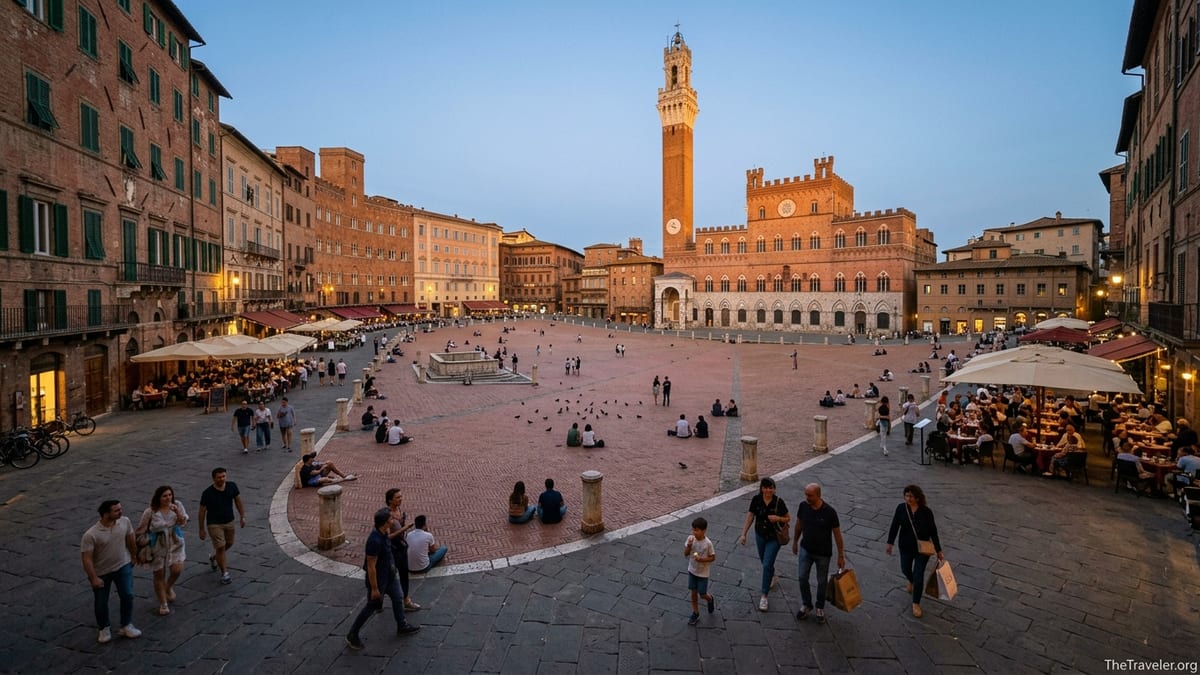
A True Medieval City, Not Just a Hilltop Village
Many Tuscan destinations marketed as hill towns are, at heart, villages: beautiful centers with a few main streets, like San Gimignano’s Via San Giovanni or the compact grid of Pienza. You wander for a couple of hours, admire the views, have a gelato and feel you have seen most of what there is. Siena, by contrast, is a full-fledged small city of more than 50,000 residents, with layered neighborhoods, universities, hospitals and everyday shops that serve locals as much as tourists. You sense this the minute you leave the train or bus and climb into the red-brick streets: there are students rushing to class, families shopping for groceries, office workers on their lunch break.
This scale affects your experience in practical ways. While San Gimignano and Pienza can feel overwhelmed when a few tour buses arrive, Siena’s broader historic center disperses crowds more easily. You can stand in packed Piazza del Campo at midday, then duck into a quiet lane near the Basilica of San Domenico or the Orto de’ Pecci garden and suddenly find yourself alone. Travelers who spend the night regularly remark that Siena after dark feels almost like a different place, with local couples strolling for their evening passeggiata and trattorias filled with Italian conversations rather than day-trippers speaking half a dozen languages.
The city’s size also means you can use Siena as a functioning base, not just a postcard stop. Many visitors rent a car from Florence or collect one at Siena’s station, then sleep in town while making day trips into Chianti, the Crete Senesi or Val d’Orcia. Compared with staying directly in a tiny village, you gain access to late-opening pharmacies, larger supermarkets just outside the walls and a full spread of dining options from inexpensive pizzerias used by students to white-tablecloth restaurants serving multi-course tasting menus.
Piazza del Campo: A Square Unlike Any Other in Tuscany
Most Tuscan towns have a main piazza, but none has anything quite like Siena’s Piazza del Campo. Rather than a simple rectangular plaza, Il Campo is a shell-shaped amphitheater sloping gently toward the Palazzo Pubblico and its slender Torre del Mangia. The space feels almost like an enormous outdoor living room where the whole city gathers. In San Gimignano, people tend to keep moving, walking from one square to the next; in Pienza and Montepulciano, the main streets act as view corridors. In Siena, you sit. You sit on the warm bricks with a takeaway coffee, on a café terrace with an aperitivo, on the stone steps listening to the square’s evening hum.
The Campo’s daily life is not just about tourists. On a weekday morning in shoulder season, you might see schoolchildren in groups following a teacher, a market stall being set up along one side, and office workers cutting across the square as the shortest route between neighborhoods. Then everything changes on the days surrounding the Palio horse races, held on July 2 and August 16 each year, when tons of earth are laid along the perimeter to create a temporary track. Recent municipal guidance notes that on race days the square closes once it reaches capacity in mid-afternoon, and as many as 20,000 spectators can pack into the center. For visitors this is both spectacle and logistical challenge, and something no other Tuscan town even attempts.
Even if your trip does not coincide with the Palio, it is worth experiencing the Campo at different times of day. In high season, mid-morning brings tour groups clutching audio devices; by late afternoon, as the sun falls behind the Palazzo Pubblico, shadows stretch across the brick paving and the mood softens. After 10 p.m., day-trippers have mostly left, the buskers tune their guitars and gelato in hand you can lie back on the slight slope and look up at the stars between the rooftops. This day-to-night transformation is one of Siena’s quietest but most memorable luxuries.
Living Traditions: The Contrade and the Palio
Other Tuscan towns host festivals, of course. Montepulciano has its barrel-rolling Bravìo delle Botti, while smaller villages might stage medieval parades in summer. Yet few events anywhere in Italy carry the intensity of Siena’s Palio and the contrada system that underpins it. The city is divided into 17 contrade, or historic districts, each with its own symbol, museum, fountain and oratory. Where you are born or live usually determines your contrada, and allegiances run so deep that locals joke it is more important than supporting a football team.
For a traveler, this means you can glimpse a level of civic identity that goes far beyond tourism. In the weeks before the Palio, visitors who happen to rent an apartment within, say, the Oca (Goose) or Torre (Tower) district often find neighborhood streets draped with flags and lamps in contrada colors. You might stumble upon an evening outdoor dinner where hundreds of residents, from grandparents to toddlers, share long tables in a back street courtyard. These are not staged folkloric shows; they are private events that sometimes welcome curious outsiders if you are respectful and ask politely.
On the race days themselves the city enters another dimension. The three-lap bareback race around Piazza del Campo lasts barely ninety seconds, but preparations and rituals dominate the preceding days. Each contrada follows its horse to blessings in local churches, and tension is palpable in every café and pastry shop. Unlike the calmer wine festivals of Montalcino or the food fairs in Pienza, the Palio can feel bewildering, even harsh, for first-time visitors. It is precisely this rawness, however, that many travelers later cite when explaining why Siena stayed with them long after more “pretty” hill towns blurred together.
A Cathedral That Rivals Florence, With Its Own Personality
Almost every Tuscan town has a church worth stepping into, from the graceful Renaissance cathedral of Pienza to Montepulciano’s hilltop temple of San Biagio. Siena’s Duomo, though, stands in a different category. Clad in alternating bands of dark and light marble, it rises over the city in bold stripes that make Florence’s pink-and-green Duomo feel almost delicate by comparison. Inside, striped columns, a star-studded vaulted ceiling and sculpted pulpits create a space so vivid it can feel overwhelming after the simplicity of rural parish churches.
What truly sets Siena’s cathedral apart is its extraordinary inlaid marble floor, widely described as one of the most elaborate in Italy. Normally protected to preserve it, large sections are revealed to the public for limited periods each year, turning the entire nave into a vast graphic narrative. Scenes range from Old Testament stories to the she-wolf of Siena surrounded by symbols of allied cities. Compared with smaller town churches that might boast a single standout fresco, here the floor itself becomes a major attraction, and timing a visit to coincide with its full opening is a worthwhile strategy for art-minded travelers.
In recent years the Duomo has also opened the so-called “Porta del Cielo,” or Stairway to Heaven, an elevated route through roof spaces and walkways that offers unusual views over the nave and city rooftops. Access is through timed small-group tours with an additional ticket, often booked by travelers who have already climbed towers in San Gimignano or Montepulciano and are looking for something different. The mix of architectural bravado and curatorial storytelling makes Siena’s cathedral complex feel like a self-contained art journey rather than just a quick stop on a walking tour.
Cuisine and Nightlife With Depth Beyond Wine Tasting
Food is excellent almost everywhere in Tuscany, but Siena’s dining scene stands out for how varied and accessible it is. In a small town like San Gimignano, many restaurants around the main streets understandably focus on tourists, with similar menus of bruschetta, tagliatelle al ragu and grilled meats at mid-range prices. Siena has those options too, yet it also has modest osterie down side alleys where a plate of pici all’aglione, the thick local pasta in garlicky tomato sauce, might cost little more than a coffee and pastry on a main square in Florence.
Typical Sienese dishes include ribollita, a hearty bread and vegetable soup that appears on most winter menus, and cinghiale in umido, slow-cooked wild boar often served with polenta. Seasonal specialties are another clue that this is a city where people actually live year-round. In autumn, black truffle shavings appear over simple egg pasta in unpretentious trattorias; around Christmas, pastry shops fill with panforte and ricciarelli, traditional sweets that locals buy for family gatherings rather than as souvenirs. Visitors staying in agriturismi near Pienza or Montepulciano often drive into Siena specifically for evening meals, knowing they will find more choice at a range of price points.
The city’s university presence and resident population also lend it a nightlife that other hill towns lack. After 9 p.m. on a summer evening, bars along Via di Pantaneto or near Piazza del Campo buzz with students and young professionals, many sipping local Chianti or a spritz for modest prices. Live music nights, wine bars specializing in Sangiovese-based reds from nearby Chianti Classico and Montalcino, and late-opening gelaterie all mean that you can fill an entire evening without repeating venues. By contrast, in a compact town like Pienza, many businesses close soon after dinner, and visitors often comment that streets fall quiet by 10:30 p.m.
Gateway to Contrasting Landscapes: Chianti, Crete Senesi and Val d’Orcia
One reason travelers gravitate to Montepulciano or Pienza is their placing within the cinematic Val d’Orcia, whose rolling wheat fields and cypress-lined lanes have appeared in countless films and advertising campaigns. Siena lacks those immediate valley vistas from its walls, yet it occupies a strategic position between very different Tuscan landscapes. To the north stretch the vineyard-covered hills of Chianti; to the south lie the lunar clay ridges of the Crete Senesi and, beyond, the Val d’Orcia. For visitors with a car, this makes Siena one of the most versatile bases in the region.
A typical two- or three-day loop from Siena might see you driving north through Castellina in Chianti and Greve, tasting Chianti Classico in small family-run wineries during the day, then returning to sleep in the city. Another day you might head south on the white roads around Asciano, where the Crete Senesi’s stripped, almost sculptural hills feel entirely different from the ordered vineyards of Chianti. With an early start, you can reach Pienza in about an hour, stroll its Renaissance streets, sample pecorino cheese from a deli on Corso Rossellino, then continue to Montepulciano for a winery visit in an underground cantina before looping back to Siena by sunset.
Public transport is more limited in rural Tuscany, but even travelers without a car can take advantage of Siena’s position. Buses from Piazza Gramsci connect to several surrounding towns, and guided small-group tours regularly use Siena as a departure point for day trips into Chianti or Val d’Orcia. Compared with basing yourself in a smaller village, where you may be almost entirely reliant on a rental car or expensive private drivers, staying in Siena offers a balance of regional access and urban convenience.
Year-Round Atmosphere vs. Seasonal Showcase
Although Tuscany receives visitors in all seasons, many smaller hill towns are still highly seasonal. In late autumn or winter you may find that some restaurants in San Gimignano or tiny villages like Monticchiello open only on weekends or close altogether, and that the rhythm of the town slows to a whisper. Siena, on the other hand, maintains a consistent level of activity throughout the year because its economy is not solely dependent on tourism. University terms, local administrative offices and regional events keep foot traffic flowing even when tour buses dwindle.
This year-round life has subtle benefits for travelers. Hotel rates in the quieter months can be more competitive than in peak July and August, and you may be able to find characterful rooms in former palazzi or family-run pensioni at prices comparable to mid-range agriturismi in the countryside. Cafés remain open for early-morning cappuccini, bakeries turn out fresh focaccia, and neighborhood markets still bustle with residents buying produce. In contrast, visitors staying off-season in a tiny stone village sometimes report feeling as if they are wandering through a museum set, beautiful but lacking everyday energy.
Siena’s ability to absorb tourism also means that even in high season it can feel less overrun than the narrow lanes of San Gimignano, which by midday can be choked with groups on tight schedules from Florence. In Siena, you can step just a couple of blocks away from main arteries like Via di Città and find uncrowded alleys where laundry hangs above your head, and a hardware store displays buckets and brooms alongside postcards. That mixture of the ordinary with the extraordinary is one of the city’s quietest gifts.
The Takeaway
Choosing between Siena and other historic Tuscan towns is not a matter of better or worse, but of what kind of experience you want. San Gimignano delivers a concentrated hit of medieval drama, Pienza is an exquisite Renaissance jewel, Montepulciano and Montalcino wrap wine culture into every view. Siena, though, offers a broader canvas: a medieval city that is still very much alive, anchored by a unique central square, an extraordinary cathedral, and living traditions that shape daily life rather than just animating festival weekends.
For many travelers, that means Siena works best not as a quick half-day stop, but as a base for at least two or three nights. It lets you taste small-town Tuscany on day trips while returning each evening to a place with real nightlife, serious food and layered neighborhoods to explore. If your image of Tuscany is a single photogenic street, any of the region’s villages will satisfy. If you want to feel how a historic Tuscan city breathes in the twenty-first century, yet still revolves around rituals born in the Middle Ages, Siena is where those layers come together most powerfully.
FAQ
Q1. How many days should I spend in Siena compared with other Tuscan hill towns?
Most travelers find that while a half day is enough to see the core of smaller towns like Pienza or San Gimignano, Siena rewards at least two full days and often three. That gives you time to explore different neighborhoods, visit the Duomo complex without rushing, experience Piazza del Campo at several times of day, and still take a short excursion into nearby Chianti or the Crete Senesi.
Q2. Is Siena a good base for exploring the rest of Tuscany?
Yes. Siena sits roughly in the middle of central Tuscany, with Chianti to the north and Val d’Orcia and the Crete Senesi to the south. With a rental car, you can reach Pienza or Montepulciano in about an hour and be back in Siena for dinner. Even without a car, buses and organized small-group tours make it a practical hub compared with very small villages that lack transport links.
Q3. How does Siena’s atmosphere compare with San Gimignano or Pienza?
San Gimignano and Pienza feel like beautifully preserved villages whose centers can fill quickly with short-stay visitors. Siena, by contrast, is a larger city with a resident population that keeps streets lively morning to night. You are more likely to see everyday life unfolding alongside tourism, from students heading to lectures to locals doing their shopping, which gives the city a more lived-in, less museum-like feel.
Q4. Is Siena very crowded, especially in summer?
Siena can be busy, especially on weekends and around the Palio races on July 2 and August 16, when Piazza del Campo becomes a racetrack and capacity limits apply. However, because the historic center is large, it generally absorbs crowds better than narrow hill towns like San Gimignano. Stepping a few streets away from main routes usually brings you to quieter corners even in peak season.
Q5. What makes Siena’s cathedral different from churches in other Tuscan towns?
Siena’s Duomo stands out for its bold black-and-white striped exterior, richly decorated interior and exceptional inlaid marble floor, which is uncovered for limited periods each year. While other towns might highlight a single masterpiece or a simple stone church, Siena’s cathedral complex feels like a multi-layered art experience, especially if you add the elevated “Stairway to Heaven” tour that looks down into the nave and out across the city.
Q6. Are evenings in Siena more interesting than in smaller hill towns?
Generally yes. Thanks to its universities and year-round population, Siena offers a range of evening options: lively wine bars, casual student hangouts, traditional trattorias, occasional concerts and late-opening gelato shops. In many smaller villages, choices after dinner can be limited to a single bar or a quiet stroll, and streets may empty early outside peak tourist months.
Q7. Do I need a car if I stay in Siena?
You can certainly enjoy Siena without a car, as the city itself is walkable and well served by regional buses. A car becomes useful if you want to explore nearby countryside, vineyards and smaller villages on your own schedule. Many visitors choose to combine a car for a couple of days of rural touring with car-free days devoted to Siena’s museums, churches and contrade neighborhoods.
Q8. How expensive is Siena compared with towns like Montepulciano or Pienza?
Prices in Siena cover a wider range. You will find tourist-oriented spots around Piazza del Campo with higher menus, but also student-friendly pizzerias and osterie where meals can be relatively affordable. In smaller towns, prices can be similar or slightly higher for a narrower set of options, especially if there are only a few central restaurants. Accommodation in Siena also ranges from simple guesthouses to boutique hotels in historic palaces.
Q9. Is Siena suitable for families with children?
Yes. Children usually love Piazza del Campo’s car-free space, where they can safely run or sit on the sloping bricks, and many families enjoy climbing the Torre del Mangia or exploring the Duomo. Compared with very small villages, Siena offers more casual dining choices, gelato shops and practical services like pharmacies and supermarkets, which can be reassuring when traveling with kids.
Q10. If I only have one day, should I visit Siena or another Tuscan hill town?
If you want a compact, easily walkable experience with iconic views, a small town like Pienza or San Gimignano works well for a single day. If you are interested in a deeper slice of Tuscan urban life, complex history and a truly unique main square, Siena is the more rewarding choice. Even in one day you can visit the Duomo, spend time in Piazza del Campo and wander several districts to get a feel for the city’s distinctive character.