


Expedia’s One Key loyalty program has quietly turned into a powerful tool for flyers. With an October 28 product update, select members can now get automatic Price Drop Protection on eligible flights and complimentary airport lounge access when certain delays hit, turning what used to be simple online bookings into something that looks more like an airline elite experience.
Get the latest updates straight to your inbox!
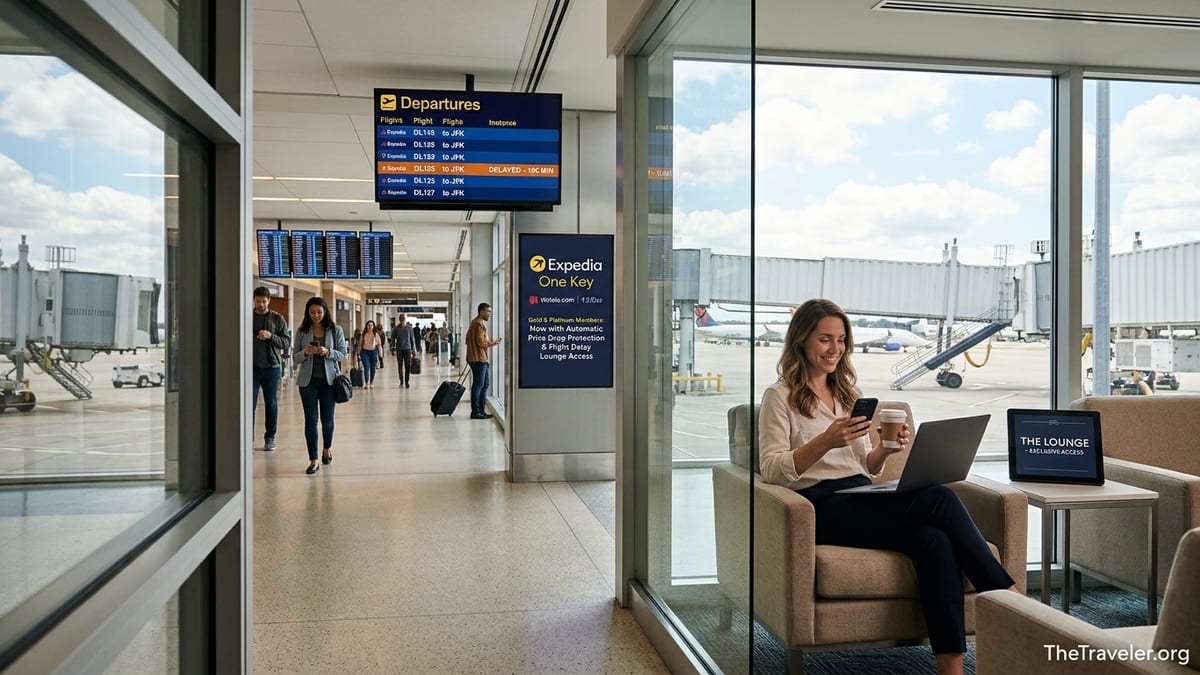
What Expedia Changed With Its October 28 Release
Expedia’s October 28 product release focused on making flights booked through its One Key loyalty program more attractive. Two benefits stood out: an expansion of automatic One Key Price Drop Protection for higher-tier members on select flights booked in the Expedia app, and the rollout of free airport lounge access or equivalent experiences when an eligible flight is significantly delayed. Expedia framed these changes as part of a broader push to make its loyalty ecosystem feel more like a full-service travel membership rather than just a discount engine.
One Key is the shared rewards platform for Expedia, Hotels.com, and Vrbo, allowing members to earn and redeem a common currency called OneKeyCash across flights, hotels, vacation rentals, car rentals, and more. The new flight-focused benefits sit on top of the existing structure of Member Prices and OneKeyCash earnings, so they are extra perks layered onto what travelers already receive for booking through the platform.
Importantly, these enhancements do not apply to all customers automatically. They are tied to One Key status levels and to specific types of flight bookings, which means travelers need to understand the fine print before assuming they are covered. Knowing when a booking qualifies can be the difference between getting hundreds of dollars back in OneKeyCash after a fare drops, or free lounge access during a long delay, and getting nothing at all.
For U.S. travelers comparing whether to book directly with an airline such as Delta or United or via Expedia, these new benefits can tilt the scales in certain situations. That said, they also come with limits and exclusions that make them far from a universal win, especially for those who value direct control with the airline during disruptions.
Who Qualifies: One Key Status Levels Explained
To understand who gets automatic Price Drop Protection on select flights and who can access lounges when a flight is delayed, you first need to know how One Key status works. The program has four tiers: Blue (entry-level), Silver, Gold, and Platinum. Every member starts at Blue simply by enrolling through Expedia, Hotels.com, or Vrbo, and then climbs based on the value and mix of eligible bookings completed across those brands.
Status is earned through what Expedia calls trip elements, which represent the different parts of travel such as individual hotel nights, flights, or car rental days. Members who book more trip elements or higher-value stays and flights move up to Silver, then Gold, and finally Platinum. As of late 2026, higher tiers earn elevated OneKeyCash rates and added perks such as room upgrades at some hotels, priority customer support, and, crucially for this article, enhanced flight benefits.
Gold and Platinum tiers are where the new October 28 benefits really come into play. According to Expedia’s product pages and program terms, One Key Gold and Platinum members see One Key Price Drop Protection automatically included on select eligible flights when they book through the Expedia app, at no extra charge. Other members can still purchase Price Drop Protection as an add-on fee for some flights, but they do not get it automatically at checkout.
The delayed-flight lounge access benefit is also designed as a premium perk. Public communications and member emails ahead of the launch highlighted that Platinum members would be the first to receive lounge access or comparable experiences when a qualifying flight is delayed by at least 90 minutes, and that Gold members would be added to that benefit. That means ordinary Blue or Silver members can book the same flight on Expedia and not receive the delay-based lounge access that a Gold or Platinum traveler on the same reservation might unlock.
How One Key Price Drop Protection Works in Practice
Price Drop Protection is Expedia’s answer to a common frustration: booking a flight today only to see the fare fall tomorrow. The feature tracks participating flight prices on Expedia after purchase, and if the fare decreases before departure, the traveler receives the difference back in OneKeyCash after the trip is completed, rather than as a cash refund to their card. This OneKeyCash can then be used toward future bookings across Expedia, Hotels.com, and Vrbo.
For example, imagine a One Key Gold member booking a New York to Los Angeles round-trip economy ticket through the Expedia app for a January departure at 450 dollars on a major U.S. carrier. If that exact itinerary on Expedia later drops to 380 dollars before departure, Expedia’s system recognizes the 70 dollar difference. Under One Key Price Drop Protection, that Gold member would receive roughly 70 dollars in OneKeyCash after they finish the trip, which they could put toward a spring break hotel in Miami or a summer Vrbo rental in Colorado.
The key condition is that the eligible flight must be one of the select options for which Price Drop Protection is offered and turned on. Even Gold and Platinum members will not see this benefit on every flight. On the app, eligible itineraries typically display a message indicating that Price Drop Protection is included or can be added for a small fee. If that message is absent, the booking will not be monitored for post-purchase price drops, and no OneKeyCash credit will be issued even if the fare later falls.
Price Drop Protection is separate from Expedia’s standard price guarantee, which generally focuses on matching lower publicly available prices found shortly after booking. Here, the monitoring is automated, and the adjustment is paid out in loyalty currency, not cash. That makes it particularly attractive for travelers who already plan to use Expedia frequently, but less appealing for those who prefer flexible cash refunds.
Eligible Flights, Monitoring Limits, and Exclusions
Not every flight booked on Expedia qualifies for Price Drop Protection or for delayed-flight lounge access. Expedia’s terms and product pages make clear that Price Drop Protection is currently available only on select flights and that automatic no-fee coverage for Gold and Platinum members applies only when those members book in the Expedia app. This means flights booked on a desktop browser may not display the same options, and some low-cost carriers or special fares may be excluded entirely.
In practical terms, travelers will see the option most often on mainstream carriers and standard published fares rather than on heavily restricted promotional tickets. A traveler booking a nonstop Chicago to London flight on a global carrier in main economy class might see Price Drop Protection as an available toggle, while someone grabbing a deeply discounted basic-economy ticket or a multi-airline itinerary with unusual routing may not. Expedia does not guarantee coverage on every route or every airline and reserves the right to change eligible inventory over time.
The monitoring itself is limited to comparing the price of the exact same itinerary on Expedia, not across other sites. So if a Los Angeles to Honolulu round-trip falls from 600 dollars to 520 dollars on Expedia, the benefit can trigger, but if the same drop occurs only on another online agency or directly with the airline, Price Drop Protection does not apply. In addition, the refund is capped based on Expedia’s program rules, and price checks occur periodically rather than in real time, which means small or short-lived dips may not always be captured.
Some exclusions also relate to changes and cancellations. If a traveler voluntarily changes the flight or cancels it, any potential price-drop benefit is typically recalculated or voided according to the new fare and the terms attached to the revised booking. If the airline significantly changes the schedule and rebooks the passenger, Expedia will generally align Price Drop Protection calculations with the new fare structure, which can reduce or eliminate the expected OneKeyCash credit.
Free Lounge Access When Flights Are Delayed
The second major piece of the October 28 enhancement is delayed-flight lounge access, marketed around One Key Flight Delay Access. Instead of being a general airport perk, this benefit is triggered only when a qualifying flight booked through Expedia is delayed by a set threshold, which recent communications and partner materials place at around 90 minutes or more. When that happens, eligible members receive access to an airport lounge or a comparable compensation experience.
In practice, this might look like a Gold or Platinum member booked through Expedia on an afternoon flight from Dallas to San Francisco that is scheduled to depart at 3:30 p.m. If the airline delays departure to 5:15 p.m. for operational reasons, pushing the delay past the threshold, Expedia’s partner system can send that traveler a digital pass granting entry to a participating lounge in the terminal, or a voucher for food and drinks at designated outlets if no lounge option is available. The goal is to turn an unpleasant wait into something closer to a premium cabin experience, even if the ticket is in basic economy.
This lounge benefit is separate from any perks tied to premium credit cards like Priority Pass memberships or airline status. A traveler without any of those can still receive lounge access solely because their qualifying Expedia-booked flight is delayed and they hold Gold or Platinum One Key status. However, the coverage depends on participating airports and partners, so access is more likely at larger hubs such as New York JFK, Los Angeles, or London Heathrow than at small regional airports.
Not every delay qualifies. The benefit is designed for genuine operational or airline-related disruptions, not for trivial schedule adjustments or issues caused by the traveler. If a passenger arrives late to the airport and is rolled to a later flight, for instance, that would not typically trigger Expedia’s lounge access, even if the new departure is substantially later than the original. Similarly, flights that are merely retimed a short amount or that are canceled far in advance might not create a real-time delay event recognized by the partner system.
Fine Print: What Is Excluded or Restricted
Both Price Drop Protection and delayed-flight lounge access come with important exclusions. First and foremost, the value travelers receive is typically delivered in the form of OneKeyCash or access to third-party lounge networks, not as direct cash refunds or airline credits. That makes the benefits most valuable to those who expect to book further travel through Expedia or its sister brands.
For Price Drop Protection, there may be minimum drop thresholds and maximum total credits defined in Expedia’s terms, which protect the company from issuing very small refunds or outsized awards on extreme fare swings. This means that if the price of a 200 dollar ticket drops by just 5 dollars, no credit may be issued, while a dramatic 300 dollar drop on a complex itinerary could be partially limited by a program cap. Additionally, the recalculated value of the booking may affect how many OneKeyCash rewards the traveler earns on the original purchase once the post-trip credit is applied.
Lounge access also carries limitations. If an airport or specific lounge is at capacity, the partner may not allow additional entries even if a traveler is technically eligible. In those cases, Expedia may offer an alternative such as meal vouchers or a discount at participating restaurants, but this is not guaranteed across all locations. In some countries, local regulations or infrastructure limitations mean there may be no partnered lounges at all, leaving no benefit to deliver even after a qualifying delay.
Additionally, these perks generally apply only when the flight is booked through Expedia and correctly linked to a One Key account with eligible status. If someone else books the ticket on their Expedia profile, or the traveler is not logged in during purchase, the system may not recognize them as Gold or Platinum, and the benefits may not trigger. It is therefore critical that frequent travelers verify their One Key membership and status are correctly attached to their reservation before departure.
Real-World Scenarios: When the Benefits Shine
To see when booking through Expedia can genuinely pay off, it helps to look at some realistic scenarios. Consider a frequent leisure traveler from Seattle who typically books domestic flights several times a year and stays at a mix of chain and independent hotels. Over a couple of years, they reach Gold status in One Key by booking a series of weekend hotel stays and a few Vrbo rentals, plus an annual international trip.
Now imagine this traveler is planning a spring trip to New York and finds an American Airlines economy flight from Seattle to JFK priced at 420 dollars on both the airline’s website and Expedia. Booking direct would preserve any American Airlines status benefits they have, while booking through Expedia in the app would display automatic Price Drop Protection at no fee due to their Gold status. If the traveler has modest or no airline status and values the possibility that the fare could fall by 50 or 80 dollars in the weeks before departure, the Expedia option might be more attractive, especially if they already use OneKeyCash for hotels.
Another example involves a family based in Chicago flying to Orlando for a peak-season vacation. They book four round-trip tickets on a major airline through Expedia, again at the same base price seen on the airline’s own site. The parents have Platinum One Key status thanks to extensive work travel through Expedia. If their outbound flight is delayed at Chicago O’Hare by more than 90 minutes due to weather or air traffic control congestion, Expedia’s delayed-flight lounge benefit could grant them access to a partner lounge where the kids can have snacks and the adults can work or relax away from the crowds. For a family with no premium credit cards or airline lounge memberships, this could be the difference between an exhausting afternoon at the gate and a relatively comfortable start to their vacation.
However, there are cases where Expedia’s perks provide less value. A road warrior with high-level status on a major airline who always books premium cabins and relies on upgrades and same-day flight changes may be better off booking direct. That traveler often gets lounge access, priority support, and same-day change flexibility from the airline that an intermediary cannot easily match. For them, the potential benefit of a few dozen dollars in OneKeyCash when a fare drops might not outweigh the control they have when dealing directly with the airline during irregular operations.
When Booking Through Expedia Makes Sense
The key question for many travelers is whether these One Key enhancements justify booking flights through Expedia instead of directly with airlines or via other platforms like Chase Travel or Capital One Travel. The answer depends heavily on status, travel patterns, and how much value an individual places on loyalty currency versus direct cash savings and airline-specific perks.
If you are a Gold or Platinum One Key member who books multiple flights and hotels through Expedia each year, Price Drop Protection and delayed-flight lounge access can meaningfully enhance your experience. For example, over a year in which you book four or five round-trip flights, it is plausible that fares on one or two itineraries may fall by 50 to 100 dollars each on Expedia, leading to a few hundred dollars in OneKeyCash. Add in one or two significant delays that trigger lounge access, and the combination of comfort and future discounts can outweigh the simplicity of booking direct.
On the other hand, if you fly only once or twice a year and usually choose the cheapest fare available, the probability of both a notable price drop and a qualifying delay is lower. In that case, the tradeoffs associated with third-party bookings, such as occasionally slower rebooking during disruptions or less seamless integration with airline apps, may not be worth the uncertain benefit. Direct booking remains more straightforward, particularly if you hold airline status or co-branded credit cards that already provide lounge access or travel protections.
It is also important to compare what other platforms offer. Some credit card travel portals and airline programs provide their own price guarantees and trip delay benefits funded through travel insurance. Travelers with premium cards from issuers like Chase or American Express may already have trip delay coverage that reimburses meals and hotels in cash when delays exceed certain thresholds. For these travelers, Expedia’s lounge access and OneKeyCash-based Price Drop Protection are value-adds but not necessarily unique, so they should weigh what is easiest to manage and where they prefer to keep their rewards ecosystem.
How to Maximize the New One Key Benefits
For travelers who determine that Expedia’s One Key benefits fit their needs, a few practical habits can help maximize value. First, always sign in to your One Key account before searching for flights, and use the Expedia app whenever possible if you hold Gold or Platinum status. This increases the likelihood that eligible flights will show Price Drop Protection automatically and that your membership details are correctly attached to the booking for any delay-related lounge access.
Second, be deliberate about the flights on which you rely on these perks. Price Drop Protection is more likely to matter on routes and dates where fares historically fluctuate, such as transcontinental U.S. flights around off-peak seasons or international itineraries booked several months in advance. Booking a flexible or refundable fare six months ahead of a trip from San Francisco to Paris through Expedia with Price Drop Protection turned on could provide meaningful upside if competition or demand shifts the fare downward before departure.
Third, keep realistic expectations about when lounge access will trigger. While operations at large hubs like Atlanta, Chicago, and London experience delays frequently, not every delay qualifies, and capacity constraints can limit lounge availability. Treat the benefit as a safety net for particularly bad days rather than a guaranteed part of every journey. If lounge access is mission-critical, you may still want to consider airline status, paid memberships, or premium credit cards alongside your One Key strategy.
Finally, remember that OneKeyCash is a closed-loop currency. It can be very valuable if you consistently book hotels, rentals, or activities through Expedia, Hotels.com, or Vrbo, but it is not the same as cash in your bank account. Plan ahead to use earned OneKeyCash on trips you are already likely to take, such as a long weekend hotel stay or a rental car on a family visit, so that the rewards from Price Drop Protection and lounge-enabled trips do not sit idle.
Conclusion: A Stronger Case for Loyal Expedia Flyers
Expedia’s October 28 enhancements to the One Key program sharpen the company’s pitch to frequent travelers. Automatic Price Drop Protection on select flights for Gold and Platinum members and lounge access for delayed flights transform certain app-booked tickets into more resilient, more comfortable propositions, especially for those who do not already enjoy elite airline benefits.
These perks, however, are not blanket protections. They hinge on status, eligible itineraries, and the traveler’s willingness to accept rewards in the form of OneKeyCash and occasional lounge passes rather than cash refunds and direct control with the airline. For some, particularly infrequent flyers or those deeply invested in airline loyalty schemes, direct booking will remain the more sensible default.
For others, especially travelers who already rely on Expedia, Hotels.com, and Vrbo for much of their annual travel, the new Price Drop Protection and flight-delay lounge access may tip the balance firmly in favor of consolidating bookings under One Key. Used thoughtfully, these benefits can make a year of trips meaningfully cheaper and more comfortable without requiring first-class tickets or top-tier airline status.
As with any loyalty product, the value comes from understanding the rules and playing to your own travel patterns. If you take the time to match Expedia’s new One Key features with the way you actually travel, you may find that booking through Expedia for certain flights is no longer just a matter of convenience but a quietly strategic choice.