


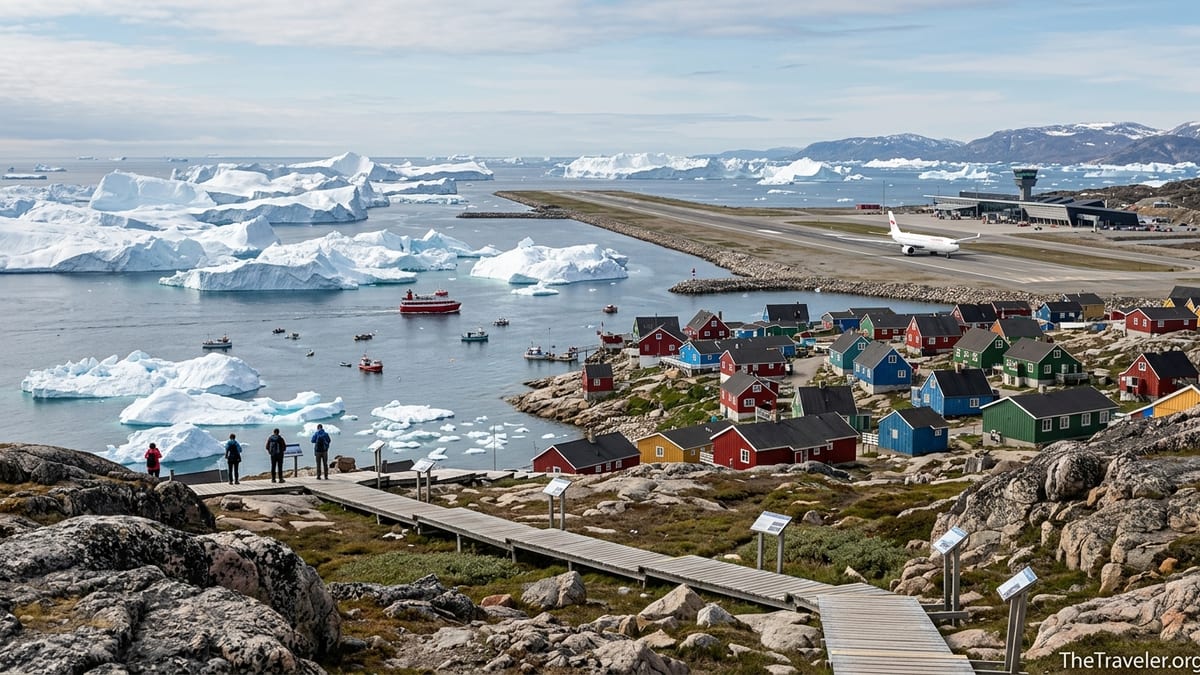
For years, visiting Ilulissat meant a long chain of regional hops through Kangerlussuaq or Nuuk before you finally reached the icebergs of Disko Bay. That changed on 29 October 2026, when the new Ilulissat International Airport opened with a 2,200‑metre runway and direct jet services from Copenhagen and, seasonally, from Iceland. If you are planning a trip in 2027, this new gateway reshapes your route choices, your budget, and even how far in advance you should book accommodation and excursions.
Get the latest updates straight to your inbox!
What the New International Airport Changes
The new Ilulissat International Airport opened on 29 October 2026 with a longer runway designed for medium and wide‑body jets, replacing the shorter strip that previously limited the town to smaller aircraft. The upgrade allows direct international flights rather than obligatory transfers through Kangerlussuaq, making Ilulissat itself a main entry point to northern and western Greenland. For visitors focused on the UNESCO‑listed Icefjord and Disko Bay, this effectively removes an entire travel day that used to be consumed by indirect connections.
The airport launch was marked by an inaugural direct flight from Copenhagen operated by Air Greenland using its Airbus A330neo, with regular winter services following immediately after. In practical terms, it means that by early 2027 a traveler can board in Copenhagen and step off directly in Ilulissat roughly five hours later, rather than combining a transatlantic leg with a domestic turboprop connection. For many European travelers, especially from Scandinavia, this turns Ilulissat into a weekend‑length destination rather than a once‑in‑a‑lifetime expedition requiring complex routing.
For North American visitors, the change is more subtle but still significant. Icelandair’s seasonal plans for Keflavik to Ilulissat flights in summer 2027 create a one‑stop route from cities such as New York, Boston, Seattle, Toronto, and many European hubs that already feed into Iceland. Instead of flying to Copenhagen and doubling back, travelers can route via Keflavik and connect straight into Disko Bay, trimming both flight time and the risk of missed domestic connections inside Greenland.
Behind the scenes, Greenland’s aviation network is being reorganized around four international hubs, including Ilulissat. This makes it easier to connect domestic flights from places such as Upernavik or Qaanaaq with same‑day onward travel to Copenhagen or Iceland. For visitors, it means fewer overnight layovers in transit towns and better odds that one weather‑related delay does not unravel an entire itinerary.
How to Fly to Ilulissat in 2027
By summer 2027, the most important new option for visitors is the direct Copenhagen–Ilulissat route. Air Greenland has indicated that in peak summer it aims to operate up to six weekly flights on this route, using its Airbus A320neo once that aircraft joins the fleet. Through winter 2026–27, the schedule is more limited, with Jettime operating Boeing 737‑800 services under contract, typically once a week on Wednesdays with extra departures around Christmas, New Year, and late‑March holidays. Travelers planning early‑season trips in February or March 2027 should expect modest frequency and plan their dates around the flight days instead of the other way around.
From a pricing perspective, recent examples give a sense of what to expect. Promotional material from Air Greenland has advertised Copenhagen–Ilulissat one‑way fares starting around 3,400 Danish kroner, roughly 450–500 euros, on selected dates. Real‑world traveler reports from winter bookings into Ilulissat suggest that return fares from Copenhagen in the shoulder season can be secured for about 1,600 euros for two people, while high‑summer departures tend to be higher unless booked well in advance. As always in Greenland, school holidays in Denmark and short booking windows push prices up sharply.
Icelandair adds another layer of flexibility from June to mid‑October 2027, when its schedule lists Keflavik–Ilulissat flights up to three times per week. This creates useful one‑stop routes from North America. For example, a traveler from Boston could fly to Keflavik in about five hours, spend a short layover, then continue to Ilulissat without ever routing through mainland Europe. Similar options exist from New York, Toronto, and several US west‑coast cities that already connect into Icelandair’s hub. Those comfortable piecing together itineraries may find competitive fares by combining a discounted transatlantic leg to Iceland with a separate ticket onward to Greenland.
Domestic connectivity remains important, especially if you are combining Ilulissat with other parts of Greenland. Air Greenland’s network map shows regular flights linking Ilulissat with Nuuk, Aasiaat, Upernavik, Qaanaaq, and several smaller communities. With the new timetable, many of these flights are scheduled to connect same‑day with the Copenhagen or Keflavik services. In practice, weather and operational constraints can still disrupt this, so it is wise to build at least one buffer night somewhere in your itinerary, preferably in Ilulissat itself or in Copenhagen rather than in a tiny transit settlement with limited services.
Disko Bay Excursions from the New Gateway
Ilulissat has long been the main jumping‑off point for exploring Disko Bay, and the new airport only reinforces that role. Boat operators such as Disko Line and a range of local excursion companies run daily or near‑daily trips in summer to nearby settlements and natural attractions. Common day trips include whale‑watching among the icebergs, midnight sun cruises along the Ilulissat Icefjord, and visits to Oqaatsut and the Eqi Glacier. Travelers on recent summer programmes have paid in the region of 400–500 euros for full‑day packages that combine boat transport, guiding, and meals.
Transport to Disko Island itself typically uses Disko Line’s ferry services between Ilulissat and Qeqertarsuaq. The schedule varies by season but usually runs several times per week in summer. While it is sometimes possible to buy tickets close to departure, locals and frequent visitors increasingly recommend booking ferries and glacier cruises several weeks ahead for July and August dates, especially as the new direct flights are expected to boost visitor numbers. A one‑way ferry ticket from Ilulissat to Qeqertarsuaq has recently hovered around 600–800 Danish kroner, with exact prices depending on time and demand.
On Disko Island, small operators such as Qeqertarsuaq Tours and Disko Adventures offer hiking, glacier walking, and sea‑kayaking around the island’s basalt cliffs and smaller glaciers. Recent price examples include sea‑kayak excursions from Ilulissat or nearby islands from roughly 280 euros per person, and guided walking tours in town from about 40–50 euros. With the airport placing more visitors directly into Ilulissat, expect the most popular departures – such as golden‑hour glacier cruises or the classic Icefjord midnight sun tour – to sell out first.
Even in winter, excursions are available. Local outfitters run snowmobile trips, dog‑sled tours on the sea ice when conditions allow, and northern‑lights boat cruises when the fjord is navigable. Because winter flight frequency is still limited and delays due to storms are more common, travelers should avoid scheduling “must‑do” excursions on their arrival or departure day. Plan a flexible buffer day at the start of your trip before committing to big‑ticket tours such as Eqi Glacier or multi‑day stays on Disko Island.
Experiencing the Ilulissat Icefjord Up Close
The Ilulissat Icefjord, a UNESCO World Heritage Site, is the main reason most visitors fly into the new airport. The experience begins in town, where boardwalks and marked trails lead from the Icefjord Centre towards viewpoints over the calving front. A commonly recommended walk, often sold as a two‑hour guided hike, follows the old Sermermiut trail to a series of wooden platforms overlooking the fjord. Package tours that include this hike, alongside boat excursions and accommodation, have been advertised from around 485 euros per person in shoulder season for short stays.
Boat trips into the Icefjord area provide a different perspective. Local operators offer two‑ to three‑hour iceberg cruises throughout the day in summer, with late‑evening sailings timed to the midnight sun. Prices for these shorter outings tend to sit between 700 and 1,200 Danish kroner per person, depending on duration and group size. For visitors keen on photography, it is worth paying a little extra for smaller boats with fewer passengers and open decks, which allow you to move freely for unobstructed shots of the towering ice walls.
Longer day trips to the Eqi Glacier, sometimes branded as “calving glacier cruises,” typically depart Ilulissat early in the morning and return in the evening. They may include meals on board and a shore stop at a small base camp, with rates that commonly run into several hundred euros per person. In 2026 brochures from European tour operators, full‑day Eqi excursions packaged with other Disko Bay activities often contribute a substantial share of a total trip price that sits in the mid‑four‑figure euro range for a week.
Travelers visiting in winter or early spring will encounter a very different Icefjord experience. Snow can cover the boardwalks, and sections of the fjord may be filled with land‑fast ice instead of drifting icebergs, while low sun angles or polar night change the light dramatically. On the upside, the northern lights can be visible directly from town or from nearby dark viewpoints. The new airport does not change the reality that conditions are harsh in February and March, but it does make it simpler to time a short aurora‑focused stay to a specific moon phase or solar activity forecast.
Accommodation Shortages and How to Book Smarter
Well before the new airport opened, Ilulissat already struggled with accommodation shortages in midsummer, with some properties fully booked months ahead. Hotel Arctic and Hotel Icefiord, the town’s best‑known hotels, have been reported at high‑season walk‑in rates around 3,000 Danish kroner per night for standard rooms, with suites or sea‑view categories costing significantly more. Several guesthouses and apartment‑style options such as Ilulissat Guesthouse and small local rentals offer more modest prices and kitchens, but their inventory is limited and competition is intense.
Travelers and local commentators have repeatedly warned that room shortages are likely to get worse before they get better, especially for 2027. While new hotel projects are underway, construction in Arctic conditions is slow, and government and tourism officials have acknowledged that Ilulissat’s beds have not kept pace with its new air capacity. A Wall Street Journal report on Greenland tourism highlighted hoteliers already seeing “the rumbling before the herd is coming” even in 2024, well before the new runway opened, pointing to rising occupancy and pressure on room rates.
On the budget end, recent anecdotal reports mention dorm beds or simple private rooms at hostels in the 600–900 Danish kroner per night range if booked directly and well ahead, with one frequently praised option being Ilulissat Hostel. Cheaper rooms below 1,000 kroner per night do exist, but visitors often need to email or call properties that are not fully represented on major booking platforms. This type of legwork becomes even more important in 2027, as tour groups will likely block‑book large chunks of hotel capacity around peak flight arrivals.
For independent travelers, the safest strategy is to treat accommodation as the first building block rather than the last detail. Secure a cancellable room before locking in excursions, especially if you plan to travel in late June, July, or early August when both European holidaymakers and cruise passengers swell demand. In shoulder seasons – late May or early September – it is often easier to combine direct flights with reasonably priced rooms, offering a good balance between accessibility and crowd levels.
Seasonal Weather and When to Go
Ilulissat’s climate is Arctic coastal, with long, cold winters and short, cool summers. July is typically the warmest month, with average daytime temperatures that can edge into the mid‑single digits or occasionally low teens Celsius, though wind and damp air often make it feel cooler. Ice conditions in Disko Bay usually allow extensive boat operations from roughly June to September, which is when most visitors come for iceberg cruises, hiking, and the midnight sun.
Spring and autumn shoulder seasons each have their appeal. In late May and early June, the sea ice breaks up, and large bergs drift past town while the trails begin to clear of snow. By mid‑September, nights are dark enough to see the northern lights regularly while many boat excursions still run, though some may switch to reduced schedules. With the new summer flights from Copenhagen and Keflavik, these shoulder periods in 2027 may become prime targets for travelers seeking slightly lower prices and thinner crowds without sacrificing access to the fjord.
Winter remains challenging yet rewarding for those prepared. Temperatures commonly drop well below freezing, storms can disrupt flights for days at a time, and daylight hours are short around December and January. On the other hand, snow‑covered landscapes, dog sledding, and aurora viewing are at their best. The direct Copenhagen flights remove one domestic leg from the equation, reducing overall exposure to weather disruptions, but they do not eliminate the risk. Travelers flying in February or March 2027 should still build at least one or two buffer days into their plans to absorb possible cancellations or extended delays.
Clothing and equipment requirements also shift by season. In summer, windproof shells, insulating layers, and waterproof boots are essential for boat trips where the perceived temperature can be much colder than the air reading. In winter, full Arctic‑level gear including insulated boots, mittens, and face protection is necessary, and many visitors choose to rent outerwear from local outfitters rather than invest in specialist kit. The new airport’s modern facilities make arrivals and departures less exposed to the elements, but once outside town the environment is unchanged.
Realistic Budgets for a 2027 Ilulissat Trip
Costs in Ilulissat are high by global standards, reflecting Greenland’s remote supply chains and small population. A realistic budget for a one‑week trip in 2027 for two people, excluding long‑haul flights to Europe or Iceland, will often land in the mid four‑figure euro range once flights, accommodation, food, and excursions are included. Direct return flights from Copenhagen might cost around 800–1,200 euros per person depending on season and booking timing, so a couple could easily spend 1,600–2,400 euros just to reach Greenland.
Accommodation is likely to be the next largest expense. At mid‑range hotels, budgeting around 2,000–2,500 Danish kroner per night for a double room in 2027 is prudent, which translates roughly to 270–340 euros. Over six nights, that could total around 1,600–2,000 euros. More upscale options with fjord views will push this higher, while careful hunting among hostels, guesthouses, and simple rentals might bring the cost down towards 900–1,200 kroner per night, or roughly 120–160 euros, if you are prepared to share bathrooms or cook your own meals.
Excursions add a substantial amount. A portfolio of activities that might include one Eqi Glacier day trip, a Disko Island visit, an iceberg or whale‑watching cruise, and a guided hike to the Icefjord could easily reach 800–1,200 euros per person over the course of a week. For travelers on tighter budgets, it makes sense to prioritize one or two major outings – for example, an Eqi glacier cruise and a whale‑watching trip – and then fill remaining days with low‑cost or free activities such as hiking to Sermermiut on your own, exploring town, or watching icebergs from public viewpoints.
Everyday expenses round out the budget. Groceries in Ilulissat are more expensive than in mainland Europe but significantly cheaper than eating all meals in hotel restaurants. Many visitors staying in guesthouses report cooking most dinners and buying lunches from supermarkets, reserving restaurant splurges for one or two special evenings. A single restaurant main course can easily run 200–300 Danish kroner, with multi‑course menus far higher, while a supermarket‑based self‑catered dinner for two might stay under 150–200 kroner. Factoring in these patterns, a frugal couple might keep total land costs around 3,000–3,500 euros for a week, while a more comfort‑oriented trip with frequent restaurant meals and multiple premium excursions can climb towards 5,000 euros or more before international flights.
Planning Ahead for 2027 and Beyond
The opening of the new Ilulissat International Airport makes 2027 an especially interesting year to visit. The infrastructure will be new, flight options from Copenhagen and Iceland will be expanding, and yet hotel and tour capacity will still be catching up. That combination rewards travelers who plan early and approach itineraries with some flexibility. Booking flights as soon as schedules open, typically about 10–11 months ahead on major airlines, will help lock in lower fares on the new direct routes. Securing accommodation at the same time, even with cancellable rates, is increasingly important.
Travel insurance that covers weather‑related delays and missed connections is a sensible investment, particularly for winter and shoulder‑season trips. Recent traveler experiences in Greenland have included multi‑day disruptions due to storms, even on major routes, and while the new airport should improve reliability, it cannot remove Arctic weather from the equation. When possible, schedule at least one buffer night in Copenhagen or Keflavik on either side of your Greenland flights so that a delayed departure does not cause you to miss a long‑haul flight home.
Finally, consider the broader context of your visit. Greenland is actively encouraging tourism as part of a diversification away from reliance on fishing, but local communities are also conscious of environmental and cultural pressures. Choosing locally owned excursions, respecting guidance on wildlife and glacier safety, and travelling outside the absolute peak weeks where your schedule allows all help distribute benefits more evenly. The new airport makes Ilulissat easier to reach than ever before; using that access thoughtfully can ensure the region’s icebergs, communities, and fragile Arctic environment remain intact for the next generation of travelers.
For visitors who have long dreamed of watching vast icebergs drift silently past colorful Greenlandic houses, 2027 offers a rare alignment of opportunity and novelty. With direct flights, modern facilities, and a growing range of excursions, Ilulissat is no longer the remote, hard‑to‑reach secret it once was. Yet step away from the runway and onto the Sermermiut trail or the deck of a small boat in Disko Bay, and you will still find the same raw Arctic beauty that drew adventurous travelers here long before the first jet ever landed.