


More news on this day
A Federal Aviation Administration ground stop at Chicago O’Hare International Airport on Sunday morning sent delays into triple digits, disrupting hundreds of flights at one of the nation’s busiest hubs and compounding what has already been a challenging summer for air travelers.
Get the latest news straight to your inbox!
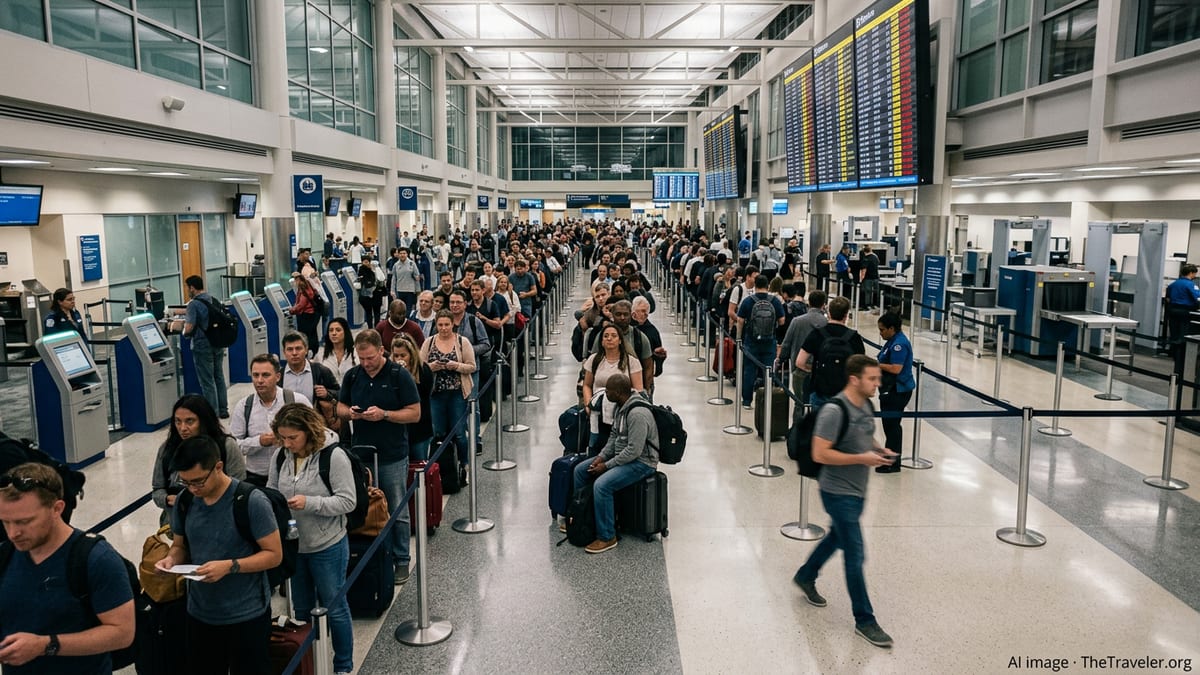
Storms Trigger Nationwide Ground Stop Into O’Hare
According to publicly available FAA operations data, a nationwide ground stop affecting Chicago O’Hare International Airport was put in place on Sunday, August 30, 2026, as strong thunderstorms moved across northern Illinois. The stop temporarily halted many departures bound for Chicago from around the country while arrivals into O’Hare were sharply limited.
FAA ground stops are designed to pause or meter traffic headed to an airport when conditions on the ground or in surrounding airspace become unsafe or too congested. On Sunday, weather was cited as the primary factor, with radar showing fast‑moving storm cells tracking across the Chicago metro area during the morning hours.
Local broadcast coverage in Chicago reported that the storms prompted at least one formal ground stop for arrivals into O’Hare, followed by a broader traffic management program. These steps sharply reduced the number of aircraft allowed to land each hour while controllers and airlines worked through the weather impacts.
FAA’s real‑time online dashboard showed Chicago O’Hare among the most affected airports in the country, with both departure and arrival flows subject to heavy constraints as the storms passed and traffic recovered.
Triple‑Digit Delays Ripple Through the System
As the ground stop took hold, delay figures at O’Hare quickly moved into triple digits, according to data shared via FAA’s operations information system and summarized by airline tracking tools. Many departures to Chicago from major hubs in the Midwest, East Coast, and South reported wait times well beyond two hours, with some seeing posted delays of three hours or more.
Travelers connecting through O’Hare felt the brunt of the disruption. With fewer aircraft allowed to arrive, gates turned over more slowly, and outbound flights often could not board or push back until inbound aircraft and crews were in place. This cascading effect pushed delay counts higher even after the most severe weather had cleared the immediate Chicago area.
Publicly available delay summaries have shown a pattern of large spikes at O’Hare whenever thunderstorms intersect with busy summer schedules. On previous storm‑affected days this year, government data recorded average inbound delays at or near the two‑hour mark, with some advisories describing delays as exceeding four hours from certain regions. Sunday’s ground stop fit that broader pattern of high‑impact weather days at the airport.
By midday Sunday, O’Hare’s status page still indicated traffic management programs in effect, with general departure delays and lingering airborne holding for some arrivals. Airlines cautioned passengers to check individual flight status closely, as schedules continued to shift while crews and aircraft repositioned.
A Summer of Strain at the Nation’s Busiest Hub
The latest ground stop arrives during what federal notices describe as an unusually strained summer at O’Hare. The airport is handling more than 3,000 flights on peak days, and federal transportation documents indicate that the planned Summer 2026 schedule exceeds the airport’s demonstrated capacity during key hours.
In a series of formal filings this year, the U.S. Department of Transportation and the FAA detailed concerns that overscheduling at O’Hare would lead to chronic congestion, heavier reliance on ground delay programs, and more frequent ground stops during adverse weather. Regulators have moved to cap or reduce schedules during the current summer season and have discussed extending certain limitations into 2027 in coordination with airlines and the Chicago Department of Aviation.
Local travelers have experienced the strain first‑hand. Public discussion forums and traveler reports throughout the summer describe frequent late arrivals, long taxi times, and extended waits on the tarmac at O’Hare, even on days without severe storms. On weather‑affected days, some passengers have reported spending several extra hours on board aircraft awaiting takeoff or a gate.
Airport construction, ongoing terminal projects, and the tight sequencing of arrivals and departures all contribute to the delicate balancing act. When a line of thunderstorms passes over Chicago at the same time as a bank of afternoon or evening arrivals, the system can quickly become saturated, and regulators turn to tools such as ground delay programs and temporary ground stops to prevent gridlock.
What Travelers Can Expect for the Remainder of the Day
By early afternoon on Sunday, published FAA status information showed that the strictest phase of the morning ground stop at O’Hare had eased, but traffic management programs remained in place. General departure delays persisted, and some inbound flights were still subject to holding or rerouting while controllers worked through the backlog.
Chicago’s own airport information portal indicated elevated delay conditions at both O’Hare and Midway, though O’Hare bore the brunt of the disruption because of its role as a major domestic and international hub. As is typical after a ground stop, residual delays were expected to continue for several hours, even if no additional storms develop.
Travel experts note that on days like this, passengers should anticipate knock‑on effects that may last into the evening: missed connections, aircraft and crew out of position, and rolling gate changes. Even flights scheduled late in the day can be affected if an inbound aircraft earlier in the chain departed hours behind schedule.
Publicly available guidance from the FAA emphasizes that travelers should rely on their airline or booking provider for flight‑specific information. While national dashboards and airport websites provide an overview of conditions and traffic‑management measures, only airlines can confirm rebooking options, same‑day changes, or compensation policies when delays move into the triple‑digit range.
Longer‑Term Efforts to Tame O’Hare’s Delays
The turbulence at O’Hare on Sunday is part of a broader, longer‑term effort to address congestion at one of the world’s key aviation hubs. Federal notices issued earlier this year outline plans to manage schedules at O’Hare more aggressively through at least October 2027, with the aim of aligning flight volumes more closely with what the airfield and surrounding airspace can reliably handle.
Regulators have cited several overlapping challenges: rapid growth in airline schedules, complex runway operations, and the reality that summer thunderstorms over the Midwest are a recurring and often unpredictable threat. When these elements combine at peak travel times, the result is often a spike in ground delay programs and, in more severe cases like Sunday’s, full ground stops.
Publicly available records indicate that O’Hare has experienced multiple high‑impact weather days this summer, with traffic advisories documenting multi‑hour delays and temporary halts to arrivals. Travelers and airline employees have echoed those reports in public forums, describing extended taxi times, crowded gate areas, and difficulty maintaining connections through the hub.
For now, regulators and airport managers are relying on a mix of schedule limits, infrastructure upgrades, and real‑time traffic management tools to keep O’Hare functioning during peak periods. Sunday’s ground stop underscores how quickly conditions can deteriorate when storms roll in, and how even short‑lived halts can ripple through the national air travel network for hours afterward.
FAA Operations Information System – Ground Stops and Delays
FAA Airport Status – Chicago O’Hare (ORD)