


More news on this day
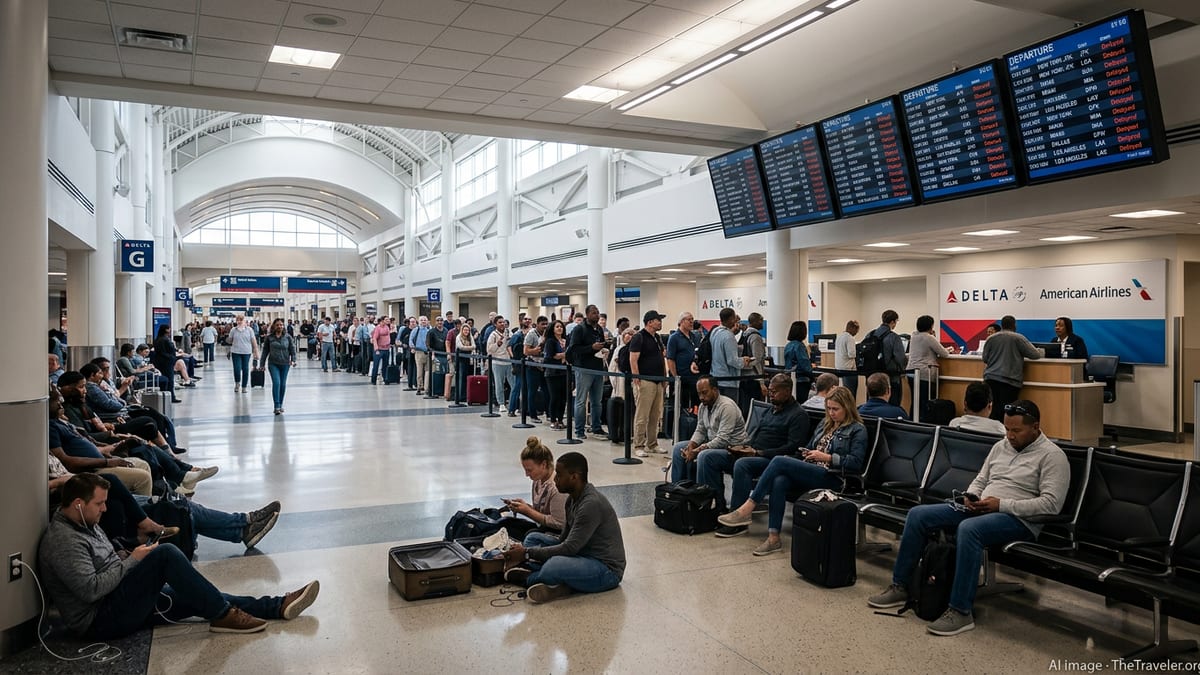
Travelers at Hartsfield-Jackson Atlanta International Airport faced hours of turmoil after a Federal Aviation Administration ground stop briefly halted departures, triggering triple-digit cancellations and widespread delays across the nation’s busiest hub.
Get the latest news straight to your inbox!
Brief Halt, Big Impact at America’s Busiest Airport
The disruption unfolded when air traffic management data indicated a departure halt at Hartsfield-Jackson, a critical node in the U.S. aviation network and a primary hub for domestic and international connections. Even a short interruption at the world’s busiest airport by passenger volume can quickly snowball, as the tightly timed web of takeoffs and landings begins to unravel.
According to publicly available FAA traffic management advisories and operational feeds, the pause on departures led airlines to cancel and delay flights in rapid succession. Within hours, total cancellations climbed into the triple digits, with hundreds more flights delayed as carriers worked through ground congestion, crew duty-time limits and aircraft repositioning challenges.
Industry schedule trackers and flight-status dashboards showed departures and arrivals increasingly out of sync as aircraft and crews were left out of position. For many travelers, especially those connecting through Atlanta, the halt meant missing onward flights, scrambling for rebooking options and in some cases being stranded overnight in the terminal or nearby hotels.
While the FAA advisory window itself appeared limited, the operational aftershocks continued well beyond the formal end of the ground stop as the system attempted to absorb the backlog.
Weather, Volume and a Fragile Summer Travel Network
Public aviation data and meteorological forecasts for the Atlanta area point to thunderstorms and reduced visibility as likely factors behind the FAA’s action. Hartsfield-Jackson sits in a region where fast-building convective weather is common in late spring and summer, often forcing controllers to reduce arrival and departure rates for safety.
Reports from national flight-tracking services show that the halt hit during an already busy travel period, when daily scheduled departures from the airport routinely exceed one thousand. With such density, even a modest temporary cap on movements can cause queues on taxiways, airborne holding patterns and reroutes around storm cells, all of which compound delays.
Aviation analysts note that the broader U.S. network remains sensitive to any disruption at major hubs. When a ground stop is imposed at an airport of Atlanta’s scale, the effect is felt far beyond Georgia, from small regional fields that depend on ATL connections to large coastal gateways expecting inbound feed from Delta and other carriers.
The latest incident underscores how closely capacity, weather and staffing are intertwined. With leaner schedules and limited spare aircraft and crews, airlines have less flexibility to absorb shocks without resorting to cancellations.
Stranded Travelers Confront Long Lines and Limited Options
As cancellations mounted, social media feeds and traveler forums filled with accounts of long customer-service queues, crowded concourses and uncertainty about rebooking. Passengers described spending hours waiting at gate counters as agents attempted to reassign seats on later flights or reroute journeys through alternative hubs.
Published images from the terminal showed dense crowds near security checkpoints and gate areas, a familiar scene whenever operations at Atlanta slow significantly. Travelers with tight connections were particularly hard-hit, with some reports indicating that same-day alternatives quickly sold out on key business and leisure routes.
Families beginning vacations, international visitors transiting through the hub and business travelers on day trips all faced similar challenges: finding open seats, securing hotel rooms and revising ground transport and accommodation plans at short notice. Airline customer advisories urged passengers to use mobile apps and websites to rebook and monitor status rather than joining physical lines, but high demand strained digital channels as well.
Travel planners suggest that in such scenarios, those with flexible itineraries, travel insurance and carry-on-only baggage tend to recover fastest, while passengers with checked bags or complex international connections often experience the longest disruptions.
Network Ripple Effects Across the United States
Because Hartsfield-Jackson serves as a connecting point for dozens of domestic cities, the halt’s repercussions spread quickly. Flight-status boards at airports across the Southeast and Midwest showed late inbound flights from Atlanta, which in turn delayed outbound services waiting for the same aircraft and crews.
Regional airports that rely heavily on ATL for onward connections, including smaller communities with just a few daily departures, saw their schedules compressed or partially wiped out. For some travelers in those markets, missed connections meant a full extra day of travel before the next available seat.
Major coastal hubs also felt the strain. According to public flight-tracking information, transcontinental and transatlantic departures that depend on feed from Atlanta faced passenger rollovers to later services, with some long-haul flights leaving with empty seats because connecting passengers could not arrive in time. Airlines then had to decide whether to delay those flights further or protect their long-haul punctuality and rebook disrupted travelers onto future departures.
These ripple effects highlight how a localized operational decision by air traffic managers can cascade into a nationwide challenge, particularly during peak travel seasons when spare capacity is scarce.
What Travelers Can Expect in the Coming Days
Operational data from previous ground stops at major hubs suggests that most disruptions are absorbed within 24 to 48 hours, but residual delays can linger, particularly on heavily traveled routes. Airlines typically focus first on restoring the core schedule, then work through mispositioned aircraft and crew imbalances.
Travel experts recommend that passengers with upcoming trips through Atlanta closely monitor their flight status, even if their departure is a day or two away from the initial incident. Same-day schedule changes, aircraft swaps and minor time adjustments are common as carriers rebalance their operations after a shock event.
Public-facing tools from airlines and airport authorities allow travelers to track delays in near real time, but flyers are advised to build in extra connection time where possible, especially when traveling through weather-prone hubs. Those with critical time-sensitive journeys may wish to consider earlier departures or alternative routings while the system stabilizes.
The latest ground stop at Hartsfield-Jackson serves as another reminder of the fragility of the modern air travel network, where a brief halt at a single airport can leave thousands of passengers stranded and send cancellations soaring in a single day.