


More news on this day
Flight operations across the United States were thrown into turmoil as the Federal Aviation Administration ordered ground stops at 13 major airports over a two day period, coinciding with more than 4,000 flight cancellations and extensive delays that rippled through the national air travel system.
Get the latest news straight to your inbox!
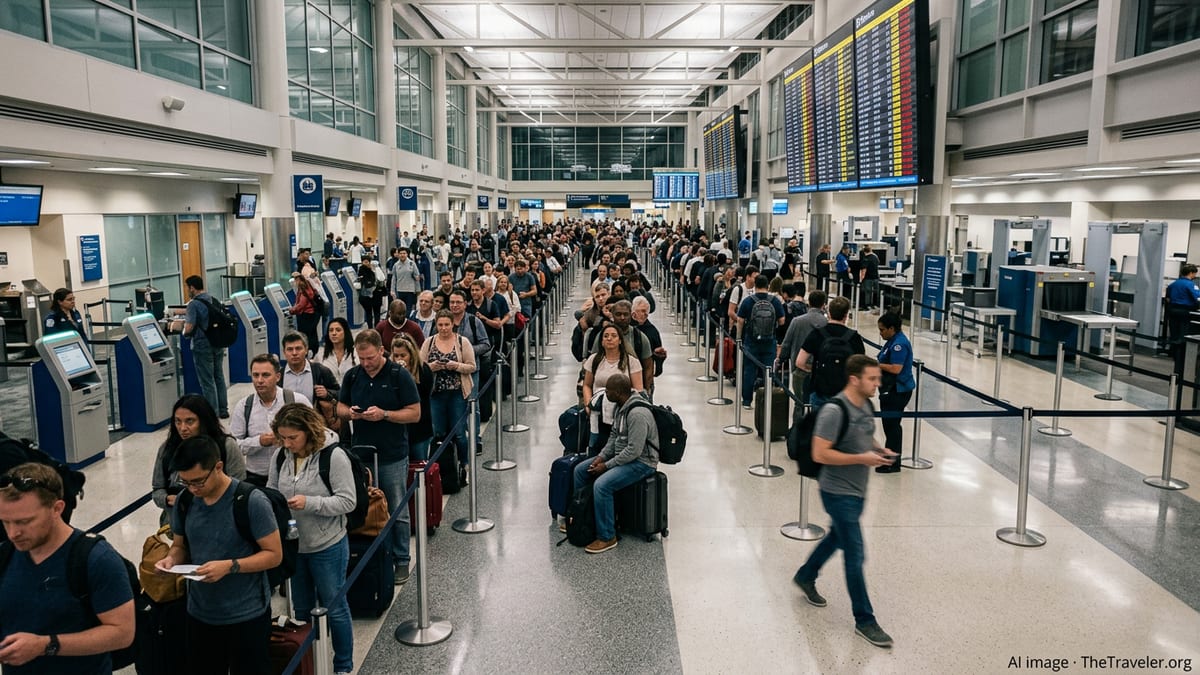
Ground Stops Hit Key Hubs as Weather and Congestion Converge
Publicly available operational notices from the Federal Aviation Administration indicate that a series of coordinated ground stops was imposed at 13 of the country’s busiest airports after traffic volumes and severe weather combined to overwhelm normal capacity. The affected facilities included several large coastal hubs and key connecting airports in the Northeast, South and West, triggering immediate knock on effects across domestic and international networks.
Ground stops temporarily halt departures bound for specific airports when incoming traffic is expected to exceed the rate at which those airports can safely accept arrivals for a sustained period. The measures are often used in tandem with ground delay programs, which meter departures through controlled takeoff times. In this case, multiple airports moved into ground stop status within hours of one another, creating localized gridlock that quickly spread nationwide.
Airlines responded by canceling and consolidating flights, with tracking data showing the number of cancellations surpassing 4,000 over two days, in addition to thousands more delays. The rapid escalation turned what might have been a routine bout of disruptive weather and airspace constraints into a broader system shock for summer travelers.
While ground stops are designed to protect safety and prevent even more severe airborne congestion, the concentration of restrictions at major hubs magnified the disruption. Passengers on unaffected routes often encountered rolling delays as aircraft and crews remained out of position, further compounding the operational strain.
How Ground Stops Work Inside the National Airspace System
Ground stops are among the most visible tools used by the FAA’s Air Traffic Control System Command Center to manage demand when airport operations risk being overloaded. Under this procedure, flights headed to the impacted airport are held at their departure points rather than dispatched into already congested airspace, reducing the risk of en route holding, diversions or go arounds.
According to FAA guidance on traffic management initiatives, ground stops may be triggered by adverse weather, runway closures, equipment outages, unplanned airspace constraints or volume that is projected to exceed an airport’s acceptance rate for an extended period. They can be narrowly targeted by origin and route, or applied broadly to all departures bound for a given airport, depending on the severity and geographic scope of the problem.
The recent wave of restrictions shows how quickly individual events can compound. When multiple hubs move into ground stop status at once, aircraft and crews are effectively frozen in place, limiting the flexibility airlines normally rely on to re route planes, swap equipment and re assign staff. Even after the formal ground stops are lifted, it can take many hours for departure and arrival banks to return to a predictable pattern.
Archived traffic management advisories also illustrate that ground stops are frequently paired with ground delay programs that ration takeoff times through controlled departure slots. This layered approach can stabilize the arrival flow into constrained airports but often results in long gate holds and missed connections for passengers, especially when disruptions stretch over more than one day.
Cancellations Surpass 4,000 as Airlines Trim Schedules
Data compiled from flight tracking and airline status boards shows that carriers canceled more than 4,000 flights in the two day window surrounding the latest round of ground stops, with many more departures operating several hours behind schedule. The disruption followed a pattern seen during previous high impact events in which airlines preemptively reduce flying when airport capacity and crew availability are likely to be constrained.
Carriers typically focus their cancellations on shorter haul flights and off peak frequencies to preserve transcontinental and international services that are more complex and costly to reschedule. Yet when multiple large hubs face restrictions, this strategy can still strand travelers far from their final destinations, particularly in markets that rely on connections rather than nonstop service.
Air travel analysts note that the rebound in traffic volumes toward record summer levels has left little margin for absorbing large scale disruptions. Airlines have trimmed some excess capacity and the FAA has introduced measures at particularly congested airports, but staffing limitations, tight aircraft utilization and strong demand mean that any prolonged ground stop can rapidly escalate into a multi day operational challenge.
Historical data from recent years shows that while the FAA has worked to reduce cancellations attributed directly to air traffic control, carrier initiated cancellations during major storms or infrastructure constraints can still climb into the thousands over short periods. The latest disruption underscores how closely linked airline scheduling decisions are to real time changes in airport and airspace capacity.
Passenger Impact: Missed Connections, Rebookings and Longer Recovery
For passengers, the immediate consequences of the ground stops and resulting cancellations included missed connections, overnight airport stays and widespread rebooking. Many travelers were forced to accept alternate routings or travel dates as available seats on remaining flights quickly filled, especially from the largest coastal hubs and connecting centers in the Midwest and South.
Travel planning guidance from carriers and consumer groups emphasizes that recovery from large scale disruptions often extends beyond the day when ground stops are lifted. Aircraft and crews can remain out of position, leaving lingering schedule gaps that show up as last minute cancellations or significant delays even after weather has improved and airspace restrictions have eased.
Passengers whose flights were canceled generally qualified for refunds upon request, while those facing significant delays were offered rebooking options and, in some cases, travel credits or hotel accommodations, depending on each carrier’s published policies. However, the uneven availability of replacement flights meant that some travelers waited multiple days for a suitable alternative, particularly on heavily traveled routes.
Industry observers highlight that travelers with flexible plans and carry on luggage tend to recover more quickly during such events, as they can accept same day alternatives and avoid potential baggage delays. Those with tight onward commitments or limited routing options through smaller regional airports face a more difficult path to their final destinations when ground stops hit major hubs simultaneously.
Strain on a System Already Under Summer Pressure
The timing of the ground stops during the busy summer travel season has raised fresh questions about the resilience of the U.S. air transportation system. Recent federal notices and planning documents point to increasing demand at several large airports, where scheduled operations are already close to infrastructure and staffing limits on peak days.
Efforts to manage that growth have included temporary caps on flights at some hubs, targeted infrastructure improvements and increased collaboration between the FAA and airlines on schedule planning. Nonetheless, specialists in air traffic management caution that even modest overruns in scheduled volume, when paired with convective weather or unplanned outages, can leave little room to maneuver without resorting to aggressive flow control measures such as ground stops.
The latest disruption also comes against the backdrop of other high profile interruptions in recent years, including nationwide ground stops linked to technology failures and large scale airline specific outages. While the current event is rooted primarily in weather and traffic volume, it reinforces broader concerns about how quickly local problems can cascade through a tightly interconnected network.
Looking ahead, aviation planners are likely to scrutinize how the sequence of traffic management decisions contributed to the scale of the disruption, and whether earlier schedule adjustments or more granular restrictions could have reduced the need for system wide cancellations. For travelers, the episode is another reminder that during peak season, conditions at a handful of major airports can reverberate across the country within hours.