


More news on this day
Flights across the Northeast were disrupted after an FAA equipment outage triggered ground stops affecting Newark Liberty International Airport and Philadelphia International Airport, with spillover delays and interruptions reaching New York City area airports including JFK and LaGuardia.
Get the latest news straight to your inbox!
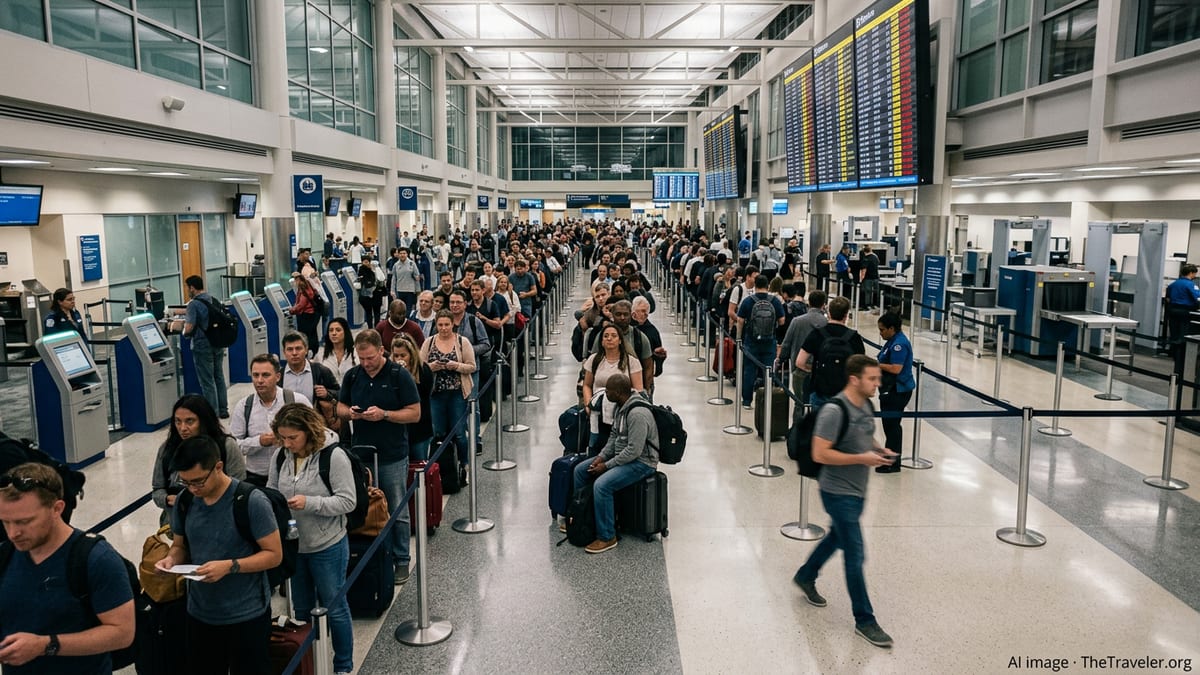
What happened and which airports were affected
Published coverage indicates the disruption centered on air traffic control systems supporting the busy Northeast corridor, prompting the FAA to slow or temporarily halt traffic flows into multiple airports. Newark and Philadelphia were among the most heavily impacted, while New York area operations also experienced significant delays as the system recovered.
Flight tracking and airline schedule data cited in coverage showed hours-long interruptions at Newark, including a prolonged period with no commercial arrivals for much of the day. Philadelphia also saw a high volume of cancellations and delays, and ripple effects extended to LaGuardia and JFK as aircraft and crews were displaced from their normal rotations.
The outage was also linked in reports to ground stops affecting Teterboro Airport in New Jersey, a key hub for private and corporate aviation that shares the same complex regional airspace.
Early indications point to damaged communications lines and a failed circuit
Reports indicate the disruption involved failures in communications and radar-related infrastructure supporting air traffic control in the region, including a circuit failure and damage to fiber lines used for connectivity and redundancy. Published coverage described a situation where primary systems were impaired and a backup path also proved unavailable, complicating restoration.
Coverage also tied the outage to construction activity in New Jersey that damaged telecommunications infrastructure, a scenario that can trigger cascading impacts when high-volume airspace depends on resilient, redundant data and voice links between facilities and control sectors.
Transportation Department messaging cited in published reporting described repairs to telecom lines and a phased resumption of operations, with airports returning to normal flow only after systems were stabilized and traffic management initiatives could be lifted.
How the outage translated into real-world travel disruption
For travelers, the outage played out as a combination of ground stops, airborne holding, diversions, and extensive departure queues. When aircraft cannot depart for a destination under a ground stop, delays quickly propagate across airline networks, affecting flights far beyond the Northeast.
At Newark, the interruption to inbound traffic reduced the airport’s ability to accept arrivals, which can force aircraft to wait on the ground at origin airports or divert to alternates once en route. Philadelphia faced heavy cancellations and schedule churn as airlines repositioned aircraft and crews to recover their networks.
Because the affected airports are major hubs for domestic and international itineraries, disruption also commonly triggers missed connections, rebookings onto later flights, and longer travel times for passengers connecting through the New York and Philadelphia region.
Why Newark remains especially sensitive to equipment and staffing constraints
The incident arrives against a backdrop of ongoing efforts to improve reliability around Newark operations. The FAA has previously outlined measures aimed at reducing delays at Newark, including limits on hourly operations during peak periods and upgrades intended to improve resilience of communications links supporting the airspace that feeds the airport.
Publicly available FAA materials have highlighted the role of the Philadelphia-area approach control facility in managing Newark arrivals and departures, and have described work to enhance redundancy, strengthen fiber communications paths, and address staffing pipelines. These longer-term efforts are designed to reduce the impact of equipment failures, but Monday’s disruption showed how a single point of failure can still create region-wide consequences.
The result for travelers is that Newark disruptions can spread rapidly: even a short interruption can force airlines to adjust schedules for the rest of the day, and recovery often depends on gate availability, runway configuration, crew legalities, and downstream congestion at destination airports.
What travelers should do next if they were booked through the affected airports
Travelers impacted by the ground stops can typically expect airlines to rebook passengers onto later flights where seats are available, though the best options can disappear quickly during systemwide disruptions. The most practical first step is to confirm the latest flight status using an airline’s app or airport departure boards before heading to the terminal.
Those traveling into or out of Newark, Philadelphia, JFK, or LaGuardia should also consider that delays can linger after a ground stop ends as traffic management programs unwind and aircraft and crews are repositioned. For time-sensitive trips, passengers often have better outcomes by seeking alternate departures from nearby airports or shifting to a different connection city, depending on what the airline can accommodate.
Air travelers dealing with cancellations should review rebooking options and any eligibility for meal or hotel assistance under the carrier’s policies, especially if the cancellation results in an overnight delay. Because this disruption involved equipment and air traffic control constraints, re-accommodation may take longer than during more localized operational issues.