


More news on this day
Air travel across North America is entering another turbulent stretch as the U.S. Federal Aviation Administration eases a series of ground stops at major hubs while Canadian airports grapple with a surge in cancellations linked to severe weather and operational strains.
Get the latest news straight to your inbox!
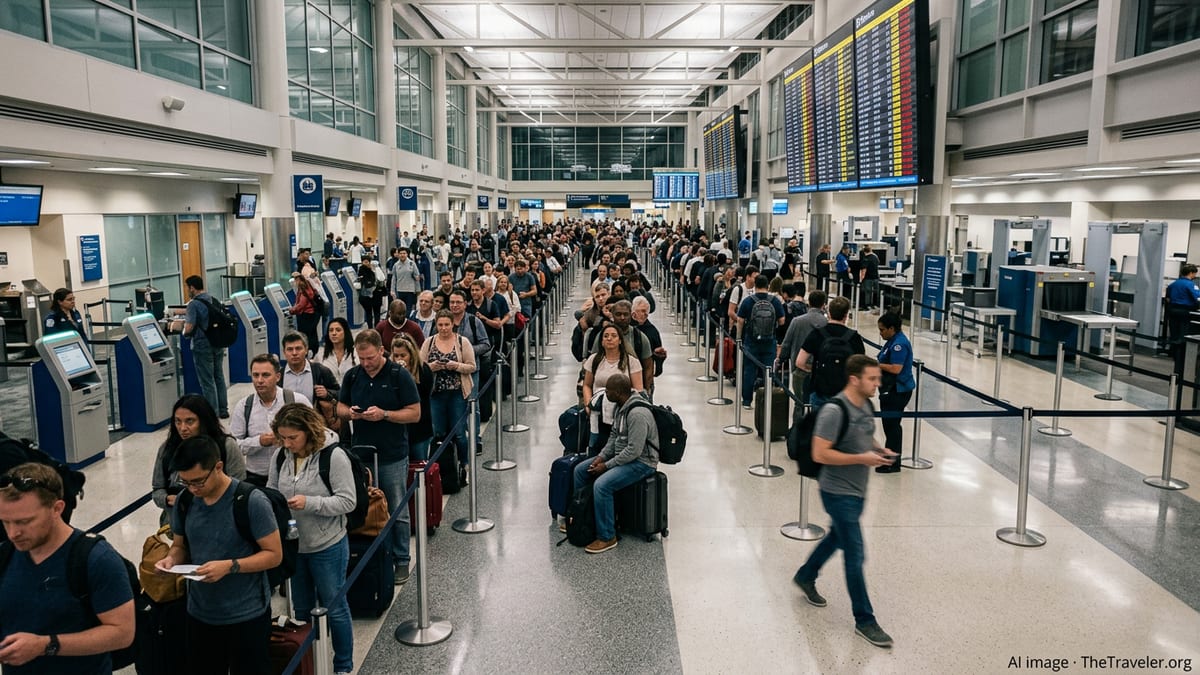
Ground Stops Ease Across Major U.S. Hubs
Publicly available FAA traffic management data indicates that a cluster of ground stops affecting several large U.S. airports has been gradually scaled back, shifting instead to more targeted delay programs as conditions improve. Ground stops, the most restrictive tool in the agency’s traffic-management playbook, hold flights bound for a specific airport at their point of departure until the destination can safely accept arrivals. Once congestion, storms, equipment issues or airspace constraints begin to ease, these measures are typically replaced with less severe controls that allow traffic to resume, albeit at a reduced rate.
Recent days have seen that pattern play out at several East Coast and mid-continent hubs, where earlier stop orders tied to thunderstorms and airspace saturation have been downgraded to ground delay programs and flow restrictions. According to FAA system guidance documents, such programs meter inbound traffic rather than halting it outright, aiming to prevent fresh gridlock while clearing existing backlogs in the air and on the ground.
Although these changes mark an improvement for travelers, flight-tracking dashboards still show elevated levels of delays across busy corridors, especially in the Northeast. Experts on air traffic operations note that once a ground stop is lifted, its effects can ripple through airline schedules for many hours, as aircraft and crews struggle to get back into position.
Weather, Staffing And Systems Keep Pressure On U.S. Operations
The latest easing of U.S. ground stops comes against a familiar backdrop of summer-weather volatility and tight operating margins at major carriers. Thunderstorms along key East Coast and Midwest routes remain a leading trigger for traffic restrictions, frequently forcing aircraft onto longer paths, reducing arrival rates and compressing the amount of usable airspace serving major hubs. In addition, persistent staffing constraints in parts of the air traffic system and at some airlines can limit how quickly operations recover once the weather clears.
Industry analyses of previous disruption waves show how quickly localized problems can cascade through the U.S. National Airspace System. When one or two large hubs encounter extended constraints, aircraft that would normally cycle through those airports may end up out of position, leaving subsequent flights elsewhere without the planes or crews they are scheduled to use. Even when the FAA steps down from full ground stops, the residual congestion can continue to generate rolling delays, misconnections and overnight stranding for passengers far from the original trouble spot.
Recent data and commentary circulating among airline operations specialists suggest that carriers are increasingly proactive about preemptive cancellations on days when storms are forecast to stall over busy corridors. By trimming schedules in advance, airlines have more room to rebook customers and reposition airplanes, but the strategy can still translate into thousands of disrupted journeys once the combined effects of weather, airport capacity limits and downstream delays are fully felt.
Cancellations Build “North Of The Border”
While U.S. regulators have begun shifting from hard stops to managed delays, publicly reported figures from Canadian airports and carriers point to rising disruption north of the border. Flight-tracking snapshots in recent days show mounting cancellations and lengthy delays at major Canadian gateways such as Toronto Pearson, Montreal Trudeau and Vancouver, driven by a mix of thunderstorms, constrained runway capacity and tight aircraft utilization.
Canada’s air traffic is overseen separately from the U.S. system, yet the two are closely intertwined. Many transborder routes shuttle aircraft and crews back and forth several times a day, meaning that problems at a Canadian hub can quickly spill into U.S. schedules and vice versa. Reports from aviation analysts note that when Canadian airports impose their own flow restrictions or when carriers there pare back departures due to weather or operational bottlenecks, the result is often a spike in same-day cancellations, especially on short-haul routes.
Industry commentary also highlights that some Canadian airlines have already reduced or reshaped parts of their U.S. network for economic reasons this year, leaving less slack in the system when irregular operations hit. With thinner schedules and fewer backup aircraft stationed at secondary airports, even a short-lived ground delay or runway closure can force carriers to scrub flights rather than risk crews running out of duty time or aircraft missing critical maintenance windows.
Cross‑Border Knock‑On Effects For Travelers
The combination of eased ground stops in the United States and rising cancellations in Canada is creating a complex picture for cross-border travelers. Passengers originating in the U.S. may find that their initial flights are able to depart once restrictions are downgraded, only to face cancellations or missed onward connections upon arrival at Canadian hubs. Conversely, travelers trying to leave Canada can be affected when inbound U.S. aircraft arrive late or not at all due to earlier traffic management initiatives south of the border.
Travel data providers tracking the North American market indicate that knock-on effects are particularly acute for itineraries involving multiple short segments. A single cancellation at a Canadian hub can sever links to regional destinations, while a delay on the U.S. side can cause travelers to misconnect with the last available flight of the day back across the border. In some cases, rebooking options are limited, with certain cross-border city pairs now served by only one or two daily frequencies.
Consumer advocates continue to urge passengers to keep a close eye on real-time flight status tools and to build additional buffer time into itineraries that rely on tight cross-border connections. With both U.S. and Canadian systems facing seasonal weather hazards and high demand, the practical difference between a lifted ground stop and smooth operations on the day of travel can be substantial.
What Travelers Can Expect In The Coming Days
Looking ahead, aviation forecasters and schedule analysts suggest that disruption levels across North America will remain elevated as the peak summer travel period overlaps with an active storm pattern. Even as the FAA pivots away from broad ground stops and toward more surgical traffic management programs, airlines will still be contending with overtaxed hubs, constrained runway and gate capacity, and the ongoing challenge of matching ambitious schedules to real-world operating conditions.
In Canada, the recent uptick in cancellations has prompted renewed scrutiny of airport resilience and airline contingency planning, with particular attention on how quickly operations can rebound after a weather event or system outage. Observers note that while hard numbers fluctuate from day to day, the broader pattern is one of recurring stress on the busiest gateways, where any disruption has outsized impact on regional and transborder connectivity.
For now, publicly available information points to a dynamic environment in which conditions can swing quickly. A morning characterized by widespread ground stops and cancellations can give way by afternoon to gradually improving traffic flows, only for another line of storms or localized technical problem to trigger fresh rounds of delays. Travelers navigating the U.S.–Canada corridor in this context are likely to face an extended period where flexibility, advance planning and up‑to‑the‑minute information remain essential parts of any trip.