


More news on this day
The Federal Aviation Administration has begun testing an artificial intelligence-driven system intended to predict flight delays before takeoff, part of a broader push to spot congestion, weather impacts, and schedule conflicts earlier so traffic managers can adjust routes and timing before disruptions cascade through the network.
Get the latest news straight to your inbox!
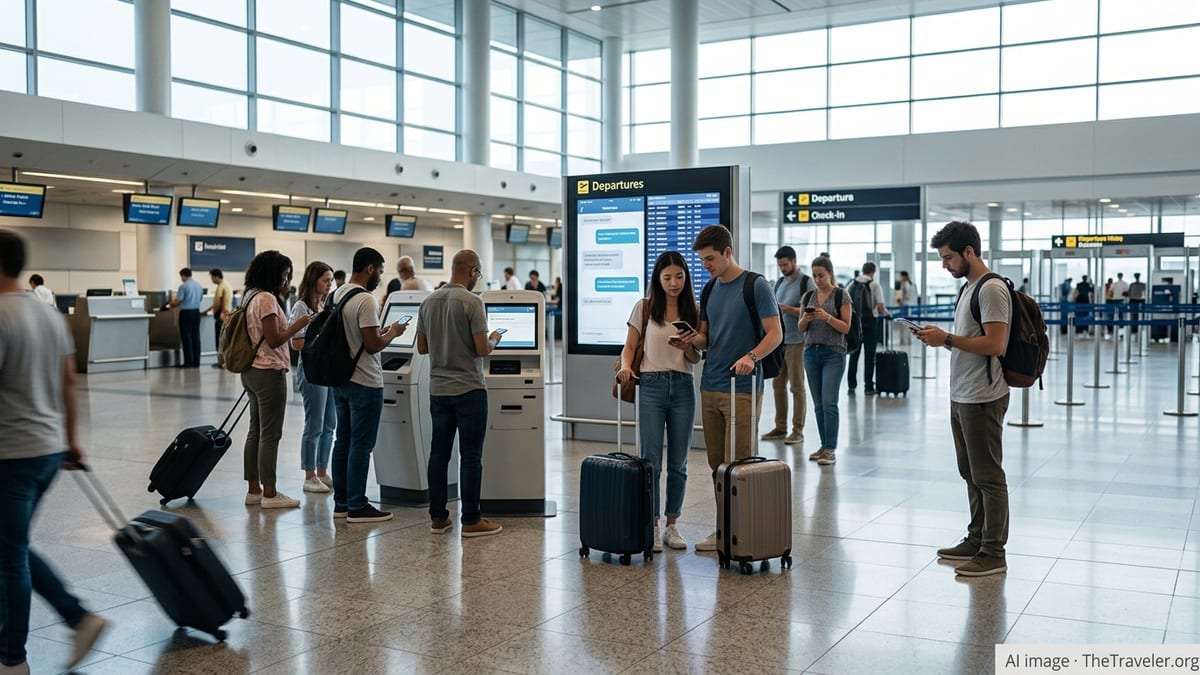
What the FAA’s new system is designed to do
Published coverage and FAA materials describe the new capability as a strategic, pre-departure forecasting layer that continuously analyzes airline schedules alongside constraints such as weather, airport capacity, and airspace conditions. The goal is to identify likely bottlenecks before aircraft push back, allowing earlier interventions than traditional tools that often react after demand already outstrips capacity.
In FAA descriptions, the system is positioned as a shared situational-awareness tool, offering a common view for traffic managers and industry users to align on departure and arrival timing, reroutes, and other adjustments that can reduce downstream disruption. The FAA has framed the effort as part of its modernization agenda focused on improving predictability for travelers and operational efficiency for the national airspace system.
Recent reporting tied the early testing to operational challenges in the U.S. Northeast, noting the FAA began testing a new computer system that uses AI to help predict schedule conflicts and weather issues so controllers can reroute traffic more effectively. That context underscores the practical aim: anticipate where trouble will appear, rather than simply manage the consequences once delays stack up.
How it fits into existing delay-management tools travelers already feel
To many passengers, “delay programs” can feel mysterious, but the FAA already has well-established levers that can slow departures to match arrival capacity at constrained airports. Ground Delay Programs, for example, assign controlled departure times so that arrivals do not overwhelm an airport during bad weather or other constraints.
The FAA’s Collaborative Decision Making ecosystem already shares demand and capacity information among the agency, airlines, and airports. Tools and data feeds supporting that collaboration include schedule monitoring, airport demand displays, and systems that distribute Expect Departure Clearance Times when a delay program is in effect. The new AI-driven forecasting layer is aimed at making those decisions earlier and more targeted, ideally reducing the need for blunt, last-minute restrictions.
Another related modernization effort, the FAA’s Terminal Flight Data Manager program, supports predictive airport and runway scheduling and surface collaboration at airports. In the FAA’s own documentation, TFDM is intended to improve demand and capacity prediction at the surface level, including runway and movement-area constraints. The AI delay-prediction push builds on this idea of shifting from reactive control to predictive management across the entire network.
What changes for airlines and airports, and what may not change for passengers
For airlines and airports, earlier and more precise forecasts can translate into operational choices that are less disruptive than a late scramble. If congestion is projected to peak at a particular time, carriers may be able to adjust departure sequencing, swap aircraft rotations, or accept reroutes earlier, which can help prevent missed connections and crew-timeouts later in the day.
For travelers, the immediate experience may be subtle. A “better” day in air traffic management does not necessarily mean fewer delays in all circumstances, especially during severe storms or when demand exceeds runway capacity. Instead, passengers may see more preemptive schedule adjustments, more accurate departure-time expectations before boarding, or fewer cases where a flight boards on time only to sit in a long taxi queue.
Importantly, an AI forecast does not by itself equal an automatic decision. Air traffic management in the U.S. is built around layered responsibilities and operational rules, and any predictive recommendation still has to fit safety and procedural requirements. The FAA’s public materials emphasize that these efforts are meant to support decision-making, not replace it.
Why the FAA is turning to AI now
The FAA’s recent public communications have repeatedly highlighted artificial intelligence and machine learning as tools to simulate and manage national airspace performance earlier than the day of departure. The agency has also published technical materials describing how it evaluates the safe integration of machine learning concepts across aviation systems, reflecting a broader federal push to adopt AI for complex operational environments.
From an industry perspective, delays are rarely caused by one factor. Weather, staffing constraints, runway configurations, traffic volume, and even upstream aircraft rotations can interact in ways that are hard to capture with static rules. AI-driven forecasting tools are being promoted as a way to absorb more variables, update more frequently, and highlight emerging conflict points before they become unavoidable.
The FAA’s approach arrives at a time when modernization efforts also include digital upgrades across facilities and communications infrastructure. Publicly available FAA testimony and program updates describe ongoing work to replace legacy telecommunications components and expand electronic tools at towers and airports, providing the data backbone that predictive systems rely on.
What to watch next as testing expands
As the FAA continues testing, the most meaningful indicators will be where the tool is deployed, how widely its forecasts are shared across stakeholders, and whether it measurably improves predictability during peak disruption periods. Early deployment patterns, including the emphasis on busy corridor airspace, will matter because those regions are prone to cascading delays that spread nationwide.
Travelers should also watch for clearer pre-departure messaging when delay programs are issued. The FAA already provides public-facing resources that allow operators to check delay assignments for specific flights when programs are active, and broader adoption of predictive tools could make those expectations more stable earlier in the day.
Finally, the success of an AI-driven forecasting system will likely hinge on data quality and operational integration, not just model performance. If the system’s outputs are timely, understandable, and aligned with how traffic managers and airline dispatchers work, it has a better chance of translating “prediction” into fewer missed connections, fewer long ground holds after boarding, and fewer network-wide disruptions that ripple far beyond the original weather cell or capacity crunch.