


More news on this day
U.S. travel guidance for Iran took on renewed urgency this week after fresh public alerts reiterated a Level 4 warning and told U.S. citizens in the country to leave immediately, with published coverage pointing to heightened regional volatility and the risk of sudden flight cancellations or airspace closures that could strand travelers.
Get the latest news straight to your inbox!
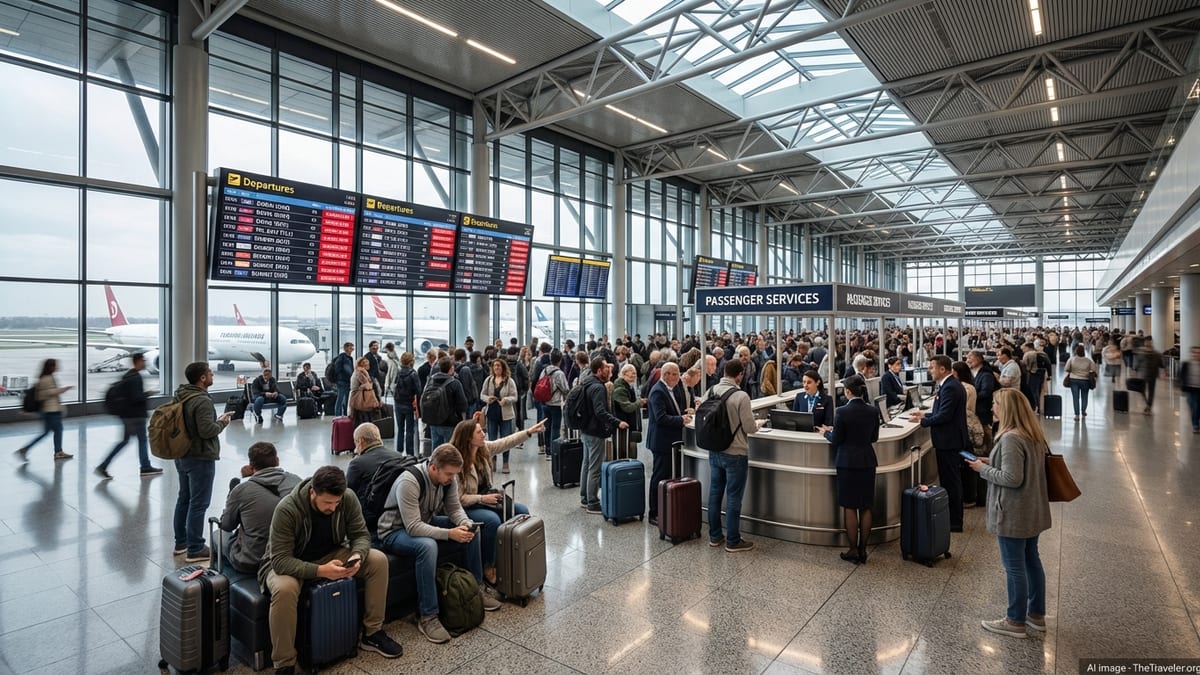
What the renewed message means for travelers right now
Recent published coverage, including a report by Hindustan Times dated September 21, 2026, described an updated U.S. warning that emphasizes rapid changes to aviation and border conditions, alongside broader security concerns in Iran and across parts of the Middle East. The language reflects a planning reality for travelers: commercial options can narrow quickly if carriers suspend service, airports face operational disruptions, or states impose short-notice airspace restrictions.
The U.S. State Department’s standing Travel Advisory for Iran remains at Level 4, “Do Not Travel,” and continues to advise U.S. citizens in Iran to leave immediately. The advisory also underscores that the United States does not maintain an embassy or consulate in Iran, limiting the ability to provide routine or emergency assistance on the ground.
Separate U.S. security messaging for the region has urged travelers to monitor airport and airline operations closely, a practical point that becomes more significant when airlines are adjusting routes and schedules in response to shifting security assessments and airspace risk.
Why flight cancellations and airspace closures are a central concern
The renewed travel warning comes as aviation regulators and safety bodies continue to frame Iranian airspace as a high-risk operating environment. The Federal Aviation Administration (FAA) maintains security-related notices emphasizing that U.S. airmen and operators should be familiar with current Middle East conditions before operating in or adjacent to Iranian airspace, and that flight planning should be based on current NOTAMs and aeronautical information.
In Europe, the European Union Aviation Safety Agency (EASA) has kept an active Conflict Zone Information Bulletin focused on the Tehran Flight Information Region (OIIX) at all altitudes, extending its validity through September 30, 2026. The bulletin highlights elevated risks tied to regional tensions, including the possibility of misidentification and escalation that can affect civil aviation planning and routing.
For travelers, the immediate takeaway is that disruptions are not limited to Iran-bound flights. When airspace risk rises, carriers may reroute long-haul services around affected corridors, which can trigger schedule changes, longer flight times, missed connections, and rolling cancellations even for itineraries that do not include a stop in Iran.
Consular realities for Americans: limited help inside Iran
One of the most consequential points for U.S. travelers is structural: there is no U.S. embassy or consulate in Iran. The State Department notes that Switzerland serves as the protecting power for U.S. interests, but the scope of services is limited and can be constrained by security conditions.
Publicly available information from Switzerland’s Foreign Interests Section in Tehran indicates that some routine services are not available, and that emergency passport submissions remain suspended until further notice. The same Swiss information describes emergency support that may be provided when security conditions permit, but it is not a substitute for full U.S. consular operations.
In practical terms, that means travelers should not assume on-the-ground consular support for evacuations, replacement passports, or rapid problem-solving if airports close or if departure options shrink. The State Department’s guidance also encourages travelers to have an emergency departure plan that does not depend on U.S. government assistance.
What travelers can do today if they are in Iran or transiting nearby
For U.S. citizens currently in Iran, the standing U.S. guidance is to leave immediately. Given the warning’s focus on flight cancellations and potential airspace restrictions, travelers may need to make time-sensitive decisions based on actual airline availability rather than preferred routings or dates.
Travelers in the wider region, including those with connections through major Middle East hubs, may want to recheck their itineraries frequently and prioritize flexibility. Publicly available State Department messaging for regional security events has stressed monitoring airport and airline operations, and contacting airlines directly for changes when flights are affected.
Travelers should also consider the downstream effects of disruption: rebooking across multiple carriers, keeping essential documents accessible, and having funds available for last-minute ticket changes or overland alternatives if flights are reduced. Where travel insurance is in place, policyholders may need to review whether cancellations or rerouting linked to conflict-zone developments are covered under their specific terms.
What to watch next: advisories, sanctions, and airline network shifts
Travel conditions around Iran can shift quickly when government alerts, aviation risk notices, and airline operational decisions move in parallel. In early September 2026, Associated Press coverage described additional U.S. sanctions targeting elements of Iran’s aviation sector, a step that can further complicate the commercial aviation landscape and the availability of certain services.
At the same time, conflict-zone guidance remains active through at least the end of September for operators monitoring Tehran FIR risk, and FAA notices continue to emphasize current-condition awareness and up-to-date NOTAM review for U.S. operators in or near Iranian airspace. Those signals matter for the routes airlines choose and whether schedules remain stable week to week.
For travelers, the best near-term indicator is operational: whether airlines keep publishing schedules, whether airports remain fully functional, and whether governments issue new restrictions that change the feasibility of specific routes. In an environment where airlines can adjust with little notice, travelers may want to treat “confirmed” itineraries as provisional until they are at the gate.