


More news on this day
The U.S. Federal Aviation Administration has activated a nationwide rule changing how air traffic controllers use the “Line Up and Wait” procedure on runways, requiring a dedicated, standalone supervisor whenever the technique is used. Effective November 24, 2026, the policy is intended to cut the risk of runway incursions and near-collisions but is drawing concern from controllers and travelers that it could slow some departures during an already busy Thanksgiving travel period.
Get the latest news straight to your inbox!
What The New LUAW Rule Actually Changes
The new requirement is set out in FAA Notice JO 7210.979, which took effect on November 24, 2026 and is currently scheduled to remain in place until June 10, 2027. The notice tightens staffing rules around “Line Up and Wait” (LUAW), the standard instruction that allows an aircraft to taxi onto a runway and hold in position while awaiting takeoff clearance. The core change is that whenever LUAW is used, a watch supervisor or controller-in-charge must be on duty in a position that is not combined with any other operational task.
Previously, FAA guidance already said that the controller responsible for a runway should not be distracted by other duties during LUAW operations, but this language was advisory and allowed more flexibility in how towers organized their staffing. The new notice replaces that guidance with a mandatory requirement. In practical terms, a tower that wants to continue using LUAW must have a separate supervisor free of other responsibilities, in addition to the controller working the local control position for arrivals and departures.
The FAA has framed the change as a safety upgrade rather than a capacity reduction. The purpose statement for the notice says the agency aims to “elevate the safety standard” for LUAW operations by removing ambiguity about staffing and ensuring that supervisory personnel are fully dedicated to overseeing the safety of the operation. A related amendments list for the broader tower operations manual also logs the LUAW staffing notice as a time-limited change, reinforcing that it is a specific policy intervention rather than an open-ended rewrite of runway procedures.
Why ‘Line Up and Wait’ Matters For Runway Capacity
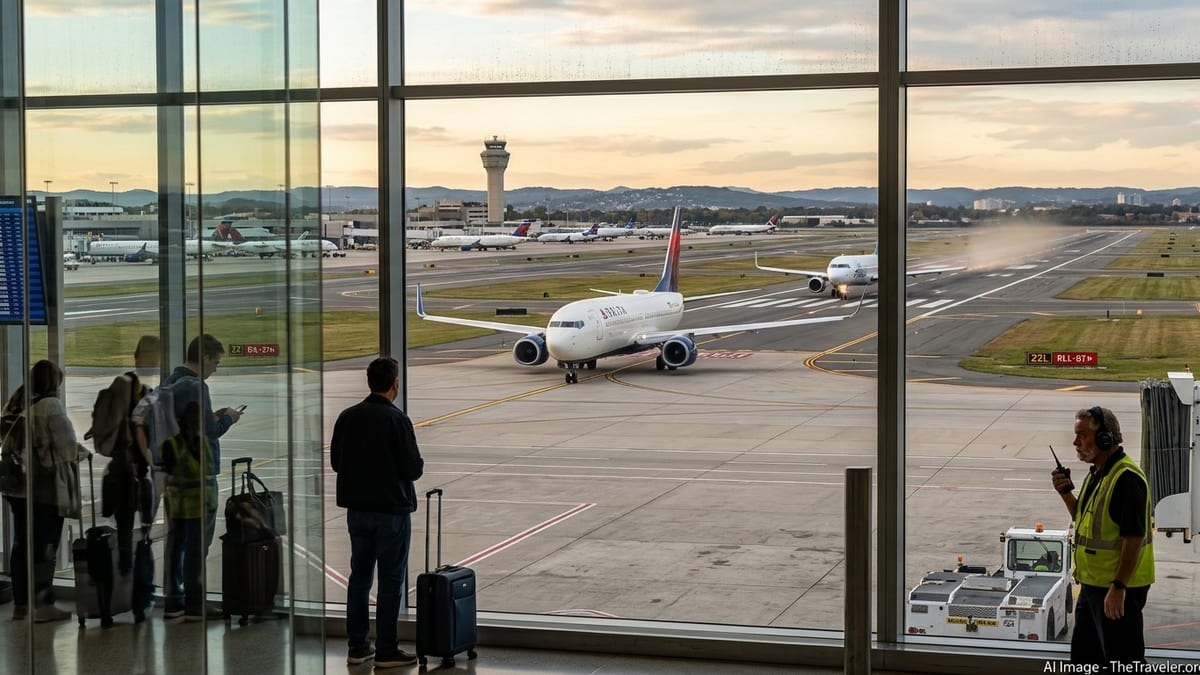
For travelers, the LUAW rule is significant because the procedure plays a small but important role in smoothing departures at busy airports. When controllers instruct an aircraft to line up and wait, they position the aircraft on the runway in advance so that takeoff can begin as soon as the runway is clear and a takeoff clearance is issued. Especially during peak traffic, this can shave valuable seconds off the interval between departures, which accumulates into additional capacity over the course of a bank of flights.
FAA guidance and safety bulletins emphasize that LUAW is not a takeoff clearance and that aircraft must receive an explicit instruction before beginning the takeoff roll. Controllers are also expected to avoid leaving aircraft in the LUAW position for more than a short period, typically around 90 seconds, without either clearing them for takeoff or instructing them to vacate the runway. Those time limits and the strict phraseology around LUAW are based on past safety reviews that examined incidents where distraction or expectation bias contributed to runway conflicts.
When towers cannot use LUAW, they must generally keep aircraft at the runway holding point or on taxiways until the runway is ready for an immediate takeoff clearance. That approach is also safe but slightly less efficient, because a few extra moments are needed for each aircraft to line up and begin its takeoff run after the preceding traffic clears. Across a full rush period, the difference in throughput can be noticeable, particularly at airports operating near their practical capacity on a single runway.
How Staffing Constraints Could Shape The Impact
The impact of the new LUAW rule will vary sharply from one airport to another, depending largely on staffing levels in its control tower. At facilities with enough controllers and supervisors to staff a standalone watch supervision position throughout the day, the change may have little visible effect. Those towers can continue to use LUAW much as before, now under clearer supervisory rules.
The more acute concerns come from towers that routinely combine controller positions because of staffing shortages. In these facilities, it has been common for a supervisor or controller-in-charge to also cover another operational function during certain periods, such as assisting with ground control or local control tasks. Under the new notice, that kind of multitasking is no longer allowed when LUAW is in use, which could force towers to forgo LUAW at times when they cannot free a dedicated supervisor.
Air traffic controller representatives and online discussion forums have highlighted the challenge that this poses for smaller or chronically understaffed towers. Controllers note that creating a separate watch supervisor slot for any period when LUAW might be useful effectively requires an extra person in the operation. Given that the FAA has acknowledged a shortfall of certified controllers and has been running an ongoing recruitment campaign, that extra staffing margin may not be available in every facility, at least in the near term.
Thanksgiving Travel, Near-Miss Concerns And Safety Context
The timing of the policy has drawn particular attention because it became effective on Tuesday, November 24, 2026, which the FAA and airlines expect to be one of the busiest days of the Thanksgiving travel period. Agency forecasts and airline schedules point to tens of thousands of flights operating across the United States over the extended holiday window, making any constraint on departure efficiency a potential concern for travelers with tight connections or limited schedule flexibility.
The FAA, however, stresses that the change is about preventing serious runway incidents, not managing holiday traffic flows. In public statements about the new requirement, the agency has said it is taking proactive steps to strengthen runway safety by enhancing staffing and supervisory oversight during LUAW operations. The FAA maintains that the policy will not affect airport operations in a way that significantly disrupts travelers, although it has not provided specific estimates of any capacity impact.
The LUAW changes also fit into a broader context of scrutiny of U.S. air traffic control safety after a series of high-profile near collisions on runways in recent years. Safety bulletins from the FAA’s policy and safety offices have pointed to distraction, task saturation and expectation bias as contributing factors in some LUAW-related events. Ensuring that a dedicated supervisor is watching the operation while aircraft are positioned on an active runway is intended as one defense against such risks, especially at times of high traffic complexity.
Clarifying How Long The Rule Lasts And What Travelers Should Watch
Although some early reports and informal comments have described the LUAW change as a permanent or open-ended ban on the procedure, FAA documentation indicates a more limited scope. The record of changes for the main facility operations order lists Notice JO 7210.979, covering LUAW watch supervision, as effective from November 24, 2026 with a cancellation date in June 2027. That means the current wording is formally time-limited, though the underlying policy could be extended, modified or incorporated into a later revision depending on how it performs.
For travelers, the immediate effect is most likely to show up, if at all, as small additional delays in departure queues at certain times and airports rather than as a distinct new category of disruption. Any impact will depend on how each tower staffs its operations across the day. Large hubs with robust staffing may see little practical change, while some smaller or mid-size facilities may reduce their use of LUAW during periods when a standalone supervisor is not available.
Passengers flying over the Thanksgiving period and into the winter should continue to monitor airline notifications, airport departure boards and general delay forecasts, since weather, technical issues and broader air traffic control capacity still drive the majority of schedule disruptions. The new LUAW rule is one factor among many in a complex system. Travelers with tight connections or time-sensitive plans may wish to allow additional buffer time in their itineraries and to keep an eye on any further FAA updates as the agency reviews the rule’s performance ahead of its scheduled June 2027 end date.