


More news on this day
A new Federal Aviation Administration rule requiring a dedicated supervisor for Line Up and Wait (LUAW) runway operations comes into force on November 24, 2026, just as U.S. airports enter one of their busiest Thanksgiving travel periods, raising concern among air traffic controllers that departure flows could slow at facilities already grappling with staffing shortages.
Get the latest news straight to your inbox!
What the new LUAW rule changes from November 24
The LUAW rule is set out in FAA Notice JO 7210.979, issued on October 9, 2026 and effective November 24, 2026. The notice amends FAA Order JO 7210.3, which governs air traffic facility operations, by upgrading previous guidance on LUAW watch supervision from a recommendation to a firm requirement. For an air traffic control tower to authorize an aircraft to line up and wait on a runway, a stand-alone watch supervisor or controller-in-charge must now be on duty, focused on supervisory duties and not combined with any other operational control position.
Operationally, the change does not alter how pilots request or receive LUAW clearances. Instead, it sets a clear internal staffing condition that must be met before controllers can use the procedure. Towers must staff a dedicated local control position handling runway operations, plus a separate supervisor position overseeing the operation. The supervisor can no longer simultaneously work a control position, which had become common practice at many facilities during lean staffing periods.
The FAA describes the purpose of the policy as raising the safety bar by eliminating ambiguity over minimum staffing for LUAW. The notice cites the risk of distractions when a supervisor is both managing traffic and monitoring colleagues. It positions the LUAW change as part of a wider portfolio of runway-safety initiatives pursued since a 2023 “Safety Call to Action,” although the document itself does not tie the new requirement to any single incident.
Why LUAW matters for airport capacity
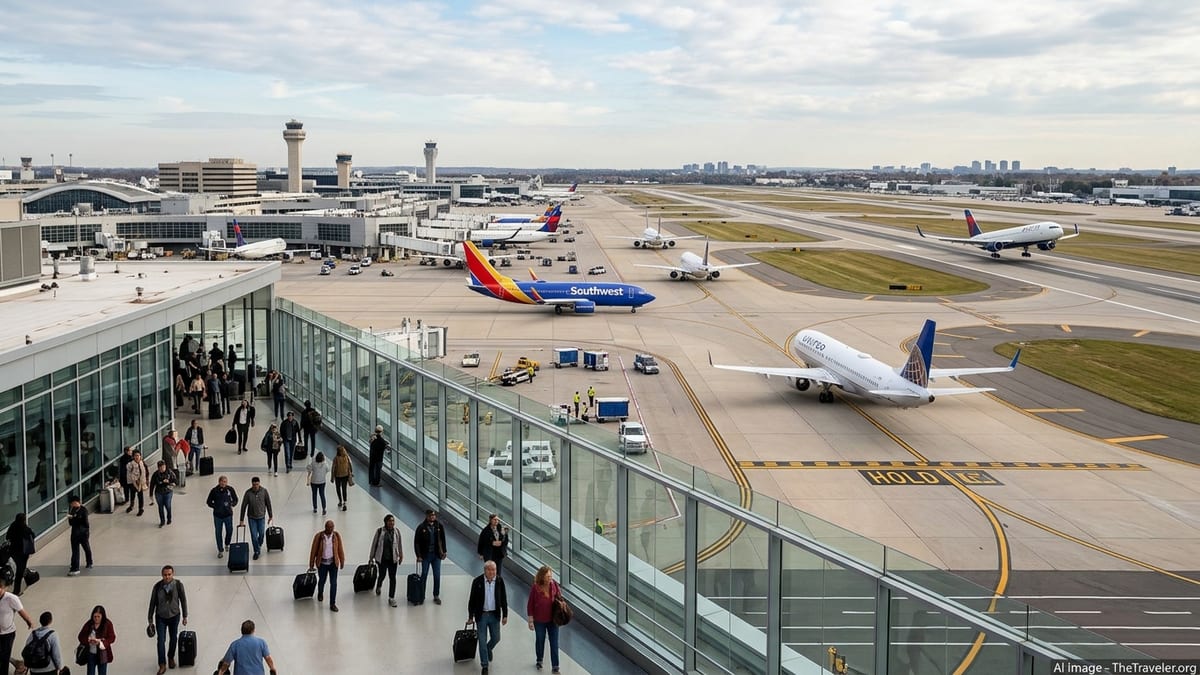
Line Up and Wait is a standard runway procedure that allows a departing aircraft to taxi into position on the runway and hold there until receiving takeoff clearance. When used consistently and with good visibility of arriving traffic, it can shorten the gap between departures by having the next aircraft already in place, rather than waiting at the taxiway hold short line until the runway is clear. At busy airports, those small savings in time can accumulate into meaningful improvements in throughput during peak hours.
Under the new staffing rule, any tower that cannot provide the required stand-alone supervision will have to suspend LUAW and keep aircraft at taxiway holding points until a supervisor becomes available. For passengers, that would be most visible as longer queues waiting to enter the runway, especially at airports where only one runway is in use because of construction, wind or noise abatement patterns. The Federal Aviation Administration has stated in public materials that it does not expect the change to affect overall airport operations, but the operational impact will depend heavily on how individual towers are staffed throughout the day.
In some locations, particularly larger hubs with full supervisory rosters, airports already schedule dedicated watch supervisors during busy daytime periods. For those facilities, the new notice largely formalizes existing practice. At smaller towers or those that have been combining supervisory and controller roles because of staffing constraints, it introduces a hard limit on the circumstances in which LUAW can be used, which could reduce tactical flexibility during surges in demand.
Controller concerns and the question of delays
Reaction among front-line controllers has focused on how the rule interacts with ongoing staffing challenges across the air traffic control system. The National Air Traffic Controllers Association, which represents controllers at FAA-operated facilities, has reiterated that its members will continue to prioritize safety and comply with the directive. Controllers posting publicly and speaking on recorded radio transmissions have, however, warned pilots that the new supervisory condition may prevent them from using LUAW at certain times of day, particularly at towers that are already operating with minimal staffing.
In a recorded exchange at Albuquerque International Sunport on November 23, a tower controller advised the crew of a Southwest Airlines flight that staffing-related LUAW limitations, previously applied mainly on overnight “mid” shifts, would now extend across the day once Notice JO 7210.979 took effect. The controller explained that they could no longer be alone in the tower cab and still issue LUAW, and that a separate supervisor or controller-in-charge needed to be present specifically to oversee such operations. The Southwest pilot responded that the requirement would likely cause delays, and the controller agreed that it had the potential to lengthen departure queues when staffing did not allow LUAW to be used.
Other pilots joining the same frequency asked whether the measure was a temporary holiday adjustment or a permanent change. The controller replied that the directive was permanent rather than a short-term Thanksgiving restriction, while noting that information had been requested about possible waivers. Within controller communities, there has been active discussion of whether towers at the FAA’s busiest air traffic levels might seek exemptions if they can demonstrate significant operational disruption, but as of November 24 there is no public indication that the FAA has granted any broad waivers from the new national standard.
Thanksgiving 2026 travel volumes and potential impact on passengers
The timing of the LUAW staffing change coincides with one of the heaviest U.S. travel periods of the year. According to the national Thanksgiving forecast that AAA released on November 16, 2026, around 81.5 million Americans are expected to travel at least 50 miles from home between Tuesday November 24 and Monday November 30. That represents a very slight decline of about 0.1 percent compared with 81.6 million travelers over the same period in 2025, ending a three-year run of record Thanksgiving volumes while still leaving demand close to historic highs.
AAAs forecast breaks out approximately 5.96 million domestic air travelers over the seven-day Thanksgiving window, a 0.2 percent dip from last year. Even with that marginal decline, airlines and airports are preparing for some of their busiest days since before the pandemic. Industry data compiled from FAA schedules and reported by aviation outlets indicate that more than 52,000 flights are planned for Tuesday November 24 alone, and roughly 417,000 flights are expected across the broader nine-day holiday travel period spanning November 23 through December 1.
The Transportation Security Administration has projected that it will screen nearly 17.6 million passengers at U.S. airport checkpoints over the seven busiest days of the Thanksgiving period. TSA officials have highlighted Sunday November 29 as one of the most intense days for security screening this year, with more than 3 million passengers expected to pass through checkpoints as travelers return home at the end of the long weekend. Airports and airlines are advising passengers to allow extra time for check-in, security and boarding, particularly at large hubs during early morning and late afternoon peaks.
How the LUAW rule fits into broader operational pressures
The new LUAW staffing requirement arrives against a backdrop of other operational stresses that could also shape the Thanksgiving travel experience. In mid-November 2026, the FAA imposed a nationwide ground stop for several hours because of a problem affecting air traffic control communications and radar feeds, disrupting flights on what was otherwise a routine weekend travel day. That episode, together with recent bouts of severe weather and coastal flooding in parts of the country, has heightened traveler sensitivity to additional sources of delay just as the holiday rush begins.
Airlines have been working to stabilize their operations after several high-profile disruption events in previous holiday periods. Major carriers, including United Airlines and American Airlines, have issued targeted travel waivers this month for passengers flying through regions facing weather advisories, such as the San Francisco Bay Area during recent flood warnings. These waivers typically allow customers to rebook flights around forecast storms without change fees, but they do not directly mitigate any departure constraints that could arise from tower staffing rules.
From a passenger perspective, it is difficult to separate the specific effects of the LUAW rule from other factors that influence Thanksgiving punctuality, such as weather patterns, airline scheduling choices and airport construction. The FAA has emphasized that the supervisory change is primarily about safety and that it does not expect a measurable impact on overall capacity. Controllers and some pilots, on the other hand, have signaled that travelers at certain airports may notice slightly longer waits to reach the runway if LUAW is temporarily unavailable because a supervisor position cannot be filled. For now, any such impacts remain a possibility rather than a documented outcome, and they are likely to vary significantly from airport to airport.
What travelers should watch for in the coming days
For passengers flying around Thanksgiving 2026, the LUAW rule itself does not require any change in how they navigate the airport or interact with airlines. Boarding, taxi and takeoff procedures will look the same from the cabin, and pilots will continue to receive clearances from air traffic control. Where the new policy could be felt is in the timing of departures during busy waves, especially at smaller or staffing-constrained airports that make frequent use of LUAW to maintain an efficient departure rhythm.
Travelers concerned about potential delays can take practical steps that apply regardless of the LUAW rule. These include favoring early-morning departures, which tend to be less affected by knock-on delays from earlier disruptions, and building longer connection times into itineraries where possible. Checking airline apps and airport status boards for ground delay programs or traffic management initiatives on the day of travel can also provide an early signal of broader system strain. If significant weather or system issues are forecast along a route, passengers may wish to take advantage of any change-fee waivers that airlines publish in advance.
Looking beyond this Thanksgiving, Notice JO 7210.979 is scheduled to remain in effect until June 10, 2027, when its provisions are expected to be fully incorporated into the next revision of FAA Order JO 7210.3. In the meantime, the agency and NATCA are likely to monitor how towers implement the LUAW supervisory requirement and whether any localized adjustments or waivers become necessary. For now, travelers can treat the new rule as one of several behind-the-scenes measures designed to improve runway safety, with the understanding that, under certain staffing conditions, it may also modestly constrain departure flows at specific airports during peak periods.