


More news on this day
U.S. air traffic regulators expect Thanksgiving 2026 to produce the busiest holiday skies in 16 years, with more than 417,000 flights scheduled over a nine-day period, even as the system continues to recover from a nationwide air traffic control outage and separate airline technology failures earlier this month.
Get the latest news straight to your inbox!
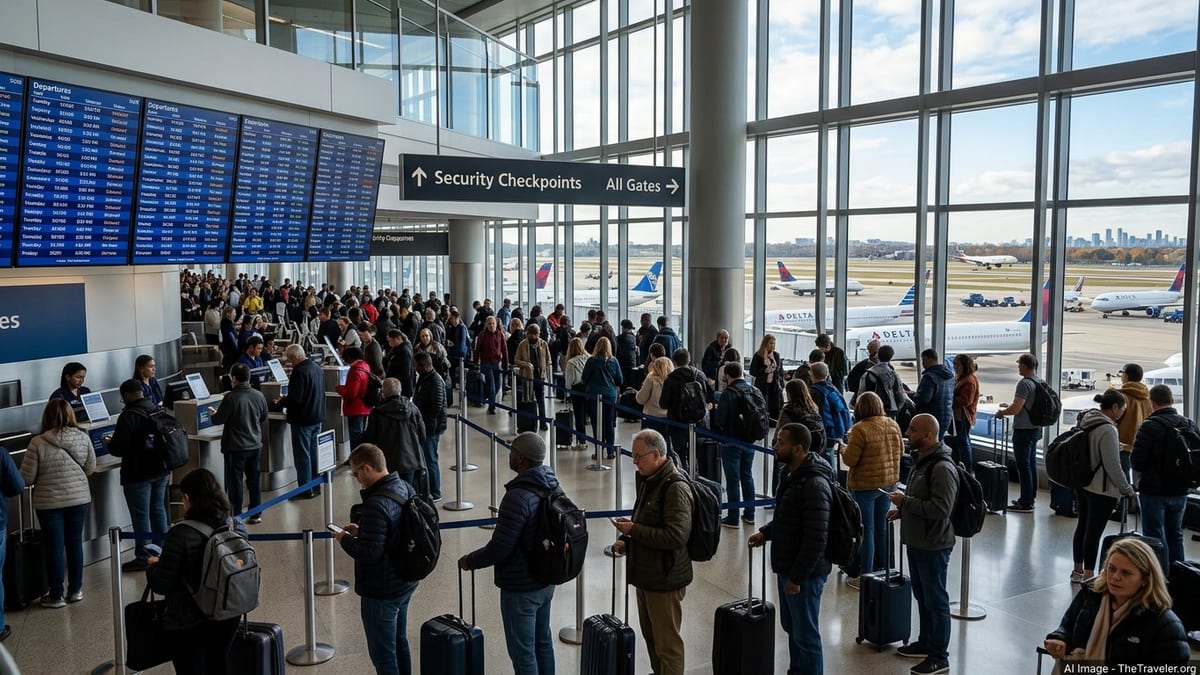
417,000 flights forecast as Tuesday emerges as peak travel day
The U.S. Department of Transportation, through the Federal Aviation Administration, has forecast more than 417,000 flights between November 23 and December 1, 2026, a nine-day period that covers the main Thanksgiving getaway and return days. Federal data and agency statements describe it as the busiest Thanksgiving flight schedule since at least 2010, reversing the modest softening in domestic demand seen earlier in the autumn travel season.
The forecast identifies Tuesday, November 24, as the single busiest day in the period, with more than 52,000 flights expected to operate nationwide. That figure includes mainline and regional services across all U.S. carriers and foreign airlines serving American airports. While Wednesday before Thanksgiving has traditionally been the high point for passenger crowds, the concentration of flights on Tuesday reflects airlines’ efforts to spread demand more evenly and offer additional options before the holiday.
This year’s schedule also represents a notable increase compared with Thanksgiving 2025. Industry and government analyses indicate that last year’s nine-day period saw a little more than 360,000 flights, meaning carriers plan roughly 15 percent more departures for 2026. The additional flying is concentrated on peak days surrounding the holiday, including the Tuesday and Wednesday before Thanksgiving and the Sunday and Monday that follow.
Passenger volumes near records as prices and weather influence demand
While the FAA forecast focuses on flight movements, passenger volumes are also expected to be high. The Transportation Security Administration has said it anticipates screening nearly 17.6 million passengers at airport checkpoints nationwide between Tuesday, November 24, and Monday, November 30. That total would keep traffic close to, or slightly below, last year’s record levels, even though some travelers appear to have shifted to other modes of transport amid higher airfares.
AAA and other travel forecasters are projecting that about 81.5 million people in the United States will travel at least 50 miles from home for Thanksgiving this year, across all modes. Their projections suggest that air travel will remain a smaller share of total trips than driving, but also that the number of people flying will stay close to last year’s volume. Buses, passenger rail and cruise services are expected to see year-on-year growth from a much smaller base, supported by travelers looking for alternatives to crowded airports and higher ticket prices.
Several booking and fare-tracking services report that U.S. domestic airfares for the Thanksgiving window are higher on average than in 2025, with some estimates approaching 40 percent increases for certain popular routes. Analysts attribute the higher prices mainly to fuel costs and capacity management by carriers rather than to the recent technology outages. For travelers, the combination of near-record crowds and elevated fares means fewer last-minute bargains and fuller cabins on many peak departures.
Holiday surge follows nationwide ground stop and airline tech failures
The expected surge in Thanksgiving flying comes less than two weeks after a rare nationwide ground stop ordered by the FAA on Friday, November 13. According to agency explanations and subsequent federal analyses, a failure in telecommunications equipment that supports air traffic communications caused instability across parts of the national airspace system, leading the agency to halt departures for about four hours and 45 minutes while engineers stabilized the network.
During that outage, more than 12,000 flights were canceled across the United States, including over 9,000 operated by major airlines, with thousands more delayed as schedules recovered. The disruption was only the second nationwide ground stop since the attacks of September 11, 2001, highlighting the continued vulnerability of some of the legacy systems that underpin U.S. air traffic control. The FAA has said a newly implemented backup network helped limit the impact, but acknowledged that the cascading cancellations reflected both the scale of modern air schedules and the difficulty of rapidly resetting aircraft and crew rotations.
The FAA outage was followed by a separate technology failure at United Airlines several days later that temporarily affected a system pilots use to calculate aircraft weight for takeoff, delaying departures until the carrier implemented workarounds. Then, on Sunday, November 22, Delta Air Lines experienced an automation system problem that led to an FAA ground stop affecting flights into its Atlanta hub for roughly an hour and contributed to delays across its network. Public flight-tracking data indicated that around 2,000 Delta flights, or more than half of its scheduled services that day, arrived late, and a smaller share were canceled outright.
Officials promise safeguards, funding push for aging systems
Transportation Secretary Sean Duffy has said the administration is treating the November 13 ground stop and subsequent airline outages as a warning that the air traffic system’s aging infrastructure requires accelerated investment. In public comments following the incidents, Duffy emphasized that safety systems operated as intended by forcing a halt to flights while communications were unstable, but acknowledged that the level of disruption was unacceptable for passengers and carriers.
In response, the department has announced the creation of a dedicated “tiger team” of FAA specialists and outside experts tasked with monitoring critical systems and coordinating with airlines to identify and resolve emerging issues more quickly during the holiday period. The group is expected to use enhanced data tools that draw on real-time information about airspace congestion, weather and system performance, with the goal of rerouting flights, adjusting flow controls and deploying technicians before small issues result in widespread delays.
Duffy has also called on Congress to approve approximately 50 billion dollars in emergency funding aimed at accelerating replacement of legacy communications and radar equipment, modernizing the telecommunications backbone that links control centers and towers, and hardening digital infrastructure against overloads and other failures. Much of that spending would augment existing NextGen modernization programs, which have focused on satellite-based navigation and more efficient routing but have not yet fully addressed vulnerabilities in older ground systems that still carry critical traffic.
What Thanksgiving travelers should expect and verify
For passengers traveling between November 23 and December 1, the immediate implications are crowded terminals, tight aircraft utilization and limited slack in the system if further disruptions occur. Federal officials and airlines are advising travelers to allow more time at the airport than they might during off-peak periods, with recommendations typically starting at two hours before departure for domestic flights and three hours for most international departures. At some busy hubs, local airport operators are urging even earlier arrivals at peak morning and late afternoon banks.
Weather is likely to play a significant role in how smoothly the holiday period unfolds. Forecasts point to the possibility of heavy rain, strong winds and coastal flooding in parts of the East and West Coasts around Thanksgiving Day, conditions that can quickly reduce airport capacity even when technology systems are functioning normally. Because modern schedules rely on aircraft flying multiple segments per day, extended delays in one region can propagate to other parts of the country, particularly for airlines that operate large hub-and-spoke networks.
Given the recent technology incidents and the volume of scheduled flying, both regulators and carriers are urging travelers to monitor flight status closely through airline apps, text alerts and airport displays, and to ensure contact information is correctly stored in their bookings. Passengers connecting through major hubs may wish to build in longer connection windows to reduce the risk of missed onward flights if delays develop. Those with flexible plans might consider traveling on historically less crowded days within the period, such as Thanksgiving Day itself or the Saturday after the holiday, when both flight counts and passenger loads typically dip compared with the Tuesday, Wednesday and Sunday peaks.